
REVIEWS
Post-film thoughts.

Whalefall: The Depth of Grief
An undeniable tension emerges when Jay is trapped in the whale, maybe not enough for the audience to feel as though we’re there with him, but enough to be glad we aren’t.

Crossing A Dawn: Before the City Wakes
Two people walking through Beijing at night sounds like very little, yet the film makes it feel like everything. Several smaller stories emerge within that walk—failed attempts at intimacy, interrupted hookups, dreams exchanged on street corners—and each one lands.

Look Back: Art Makes Memories
As an adult Fujino looks back on their friendship, Kore-eda interjects flashbacks of quiet childhood moments with Kyomoto and even a few “what-ifs” for the audience to consider ways their story may have turned out differently.

Clayface: A Man Unmade
Matt’s face droops, melts, bleeds, bubbles, and molds itself into all kinds of shapes in ways that turn the audience’s stomach. Despite the film's low budget, Watkins and his team knew exactly where to focus their priorities, bringing to life the horror that is Clayface.
Primetime: To Catch a White Whale
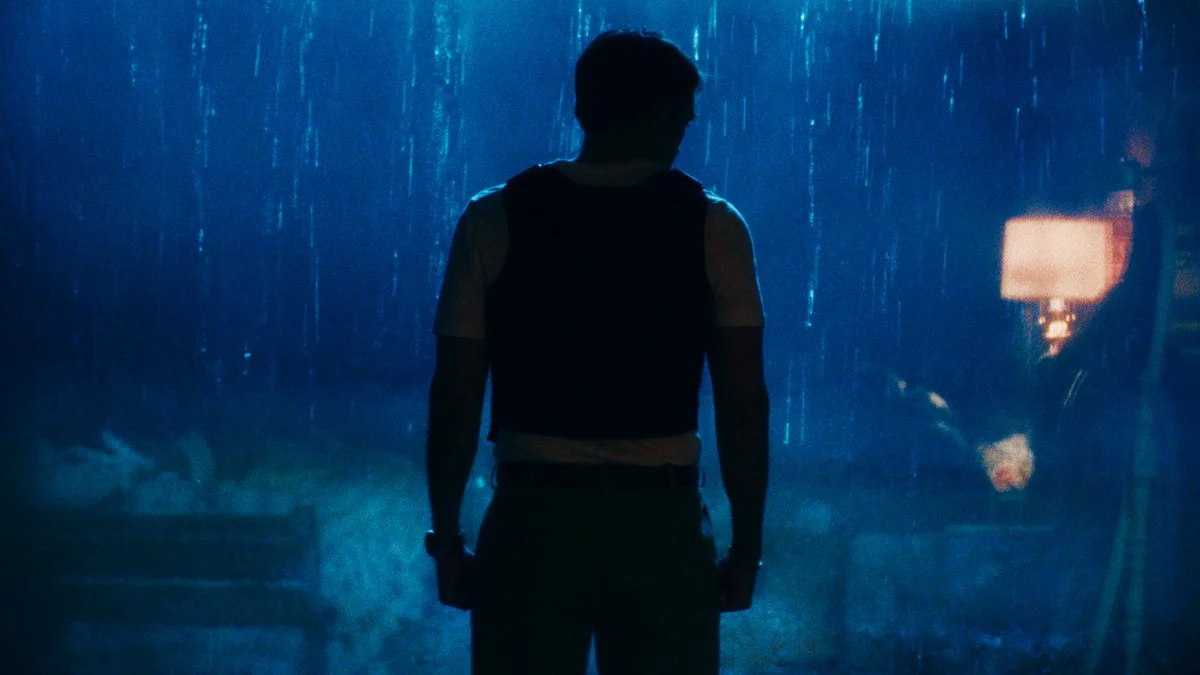
Hansen’s hunger for his White Whale jumpstarts the loss of himself. He goes on a Dantean journey into Hell, but it is unclear whether he came out the other side. In his desperation, Hansen’s world begins to fracture at its seams during his mad dash to capture the final predator, calling into question who the real predator is.

Digger: Art Won’t Save You
Through rotating podiums and rotting walls, the stage of fools is brilliantly pulled apart piece by piece as Cruise delivers a strikingly smarmy diegetic indictment of our complacency. Iñárritu doesn’t just bend the landscape of Digger Rockwell’s reality, he reaches through the screen and throttles you in the very theater you’re sitting in, punishing you for cackling at the jokes he’s serving you.

Vertiginous: This Is a Simulation
While this film doesn’t introduce any new angles or particularly groundbreaking perspectives on the theory, it embraces the purposely awkward and intentionally artificial design of its world to tell a deeper story. Its commentary on society’s readiness to accept new technology without question is highlighted by the contrast between the complex idea of “visiting” the other side of the simulation using new technology and the raw feel of the world and character design.

The Beloved: A Reunion Unraveled
Along with captivating visuals, the pacing and characterization elevated this film into one of the best watches of the festival this year. Slower solitary moments contrasted with intense, quick-fire arguments and fights between father and daughter, occasionally resulting in undeserved blows to innocent bystanders.

Toy Gun Bandit: No Way Out
What sets the film apart from other crime-thriller films is the beating heart at its core. None of its characters (bar a few) actually want to be there, doing what they’re doing. Each one knows they’re only making their situation worse, that they’re teetering on a point of no return.

No Rest for the Wicked: Even in Death
Doomed, gay vampire romance is by no means a new concept, but Director Kasper Kalle’s take on vampires refreshed the genre with a layer of the paranormal and body horror.

Girl in the Night: For the Misfits
Every aspect of this film makes it hard to look away for even one of the 94 minutes it gives us. Girl in the Night uses the night to its advantage: blue and green lighting emphasize the monotony and mind-numbing boredom Rok feels at work, and gorgeous orange and yellow hues spread across faces and combine with waxing and waning instrumentals to raise the tension in intense physical scenes.

Diary of a Mad Old Man: Distorted Desire
From a persistent foot fetish that leads to Utsugi getting Susu’s footprints engraved on his gravestone to his cartoonish rejection of anything and anyone that isn’t Susu, you can’t help but watch with a morbid and pitiful fascination as he gets lost in a relationship he’s largely projected onto his daughter-in-law.

Sunburn: The Warmth of Youth
The film is nostalgic, yet keeps moving forward. By forcing all of its characters outside with no access to an online world, it feels like it could be happening in any era. They wander the streets, play a day-long game of Manhunt, chase after the ice cream truck, bask in the sun, and have a water balloon fight all while coming to terms with the end of a chapter in their lives.

Littermates: A Makeshift Family
Inspired by their own family dynamics, Tinkham and Woloson successfully captured the silly and trivial aspects of growing up along with the deeply profound relationship only found between siblings. They bicker, they fight, they get into trouble together, and they work together despite constantly butting heads.

Memories of a Forest: Family Trees
Literalized through the titular forest, Memories of a Forest is a story of roots and generations—the stories we know of the people who came before us, cycles of trauma and societal expectation, the precarious choice between tradition and forging your own path. Inspired by real experiences, and filmed with an almost documentary-like sensibility, using real forests and some non-actors, Katharina Rabl takes a relatively simple story and injects it with surprising complexity.

Vintage Violence: Doing It for the Views
Seemingly fascinated with the intersection of performance and reality, Vintage Violence is one of the few entries in recent years that feels truly entrenched in online culture. Kotlyarenko approaches the subject not with an intention of warning, but an understanding that the online world is part of our reality just as anything else. Every detail, down to the individual users in Carter’s livestream chat, feel deeply human and all too real.

Furies: Taking It Back
Unlike other heist films, where the thief’s motive is one of vengeance, greed, or ego, the motives of the thieves in Furies are rooted in justice and reclamation. It is not the desperation of having nothing that drives these characters to rob the bank, but the knowledge that their own property is being kept from them.

Resident Evil: Achievement Unlocked
In Resident Evil, Cregger and his co-writer Shay Hatten ask how far you would go to avoid an inevitable change. Would you run and hide? Stand, fight, and survive? Perhaps you won’t know until you’re backed into a corner and forced to make the decision, wasting ammo, energy, and precious time.

Jollyface: White Guilt and Black Crimes
The reveal that the police deliberately dismissed the case is where Jollyface finds its sharpest edge—particularly the moment Blair watches the footage herself and realizes the cover-up wasn't negligence, it was a choice. The system didn't fail Nick. It worked exactly as intended.

River: Terror Downstream
The story of the film itself is nothing to write home about, but really, who is watching a slasher for a hero’s journey? We’re all here for the thrills, and River delivers.