
By Zehra Aslanhan
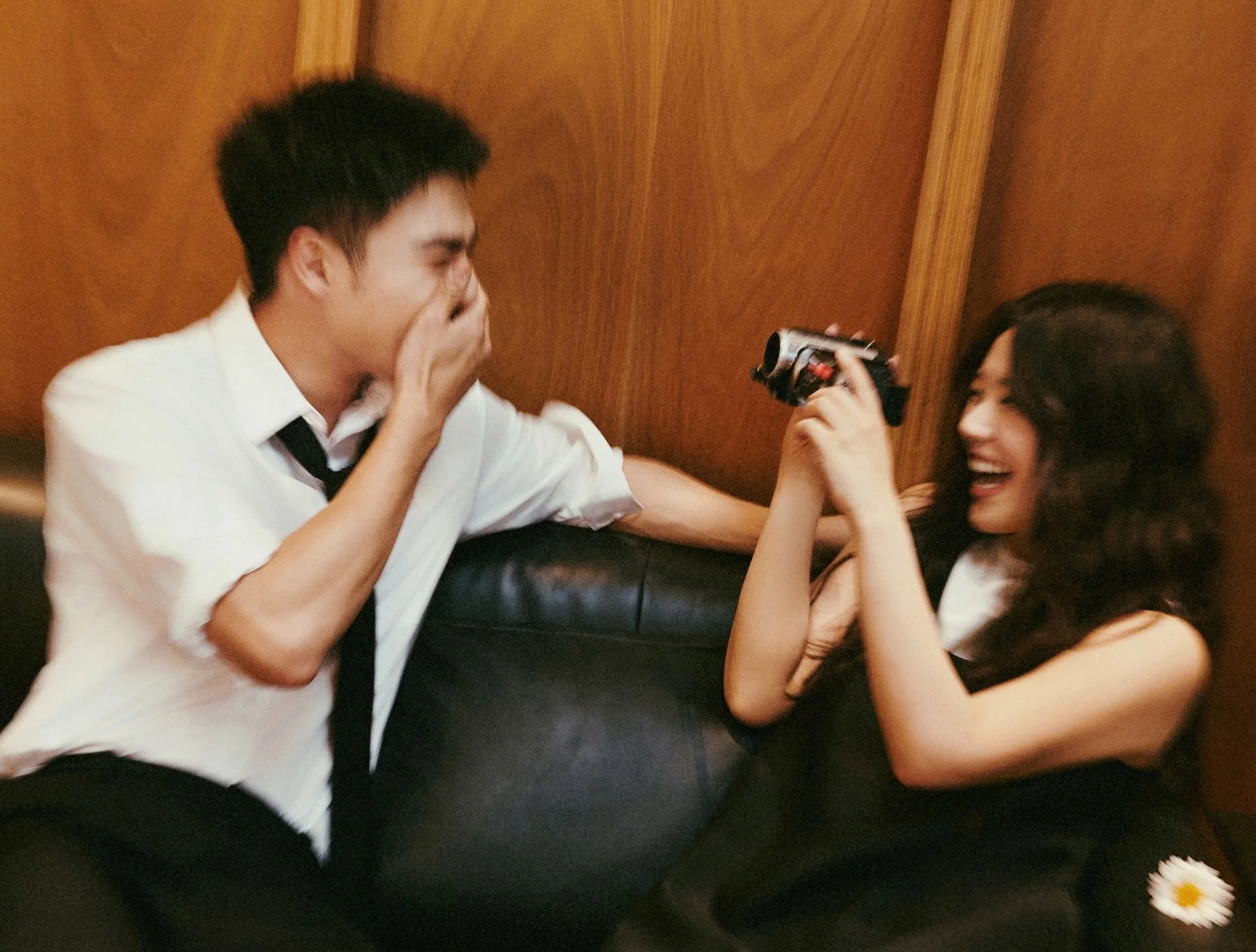
Experienced screenwriter Zhao Badou made his feature directorial debut with Crossing a Dawn (2026), a Beijing-set romance that unfolds entirely over one night. The film follows Xu Qiu (Sichun Ma), a sharp-tongued, pragmatic woman who gets catfished on a date, only to spend the rest of the night wandering the city with the wrong man—Chen Yuzhou (Edward Chen), a wide-eyed newcomer from a smaller city. Earlier this year, It was nominated for Best Film at the Beijing International Film Festival, and it deserves our attention.
The film taking place within 24 hours is its best decision. Zhao uses the constraint well, building a whole world inside a few hours without it ever feeling forced. Two people walking through Beijing at night sounds like very little, yet the film makes it feel like everything. Several smaller stories emerge within that walk—failed attempts at intimacy, interrupted hookups, dreams exchanged on street corners—and each one lands. The pacing drags in stretches, but the naturalism of watching two people move through a city together carries it through.
What Crossing a Dawn is quietly doing underneath the romance is more interesting. Beijing's housing prices come up more than once—Xu Qiu lives in a rental warehouse and dreams of a cozy home she can actually call hers. The film does not make a point of it; it lets the economic conditions take up space, present in every conversation about the future. Young adults with big dreams and little money is not a new subject, but Zhao earns it by grounding it in detail. The film understands that love and survival are not always separable questions, and that sometimes material reality wins.
The chemistry between Xu Qiu and Yuzhou is where the film lives. She does not believe in love at first sight—she tells him so, more than once—because love, as she sees it, has too many variables. Yuzhou's small-city optimism keeps bumping up against her Beijing pragmatism, and neither of them is entirely wrong. The film is most affecting in the final act, when Yuzhou cries over a small act of kindness from a dumpling shop owner. It is the kind of moment that reframes everything before it: even in a city where individualism thrives and living prices keep climbing, the community survives. Zhao finds the heart in everything without overdramatizing.
Sichun Ma and Edward Chen make their characters their own through their naturalistic performances and on-screen chemistry. It gives them a down to earth feeling while preserving uniqueness. Xu and Yuzhou’s chemistry goes beyond the romantic—they seem to genuinely understand each other despite the differences, and are not afraid to show it. Xu Qiu could be read as cold and demanding, but Ma makes her considerate underneath the bluntness. Yuzhou could be read as naive, but Chen gives him a quiet dignity in wanting to find love. Together, watching them feels less like a film and more like finding someone's old camera footage and pressing play.
Crossing a Dawn is a film about growing up and accepting that happily ever after is not a given—and finding something worth holding onto anyway. Zhao Badou finds warmth in places the city insists there isn’t any—that instinct alone makes him a director to keep an eye on.