
By Rohan Connolly
The scene is set. The suspect approaches. His car comes into view while an actor posing as a young girl opens the door. The man enters the house as she guides him into the kitchen, anticipating what the two might do together while her parents aren’t home. “I made cookies,” she says. “I brought condoms,” he replies. As the girl disappears into the hallway, another man enters wearing a beige suit with a bright blue button down, his hair slicked back, and a smirk on his face. He corners the suspect in the kitchen and invites him to sit down. He stretches his hands out in front of him, “You see how this looks, right?” And with that, the jig is up. The cameras descend, the crew enters, and the police surround the home. Chris Hansen (Robert Pattinson) begins to read out an incriminating series of chat logs between the man and the decoy until eventually, he asks: “What would have happened if I wasn’t here?”
Lance Oppenheim’s debut narrative feature Primetime (2026) is a chilling adaptation of Luke Dittrich’s 2009 Esquire article, “Tonight on Dateline This Man Will Die”. Dittrich’s story about the episode of To Catch a Predator that ultimately led to the cancellation of the show dives into the botched police investigations and the corruption within local departments regarding their involvement with the show.
In a typical episode of To Catch a Predator, Chris Hansen and his crew set up in an American town, making camp in a rented decoy house. Teaming up with the vigilante organization Perverted Justice, the crew lures local predators under the guise of meeting up with the children they believe they’ve been talking to online. Once cornered in the home, Chris Hansen exposes the predator to the cameras and to the country, leading him outside where a group of police officers tackle him to the ground and put on a big show of arresting him. All is well: The predator is taken care of, no children are harmed, the police get to celebrate another danger off the streets, the network gets good ratings, and the American public relish in the satisfaction of watching a pedophile get what’s coming to him, glad that he will never end up in our backyard, speaking to our children. This familiar format brought comfort to viewers, a weekly meeting in the town square where wrongdoers get punished and shamed by the public, all from the comfort of our living rooms. What Dittrich’s article exposed however, was the fact that justice was not being served at all, and the show was doing nothing but making evidence inadmissible, bringing more predators to small towns, and forcing the system to let them walk free after their cases were thrown out.
While the article focuses on the corruption and misdoings of the police forces that worked with NBC, Oppenheim’s adaptation works best as a companion piece, looking at the active role that the network, and Chris Hansen himself, played in failing to protect communities. Unlike a traditional biopic—if one would even call this a biopic—Primetime is completely unsympathetic to its protagonist. At the time of the show, Chris Hansen had taken on an almost mythological form, acting as a saviour to the families of America. In the film, his grandiosity is similar though much more menacing. Hansen, portrayed in a career-best performance by Robert Pattinson, is a boogeyman, lurking in the shadows, haunting these empty, uncanny houses.
Throughout the film, Hansen is pressured by executives at NBC to up his showmanship, in an echoed mantra of being “bigger than Lost!” His team brings on rookie actor, Dan Plum (Skyler Gisondo), to play “Decoy Dan,” who falls under Hansen’s spell as they and the rest of the crew begin their search for their White Whale, their predator that will carry them to the top of the charts.
As the search goes on, the characters get lost in their roles. Decoy Dan falls deeper into his childlike role, seemingly groomed by Hansen into becoming the perfect victim, the most delicious prey. Hansen, on the other hand, is framed as a predator himself, albeit a different kind of predator. As Dan masters his lines to lure pedophiles in, the camera cuts to Hansen, his nostrils flaring, his head nodding, as he watches Dan become the alluring prey, asking the anonymous predator to “just come on in and picture me naked” with a youthful smile on his face. The further the two men sink into their roles, the more the lines in their relationship blur. Hansen plays catch with Dan as they discuss the actor's future, they make eyes at each other during a candlelit dinner, and Dan struggles to tell the difference between the man he is and the child he pretends to be.
It’s in this grey area where the film thrives. Its exploration of humanity and the desperation that comes with trying to hold onto it is Oppenheim’s biggest accomplishment. Ultimately, the story of Chris Hansen and Decoy Dan is the battle for identity. While Dan does all he can to clutch onto threads of his normal life, Hansen’s hunger for his White Whale jumpstarts the loss of himself. He goes on a Dantean journey into Hell, but it is unclear whether he came out the other side. In his desperation, Hansen’s world begins to fracture at its seams during his mad dash to capture the final predator, calling into question who the real predator is.

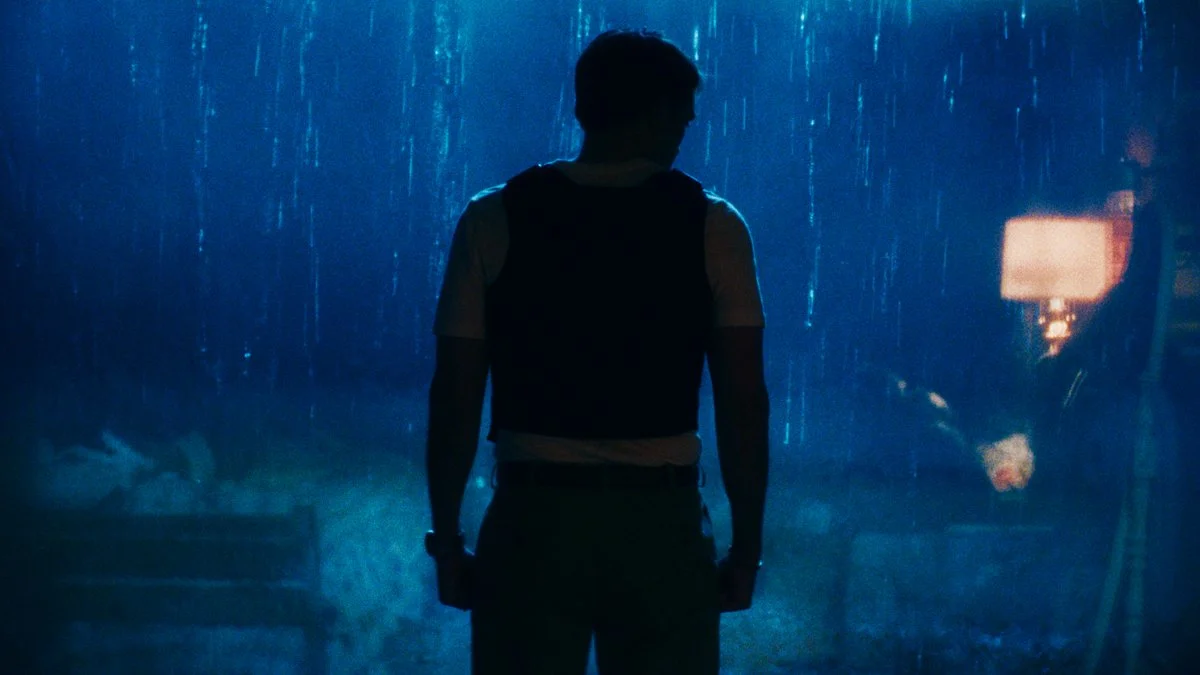
The film is dark, twisted, grimy, uncomfortable, and beautiful. The joint effort of Cinematographer David Bolen, Editor Daniel Garber, and Colorist Damien Vandercruyssen results in one of the most ambitious and unique visual experiences in any film of the past decade. The team of Primetime evokes the nostalgic feeling of watching the original show with the retro aspect ratio and colour palette, while twisting it on its head, understanding that nostalgia is in equal parts angel and monster. It can be fun to revisit old memories and media, but the feeling can quickly consume us and make us forget the horrors of the time. As we get lost in the story, the colours grow darker, more sinister, more overwhelming. What originated as a palette of beiges, pinks, warm oranges, and light blues, evolves into deep blacks, an array of cold blues, dark greens, harsh reds, and sickly yellows. As Hansen falls further into his madness the colours lose their humanity with him, growing colder, more hostile, less static.
Primetime is a film that will be remembered. From its masterful performances by Pattinson and Gisondo—not to mention Merritt Weaver as Hansen’s lead producer—to its hypnotizing visuals, and its enthralling mythos, the film is more than a conversation starter. Oppenheim is firing on all cylinders to deliver what could become a defining story of this generation. Using the very tools that made To Catch a Predator so addictive back in the day, Primetime lulls you in with the same thrills, and instead asks who the real predator is, even daring to incriminate its own audience. Primetime is a rollercoaster of emotion, spinning you around until you no longer know which way is up and whether your feet are really on the ground, or if they ever were, and asks you to consider what could have happened if Chris Hansen wasn’t here?