
By Rohan Connolly
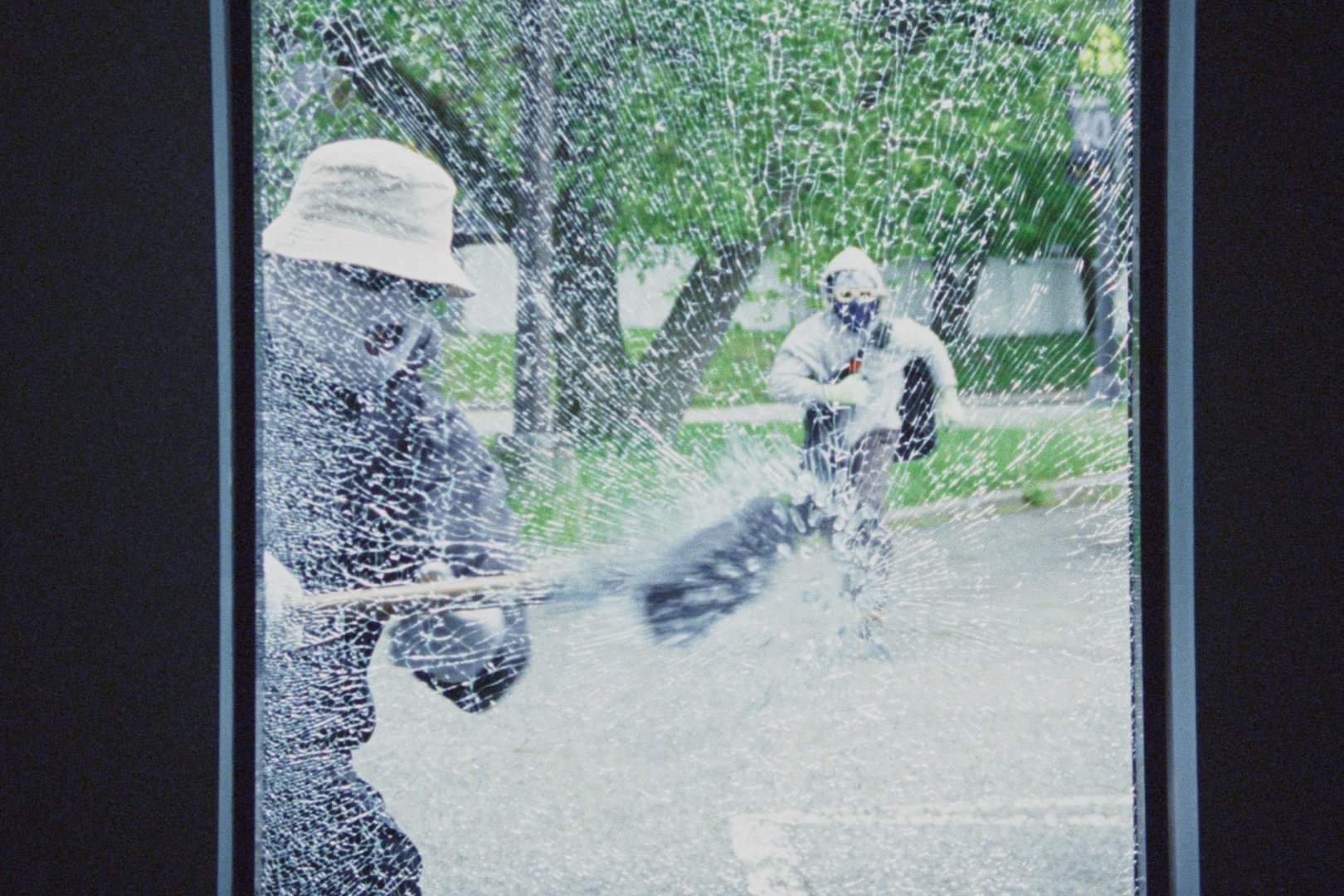
On his 15th birthday, Félix (Félix Munger), a young and impulsive outcast, dyes his hair bright blue, dries it with a clean white towel and, without a second thought, throws the stained towel into the washing machine as he rushes out the door to a party with his best friend. As the two set off on their night out, Félix’s mother shouts to his friend to not let Félix do anything stupid as she goes to put the laundry on. Toy Gun Bandit celebrated its world premiere at the Toronto International Film Festival this past September and it cemented Québécois director Rémi St-Michel as a rising star in Canadian cinema.
After he gets kicked out of a house party on his birthday, Félix and his friends go to a gas station and try their hand at buying a case of beer. Nervous of the cashier discovering his age, Félix shields his face as he enters the store and, mistaking him for a thief, the employee tells him to take whatever he wants. After helping himself to a case of beer and approximately 200 dollars from the register, Félix and his friends speed away with adrenaline coursing through their veins. After bragging about his robbery to Dave (David Beaudoin), an older man on probation, Félix is lured into a plot to rob a local bank alongside Dave and Sara (Sara Montpetit), a homeless woman struggling with a drug addiction. The three wave around toy guns in the bank and somehow manage to pull it off. Félix, desperate to keep a good thing going, convinces them to continue knocking down more banks as the mess around them gets bigger and bigger until it seems the only way out is to keep digging the hole deeper.
Toy Gun Bandit follows in the footsteps of the Safdie brothers’ Good Time (2017) as a colourful, high-stress, chaotic film with what seems like no escape from the impending disaster. Munger as Félix is anxious to keep the good energy going, not wanting to disappoint the adults who have grown to like and even rely on him, and his twitchy performance is grounded in his desire to do and be good. Beaudoin is magnetic as Dave in a way that hypnotizes both the viewer and Félix into wanting his approval despite radiating danger, and Montpetit is subdued, sated, and delicate in her portrayal of Sara, knowing what she’s doing is bad for her but unable to leave.
What sets the film apart from other crime-thriller films is the beating heart at its core. None of its characters (bar a few) actually want to be there, doing what they’re doing. Each one knows they’re only making their situation worse, that they’re teetering on a point of no return. Félix, as the protagonist, is the biggest example. His youth and naivety is repeatedly taken advantage of, as is his desire to fit in. He would rather do anything else than hurt another person, but what happens when the gun in his hand is no longer just a toy? The film pushes Félix to his limit and forces him to draw a line in the sand: Will he stand his ground or will the dire circumstances force him to compromise his own humanity?
Ultimately, Toy Gun Bandit’s biggest strength is its humanity. It can be easy to get caught up in the thrill of watching these characters get away with robbery, see them outsmart the law, enjoy their riches, and forget the fact that after they pull it off, life goes on. When you rob a bank to pay one bill, you have to somehow come up with the same amount of money the next month. The film is more interested in the aftermath, following characters down the slippery slope until they reach the bottom, and watching as they work their way back to the top.