
By Emma Batterman
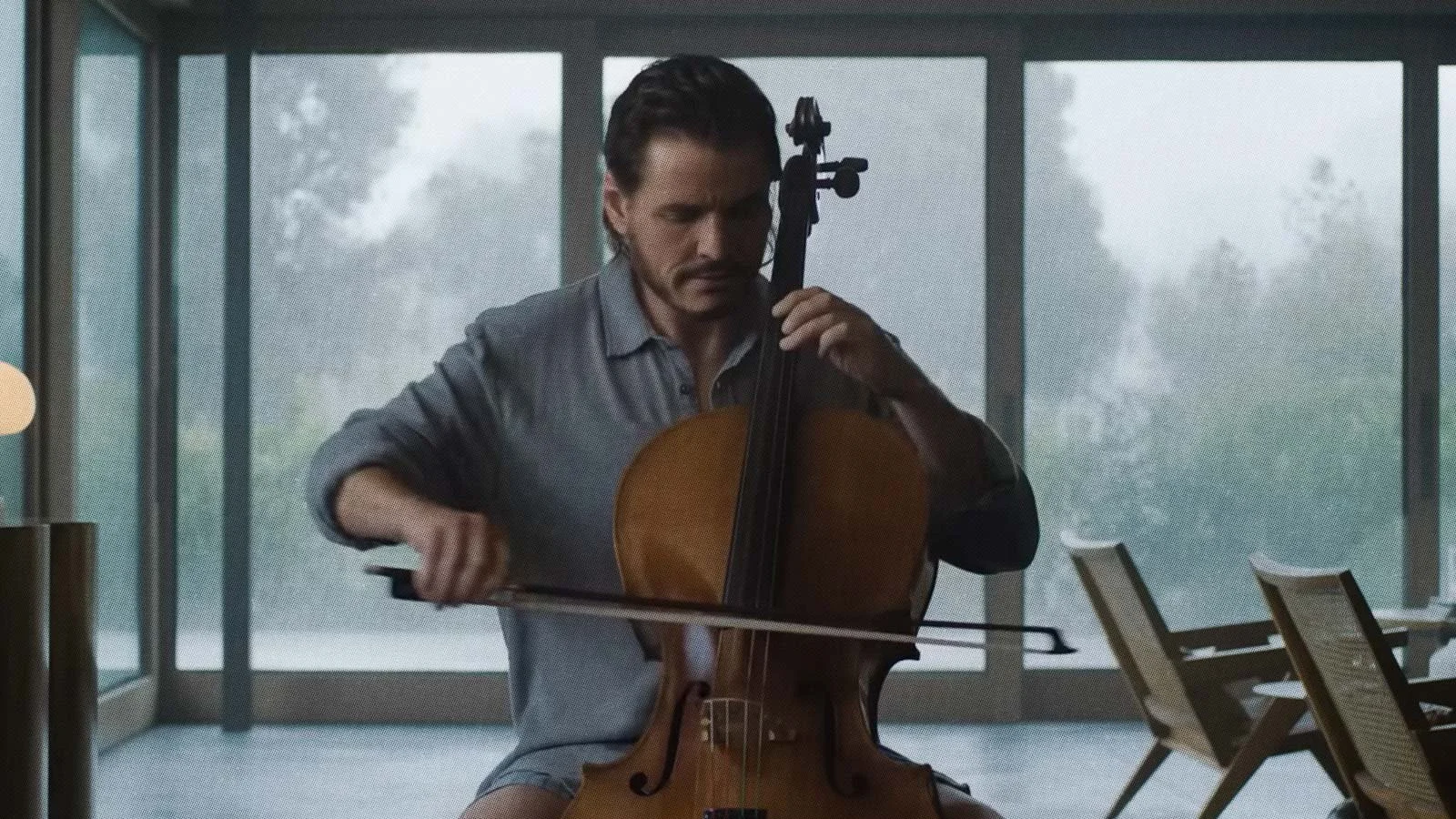
Tony Gilroy has once again taken a seat in the director’s chair for the first time since 2012's The Bourne Legacy. Fresh off the success of Star Wars’ Andor (2022-2025), where he reigned as showrunner for the last five years, the writer-director has stepped back from the grandeur of political theatre and delivers a wistful melody in the form of his latest film, Behemoth!
Teaming up with fellow Star Wars veteran Pedro Pascal, Gilroy slows down the tempo as we follow protagonist Alex Serian, a renowned cellist. Spanning almost 20 years, we’re granted nonlinear glances of Alex’s past and present. He hops from orchestra to orchestra, city to city, never staying long enough to form lasting relationships. The world flocks to him anyway, despite his desperate attempts to shut them out. Alex is a prodigy, he was playing the strings on late night talk shows when he was still learning how to read. He's sought-after and loved—perhaps too much. His brother (played hilariously by Will Arnett) chases after his coattails while his parent’s musical birthright suffocates his perceptions of personal accomplishment. With ephemeral glimpses of his life dotted by overtly emotional confrontations, we watch the musician’s world slowly tilt as he’s forced to face his legacy of transitory connections.
Pascal portrays Alex with tight lips, unspoken words swallowed down in the film’s rare moments of human exchange, delivering an expertly understated performance as he’s paired with an explosive array of characters who desperately push against his grim withdrawal. Gilroy balances this delicate melancholy with admittedly engaging moments of melodrama. From Eva Victor to Olivia Wilde, the supporting cast provide a welcome levity from the weight of genius that burdens our protagonist. Yet, Alex’s ultimate moment of reckoning comes across as a contrived attempt at humanizing a restrained and exploited man. Losing the subtlety crafted by slowly slotting together the nonlinear puzzle pieces, the sickeningly sentimental redemption feels more compulsory than naturalistic—a surprising conclusion, considering Andor’s primary strength of staggeringly well-written payoffs.
It would be remiss to discuss the film without mentioning its monumental score. The scale of the film’s title lies in the operatic melodies. Featuring the work of nine different composers, the music dons both the non-diegetic emotional set pieces and the orchestral brigade of flying fingers and rosin-soaked bows. Words are replaced with sheet music while the on-screen instruments provide a grounding repetitional narrative flow. Pascal also deserves some credit here. Despite the actor admitting this role was the hardest thing he’s ever done creatively, the camera doesn’t shy away from the neck of his cello as the actor’s fingers press against the strings, moving the bow in synchronicity with the score. He’s able to lend an unquestionable believability to the unending musical prowess that engraves the narrative with a flurry of beautifully crafted refrains.
It’s hard to sideline the qualitative success of Andor when discussing Gilroy, who considers the show “the most important thing [he will] ever work on,” according to an interview with TVLine. It’s even more difficult not to compare this film against his screen-writing repertoire of political thrillers, from the Jason Bourne saga to Michael Clayton (2008), but Gilroy has always possessed an uncanny knack for weaving surprisingly moving character arcs between threads of espionage and high-tempo action. Perhaps the lack of background noise forced him to peel back the curtain of melodrama a little too far here. Nevertheless, despite a disappointing finale that leaves any emotional ambiguity by the wayside, Behemoth! proves to be an overall elegant thing. With an excellent performance from Pascal, a grandiose orchestra, and a strikingly quiet emotional build-up, Gilroy showcases his dramatic chops in a symphonious examination of the prodigal son.