
Girl in the Night: For the Misfits
By Karen Reyes
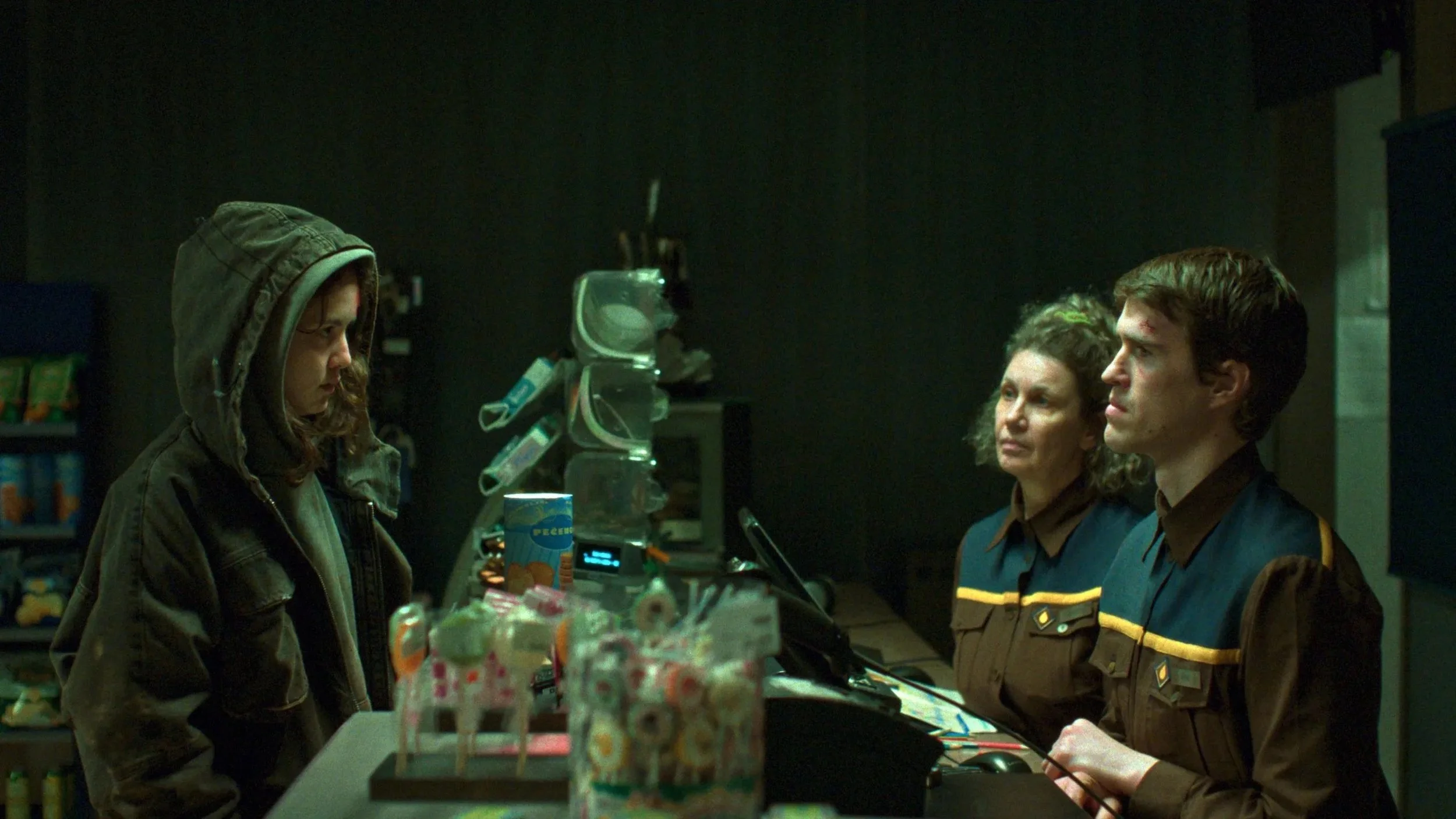
For the awkward misfits and those of us obsessed with the delightfully painful encounters of our youth, Girl in the Night follows a bored-with-his-life Rok (Urban Kuntarič) as he inserts himself into the late-night vigilantism of a young woman (Lara Wolf) who wanders the city in search of crimes to stop. Luka Marčetič’s second feature film premiered at Fantastic Fest 2026 and crafts a poignant and somewhat strange world filled with quirky, deadpan, and intensely emotional characters. Rok’s only source of excitement is stealing the occasional chocolate bar from the gas station where he works, so when the young woman appears one night, mysteriously beat up and short on words, he decides to steal her bike in a roundabout attempt to add some excitement to his life—and to keep running into her.
Every aspect of this film makes it hard to look away for even one of the 94 minutes it gives us. The nighttime setting gives way to one of my favorite details of the film: the beautiful, colorful lighting. The movie and TV industry is overrun with muted, dark color palettes and lighting that makes it impossible to see even daytime scenes. Girl in the Night, however, uses the night to its advantage: blue and green lighting emphasize the monotony and mind-numbing boredom Rok feels at work, and gorgeous orange and yellow hues spread across faces and combine with waxing and waning instrumentals to raise the tension in intense physical scenes. The bright pinks and blues of the neon lights at the food truck they visit only make the film that much more visually compelling.
Lev Predan Kowarski’s cinematographic eye elevates the captivating, offbeat nature of the film. Silhouettes against brightly lit backgrounds draw a focus to the physical acting, while static camera work, playing with height and unusual angles, and environmental framing make each shot feel like a breath of fresh air. The few and far between camera movements are intentional and directional, leading the viewer into the next scene and creating a masterpiece of visual storytelling that doesn’t rely on expository dialogue. Instead, we are propelled through the plot via action, emotion, and the set-up of each shot.
That’s not to say the dialogue isn’t impactful—deadpan, dry line deliveries give the film a slight Wes Anderson feel that leans into the subtext of the matter-of-fact happenings that would otherwise draw dramatic outbursts from the characters. For example, the lack of reaction when characters get hurt creates a surreal world where young people believe the worst danger isn’t violence, but boredom. The clipped sentences carry a beat that holds your attention and contributes to the “show don’t tell” nature of Marčetič’s storytelling along with the subtle and powerful performances of the cast.
Urban Kuntarič plays Rok with a quiet intensity, delivering his feelings through emotive eyes and purposeful actions. Though not always making the best choices, he counts down before doing things that scare him or feel rebellious, signaling the boyish youth still inside him as he seeks out excitement. As the young woman, Lara Wolf captures fearlessness and bravery as she throws herself into dangerous situations, while also battling with vulnerability as she slowly allows Rok into her otherwise solitary nights. The emotionally charged performances are balanced with Kremen’s (Rok Roudi) often comedic dynamic with Rok in their shared home. While monotone line delivery is typically the opposite of what we look for in a film, Girl in the Night uses it to its advantage and injects a wonderful absurdity into its characters.
In the end, this is a love letter—to youth, to the eccentric, to nonsense, to the odd ones out. It’s a film that brings forth the essence of being young and figuring things out, even if it’s through awkward, half-intentional crime and subsequent vigilantism to make up for it. Enthralling the viewer from beginning to end, it’s sure to have you yearning for your own surreal, nocturnal adventure.