
By Rohan Connolly
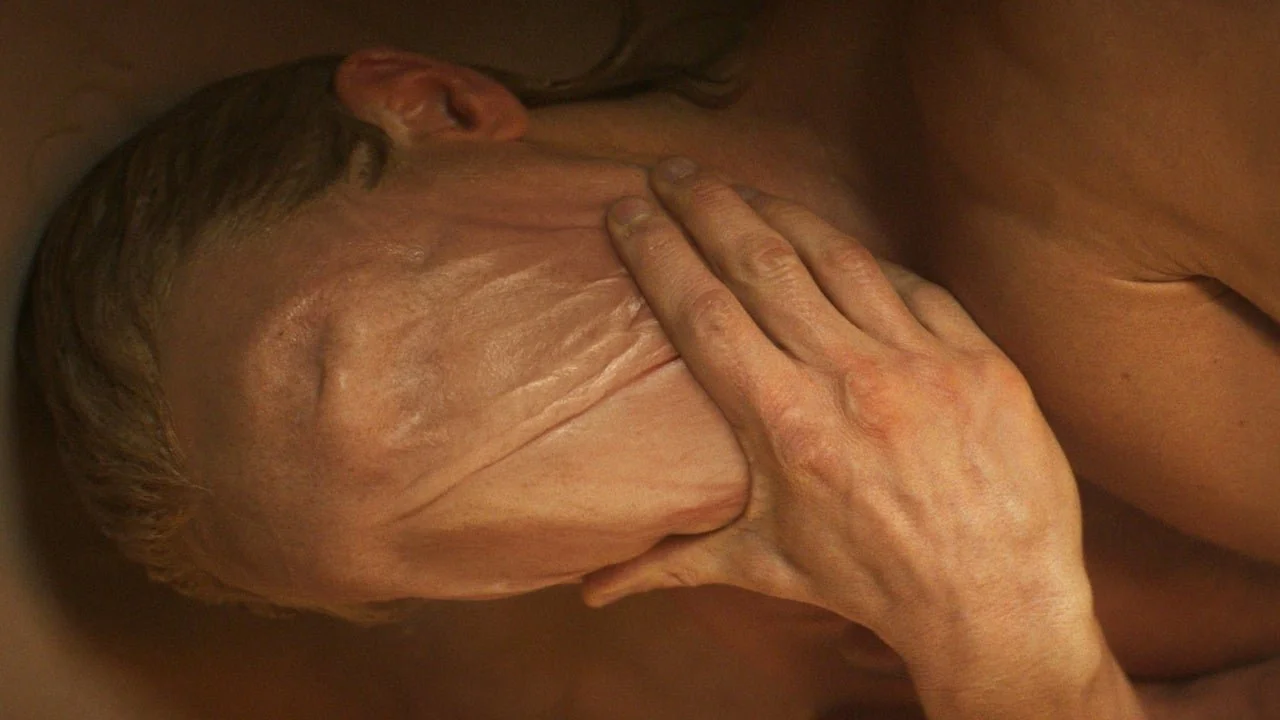
Clayface (2026) is exactly what I expected it to be. The film, directed by James Watkins, is the latest instalment of the DCU and is the franchise’s first time dipping their toes into Cronenberg-esque body horror but hopefully not the last. The film follows up-and-coming movie star Matt Hagen’s (Tom Rhys Harries) descent into villainy after a run-in with mob boss Marcos Szabo (David Dencik) that leaves his face severely disfigured. Harboring resentment towards Szabo, his team, and the world that abandoned him, Matt, determined to get his life back, volunteers as a human test subject for Dr. Caitlyn Corr’s (Naomi Ackie) regenerative nanocell technology. After Dr. Corr reconstructs his face, Matt isn’t satisfied: He wants more than just his life back, he wants those who took everything from him to suffer the consequences. An overdose of the nanocells causes Matt to become the monster that is Clayface, able to shapeshift at will and mold his face as he pleases.
While not perfect, the film is excellent where it matters most. Clayface’s special effects are incredible. Matt’s face droops, melts, bleeds, bubbles, and molds itself into all kinds of shapes in ways that turn the audience’s stomach. Despite the film's low budget, Watkins and his team knew exactly where to focus their priorities, bringing to life the horror that is Clayface. Blending both practical effects and CGI, the film immerses you in the grotesque outcome of Matt Hagen’s search for vengeance.
Matt’s quick rise and long fall is a perfect study in centering a villain in a story. We feel sympathy for this struggle. As someone whose life cannot be lived without the face that made him, he is angry, hurt, defeated at how quickly everything can go up in flames. We understand the pressure to fit into certain molds, the need to be appealing, to draw people in, yet his decisions in the latter half of the film, as he indulges in his rage, are unjustifiable and undoubtedly evil. His increasing body count, his terrorizing Gotham City, and his behaviour towards Caitlyn are understandable, yet never supported. It’s fun to see Matt stalk his prey, to indulge in the dark side that wants to see him get his revenge, but that feeling is quickly upended when he sets his sights on a character we’ve grown attached to.
The film struggles in the first half, with awkward, stilted writing that proves a hindrance to the development of the relationship at the core of the story between Matt and Caitlyn. The romance is carried mostly by the chemistry between Harries and Ackie rather than the script itself. But once it gains its momentum, Clayface is a force that cannot be stopped, reaching a boiling point during an absolutely energetic scene in the nightclub Vesuvius, which is arguably the best sequence in the entire film.
Clayface is an exciting and visceral film. Getting to see a comic book adaptation be less confined by the rules of typical superhero movies is riveting. DC Comics as a company is aware of the benefits that come with prioritizing engaging characters and strong stories over bland money-grabs, notably with the work published under its imprints Vertigo and Black Label where some of its most iconic and imaginative stories have come from. Whether it’s in the realm of comics or film, this prioritization of fitting a format to the story allows for creators and audiences who might not have looked twice at a comic book movie to reconsider. I commend DC for their decision to lean into genre filmmaking, and I hope Clayface teaches them the right lessons.