
By Emma Batterman
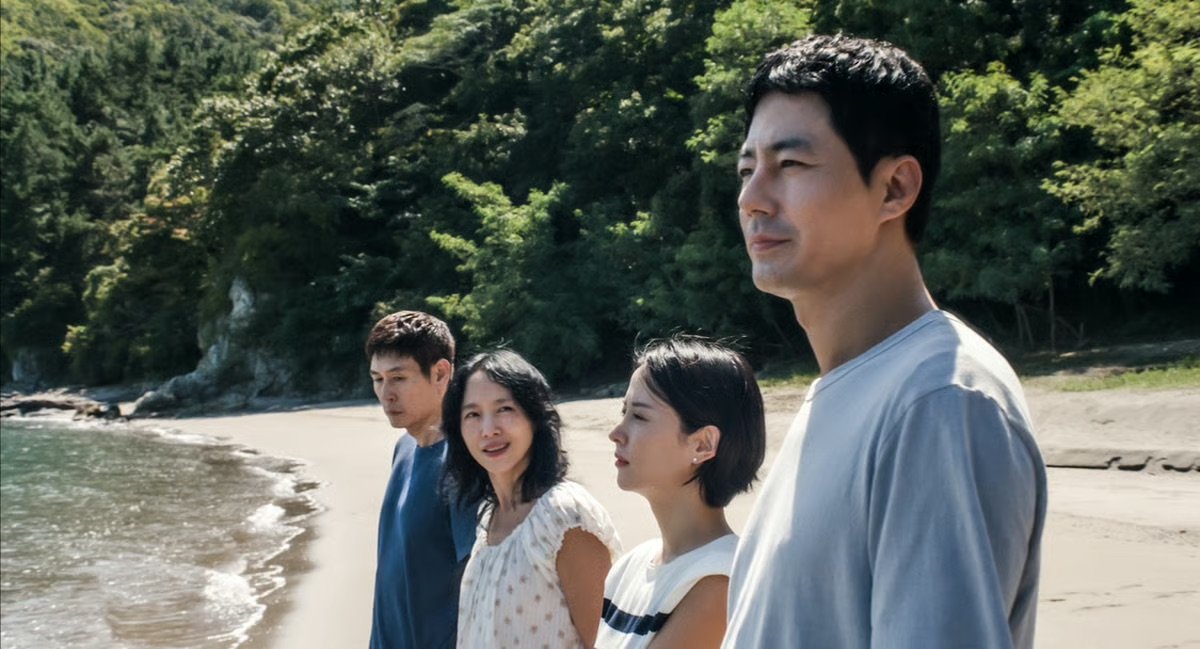
In 2009, Korean motor company KG Mobility (formerly Ssangyong Motor) laid off over 2,000 workers, upwards of 43% of its workforce, after private equity stripped it for parts. As the Metal Workers’ Union struggled through their historic 77-day strike, riot police forces honed in on the group while they occupied the factory. Violence erupted, employees were beaten, property was damaged, and the Supreme Court intervened after the conglomerate rubbed salt in the wound, suing the union for 15 billion won in damages (about 11 million USD). “Until that point in time in Korea, labourers’ rights were widely accepted,” claims Director Lee Changdong, referencing the protest’s impact in an interview with The Guardian, “however, afterwards, the basic rights of labourers changed; to the public, they couldn’t be seen as more important than market profitability or corporate competitiveness.” It’s here, in the blurred aftermath of laborers forced to their knees, where Lee’s latest film, Possible Love (2026), takes shape.
Rookie documentarian Yeji (Cho Yeojeong) has set her sights on the laid off workers of SP Heavy Industries, a fictionalized variant of Ssangyong Motor. Miok (Jeon Doyeon), Hoseok (Sul Kyunggyu) and their young son Cheol (Jeong Seop) make up the stars of Yeji’s film. Similar to Cho’s role in 2019’s Parasite, Yeji’s privileged life as the wife of wealthy business inheritor Sangwoo (Zo Insung), clashes with the subjects of her documentary. While Miok is more than happy to please the well-meaning filmmaker, she pokes at her expensive shirt in polite distaste. “You’re interviewing laid off workers,” she points out during a smoke break outside the SP Union building. Yeji silently nods in reply, her face slightly twisted in shame. It’s these subtle class disparities that form the crux of Possible Love—not only questioning the profit-incentives that led to the mass layoffs, but the ethics of pointing a camera at it.
Lee’s novelistic tale of wealth disparity is certainly not a groundbreaking topic among modern-day filmmakers, perhaps even less so in South Korea. Yet, he doesn’t dwell on the dualistic right-and-wrongness often associated with the shrunken middle class. What separates Possible Love from Park Chanwook’s darkly cartoonish violence in No Other Choice (2025) or Bong Joonho’s outlandish dystopia in Snowpiercer (2013) is the aching humanity of each character. Yeji, despite her expensive shirt and questionably apathetic husband, deeply cares for Miok and Hoseok’s story. Cho does a particularly fine job balancing her character’s tearful sympathy and voyeuristic desire to capture their pain on camera. Her heart’s in the right place, to the couple’s eventual dismay. Of course, the obvious tells of upper-class lifestyle are still there, sometimes laughably so. From Sangwoo’s personal servant at his lavish beach house to Hoseok's adjustment under the surveillance of a younger supervisor, the subtleties don’t seem to extend to their material circumstances. Nonetheless, Lee delivers a layered portrait of two opposing families who struggle towards a personal sense of freedom, even at the expense of one another’s happiness.
Lee’s excellent character building, however, does not justify the extensive runtime. Clocking in at two hours and 45 minutes, the film feels nothing short of a drag as it inches towards the finale. There’s a palpable lethargy in the way it quietly crawls forward, the devastating character conflictions slowly losing their impact as your knee bounces restlessly in your seat. Despite the powerful performances and script behind them, the prize for enduring the nearly three hour film is the same conclusion we’ve seen before: the class war is killing us. Still, there's room for absolution due to Lee's ability to elegantly connect the verbose resolution to his strikingly well-rounded characters, allowing Possible Love to deliver on its nuanced criticism despite its weighted runtime.