
By Rohan Connolly
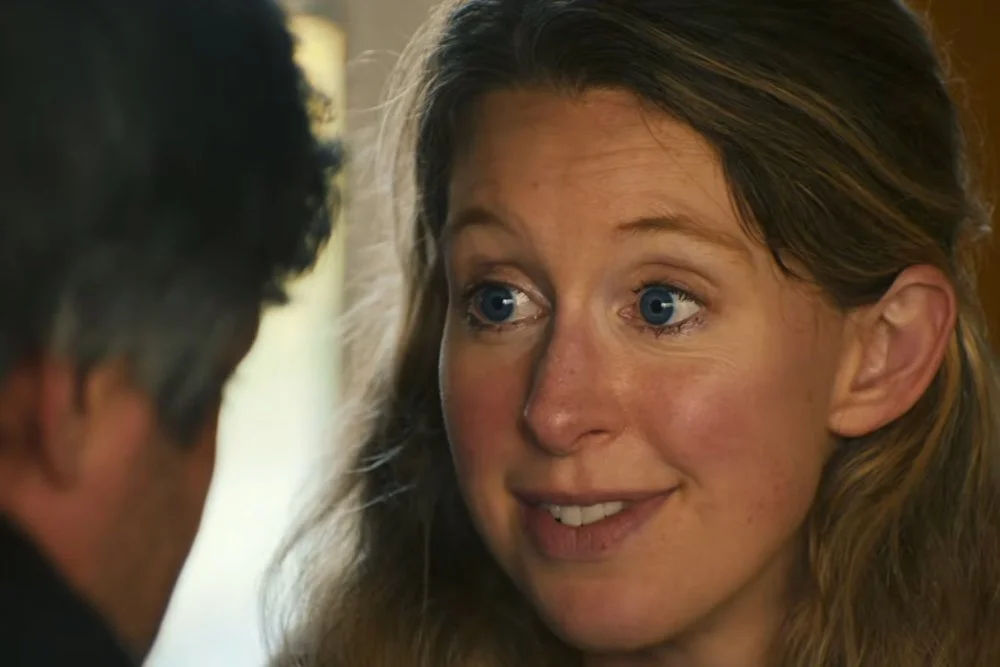
You Can See Everything (2026) is by far the most ambitious and unhinged film of the year. The documentary, co-directed by Nathan Fielder and Lance Oppenheim, is also the most difficult to discuss. Originally following Fielder as he is allowed exclusive access to notorious Silicon Valley scam artist Elizabeth Holmes, her partner Billy Evans, and their family in the month-long lead-up to the beginning of her 11-year prison sentence, the film slowly unravels to become something so much more.
The first half of the film is relatively tame, given its already ludicrous circumstances. Fielder converses with Holmes, Evans, and Holmes’ parents, he accompanies them during their daily routine: He watches them from afar as they walk on the beach, he sits next to them as they make breakfast, he lingers awkwardly outside the door as they shower. Fielder, and the audience, sees everything. He attempts to answer the question, through this peek behind the curtain, of if Holmes truly understands what she did wrong, if she is the criminal mastermind the press makes her out to be, or if she is genuinely unaware of the damage she has done.
The second half of the film takes place after Holmes goes to prison, where Fielder loses his all-access pass to her. He must trust the information coming from Holmes’ partner based on the relationship he has built with the family. But can he? The web that Fielder has weaved of his journey with the couple begins to unravel over the course of the 2 years between her sentence and the film’s release, flipping the viewer in every direction until no one, not even Fielder and the rest of the crew, knows what the truth is anymore.
You Can See Everything is absolutely enthralling. It is the ultimate car crash that you can’t look away from. As soon as you think you know what’s going on, Holmes, Evans, or Fielder himself rips the rug right out from under you. It does not underestimate the intelligence of its audience, it refuses to serve answers on a silver platter. Bar from briefly explaining how Holmes got to where she currently is—in a beige jumpsuit in Bryan, Texas—the film trusts you to keep up, and encourages you to stretch your understanding of the medium to immerse yourself in the full story.
Filled with tight close-ups, tense music, and oppressive quiet, the film is overwhelmingly claustrophobic. For the nearly 3-hour runtime, it suffocates you in stilted conversations and the weight of words left unsaid. Fielder and Holmes seem to repel each other with the expected dynamic of an unstoppable force in Fielder and an immovable object in Holmes, though they never feel truly at odds. Their ultimate collision is inevitable but even when it happens, it does not go as expected.
In a conversation between Fielder, Holmes, and Evans in the first hour of the film, Fielder tries to understand Holmes’ perspective. She believes she has done nothing wrong and lied to no one when her company Theranos stated that their blood-testing device “can” run any test. In an attempt to communicate what Fielder knew the public understood by this wording was that it was “capable” of running any test it had access to—not any test that existed. The title of the film and the experience itself leaves you wondering, can we ever see everything, or were we fooled into thinking we could? And is this film only capable of showing us the information available?