
We Are Aliens: Friendship and the Scars It Leaves
by Mars Dalys
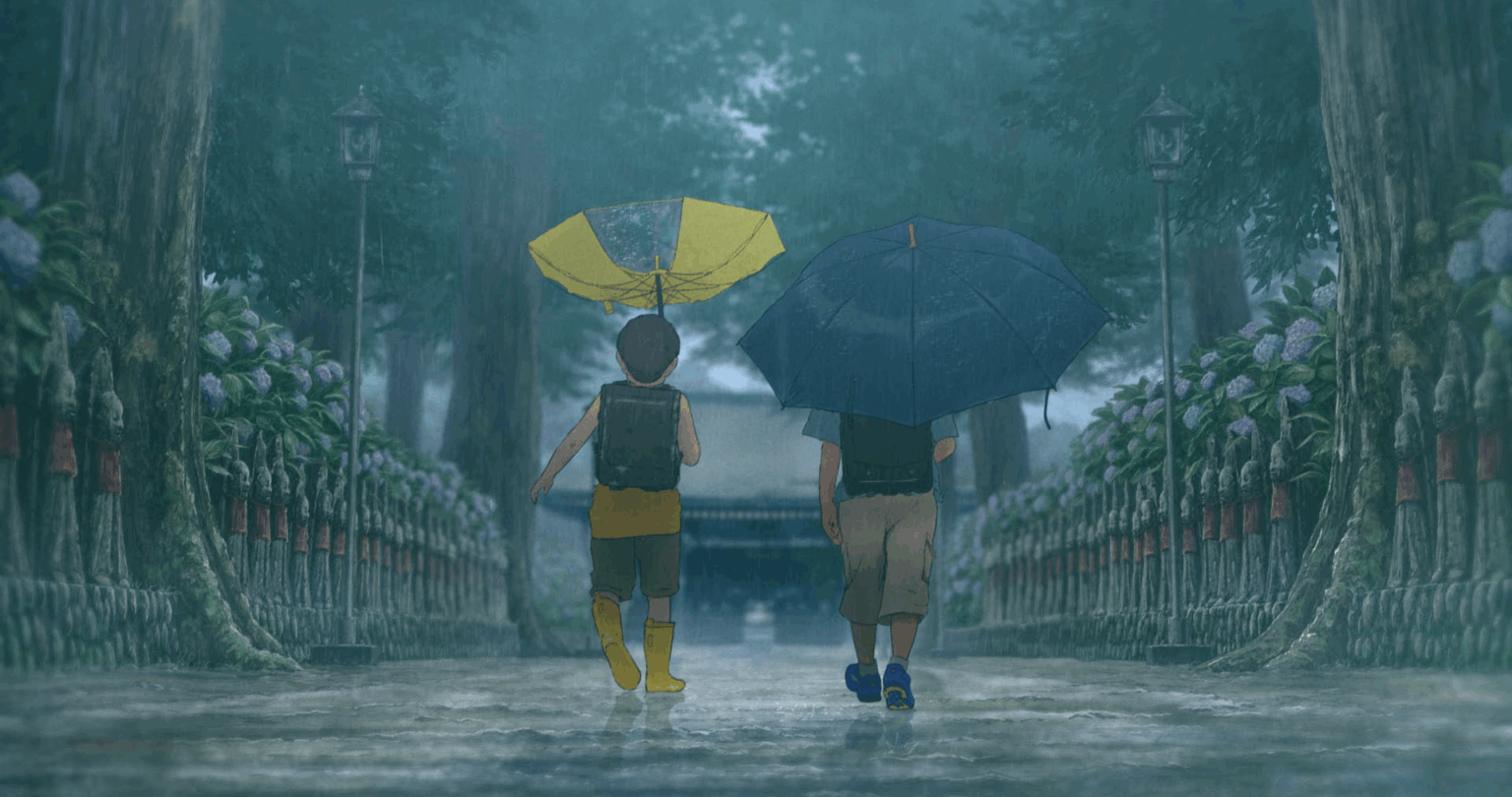
Who hasn’t stared at the ceiling for hours, late at night, replaying an embarrassing memory from middle school over and over again? We Are Aliens (2026) takes this feeling and pushes it to its limit, and, as someone who tends to get stuck in the past, I immediately felt like the film was made for me.
Tsubasa and Gyôtarô met at school and friendship quickly blossomed between them, tinted with the vibrant innocence of 8-year-olds. Yet, when one of them betrays the other, their lives take a drastic turn that follows them well into adulthood. 30 years later, they meet again as the bitterness that never left finally boils over.
Japanese Director Kohei Kadowaki builds a dual narrative that follows both Tsubasa and Gyôtarô’s perspective, letting us feel every crack before their relationship reaches the breaking point. As miscommunication leads to bullying, and love quarrels to irreparable fights, the fragility of human bonds reveals itself. The film ends in a melodramatic thunderstorm, yet the aim is not so much to create tear-jerking sequences as to explore its subject to its very core. The title, We Are Aliens, is a touching and clever callback to the film’s themes of estrangement and invites the audience to consider our own human nature long after the screen goes dark.
The romantic storylines act as catalysts for change without being omnipresent. Like the other narrative elements, they are handled with respect for their complexity and are not oversimplified for the sake of the audience, as is frequently the case in films involving two teenage boys fighting over a girl.
For his first feature film, Kadowaki closely supervised each part of the creation; while working with the screenwriters and editors throughout the process, he also participated firsthand in the animation. We Are Aliens curates a distinct visual style with stunning realism due to the use of rotoscoping, an animation technique consisting of tracing over live-action footage frame by frame. At times bone-chilling when the characters are in anguish, and warm as a summer day when things are going well, it is one of the most striking animations I saw this year. Backgrounds are crafted with a care that makes you want to pause the film to look closer, each flower looking like you could hold it in your palm. Faces of the characters sometimes distort and warp, adding expressiveness and dipping into surrealism when the situation needs it.
The only weakness of the film resides in its slow rhythm coupled with its repetitive story beats. The shots unfold at their own pace, sometimes a bit too slowly to be fully engaging, and reliving the same events twice, albeit from a different perspective, creates a sense of déjà vu. While revisiting these moments has value, it results in sequences that drag narratively.
However, it is a work that affirms a distinct identity and leaves a lasting impression on its audience. It made me eager to discover the team’s next projects and the director’s future ideas! But, before that, it is worth following the journey of We Are Aliens: After screenings at Cannes for the Director’s Fortnight and at Annecy for the Feature Film Competition, it is now heading to Melbourne and Ottawa. Audiences all over the world will be leaving the theater asking themselves the same question: Am I an alien?