
Tana: Music as Heritage
by Romane Tissandier
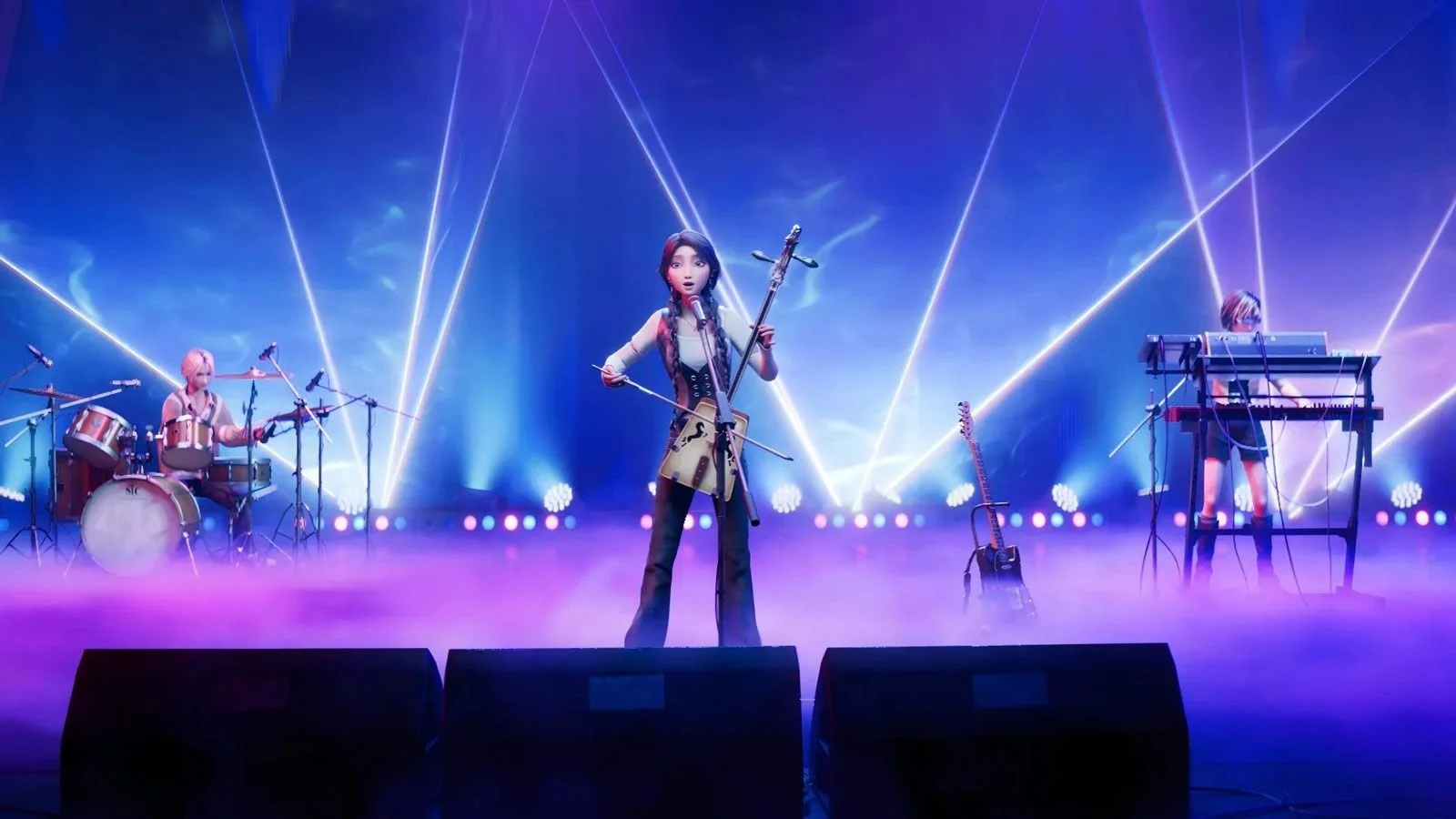
When her father falls ill and a music competition jury criticizes the lack of purpose in her music, Tana leaves Shanghai and returns to the Inner Mongolian Grasslands where she grew up. She learns to build a different relationship to her art with the help of a mysterious fiddle fairy and reconnects with the memories of a land that shaped her creativity more than she realized. Ji Zhao and Ke Er Zhu’s Tana premiered as part of the Official Selection at the 2026 Annecy Festival.
Tana displays the quality of Chinese animation, combining impressive technical achievements with smart creative choices. Using mostly 3D animation, the level of fluidity and detail in each frame exceeds the limits often associated with this style, as it is adapted to what the story needs and not the other way around. The film allows us to admire the Mongolian landscapes, rendered in all their majestic vastness. The steppes, mountains, and fields surrounding Tana become powerful presences which are more than beautiful backgrounds—places that resonate with the stories of her ancestors.
A few musical sequences resort to mixed-media animation, incorporating 2D art and a more abstract drawing style. The changes from the main style develop a singular visual identity in direct conversation with the rest of the film. They allow the audience to promptly understand Tana’s feelings as she is absorbed by the performance of her art.
Along with its finely crafted visuals, Tana’s most memorable element is its soundtrack, composed by Guo Haowei. Incorporating several traditional instruments and techniques such as the morin khuur and throat singing, it pays a touching tribute to traditional Mongolian music. Progressively, Tana dares to enrich her own music with her musical heritage without sacrificing one for the other, as she realizes embracing her individuality is not opposed to the necessity of community in the creative process.
Although it is written in a quite predictable manner, Tana’s relationship with her dad is a moving story of love and transmission, as she recalls how much he influenced her passion for music. His illness confronts Tana with the urge she had to leave his side when she was younger, shedding a new light on her memories with him. Exploring with great tenderness the importance of artistic influences between generations, Tana reminds the audience of the beauty of keeping one’s culture alive through art and self-expression.