
Lucy Lost: The Journey to Belonging
by May Renault
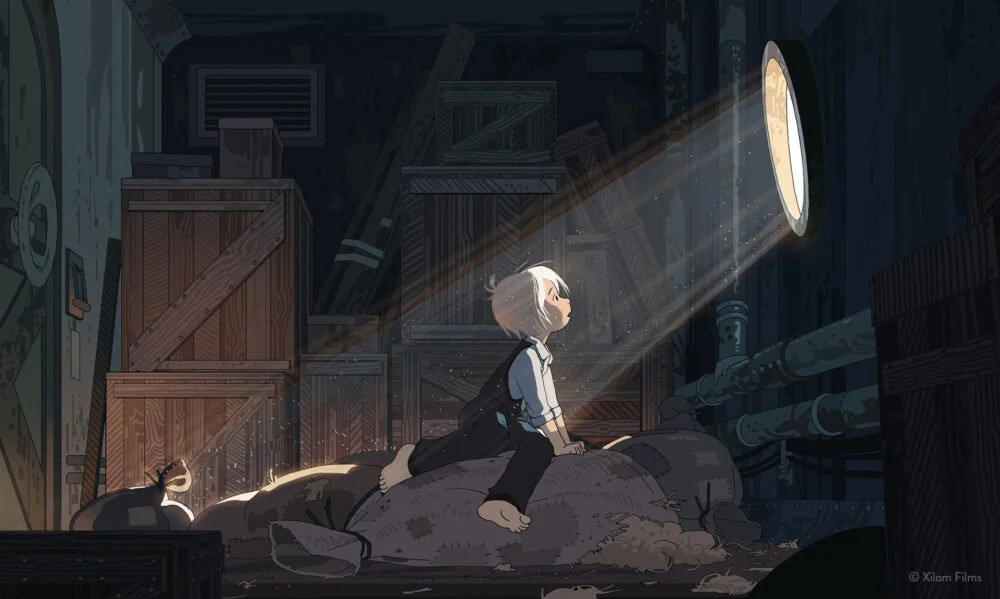
Tales of childhood and the breaking of innocence are always an emotional ride for those sensitive to the exploration of loss and change in film. With a Ghibli-esque soul in its story and artstyle, Lucy Lost paints a beautiful mosaic of everything a coming of age story on a tragic historical background should be.
Premiering at the Cannes Festival in May, Lucy Lost was a part of the official competition at this year’s Annecy Festival. An adaptation of Michael Mopurgo’s novel Listen to the Moon, Lucy Lost is a French 2D film that tells the story of a young girl living in the far-off British Scilly Isles with a fishermen family of three. Sick and quiet, Lucy is treated differently from the other kids and has no recollection of her early life. As the Great War rages down on the European continent, Lucy encounters a girl her age named Milly who will help put the pieces of her early story back together so she can find her place in the world.
Unbelievably well written, Lucy Lost deals beautifully with the experience of war through the eyes of children. It blends ignorance with acceptance, and subtly shows how the violence of bombs threads its way into their naivety to tear it apart against their will. Taking place far away from the main continent, the plot settles for a different approach to the first World War than what audiences may be used to. We explore how remote villages were affected through the drafting of the Isles’ teens, older brothers of the kids and prided sons of the fishermen. We learn how the Scillonians got their news of the ongoing fights through the sea and how that influenced their opinions and neighbor arguments, how war reached the children through the witnessing of aerial fights of the military planes. All of the plot points are used to form an anti-war mosaic nuanced by a clever exhibition of human nature.
Alongside colorful backdrops and a well thought of composition for each scene, what really made Lucy Lost such a wonderful piece of fiction to me was its music. The score elevates every scene, from the quiet moments of doubts Lucy shares with her family to the dramatic changes she goes through as she gets closer to finding out about the truth of her past. The music acts as a companion throughout the whole story to the viewer the same way Milly does with Lucy, and holds out a hand to grab onto as things get tougher.
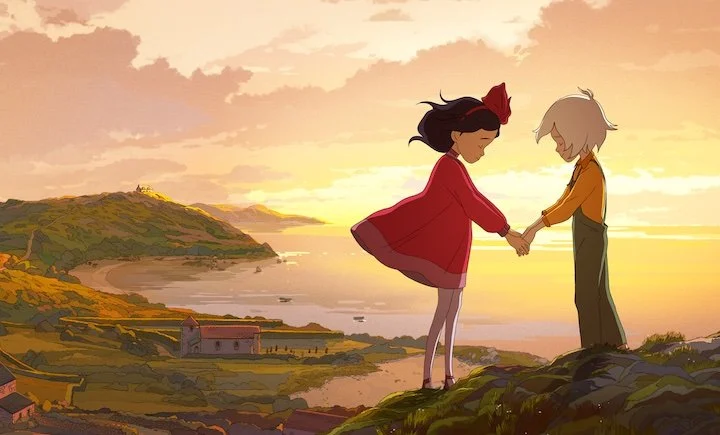
In the relationship of the two girls is not only a beautiful fable of a childhood memory, but a touching exploration of girlhood through the hardships of mental health and the fatality of the times they live through. Lucy’s hallucinations are navigated in a thoughtful way that is rarely discussed when it comes to children. Lucy and Milly care for each other with an affection and understanding of the other’s struggles that can only make you invested in their bond from the very first scene they share.
This is a deeply human story to its core, as much in its message as in its artistic soul. Producer Marc Du Pontavice, an icon in the French animation industry, spoke multiple times of the parallels between the moral of the film and the fact that this is an entirely human-made film, insisting that “AI could never reproduce something like this.” The accuracy with which each character is portrayed in the film speaks directly to the viewer. The exploration of every feeling and dynamic exhibited in the film is one of its biggest strengths, translating an ever-needed honesty. Each aspect that is dealt with in Lucy Lost’s 85-minute runtime speaks directly to the beating heart of each and every single one of us, and proves evermore that at the core of experiences like war and hurt is the same humanity that makes animation and cinema so special.
From its tender start to unexpected finish, Lucy Lost is a beautiful tale of hope and grief on a fantasy background that blends gracefully with a real historical tragedy. In an interview, director Olivier Clert said, “The world is a harsh place and we need works that can talk about that to children.” Lucy Lost aims towards that exact goal and succeeds at making a heartfelt feature that can deeply reach the emotions of people of any age.
Lucy Lost releases in French theaters on October 28th.