
by Emma Batterman
Olivia Wilde is no stranger to relationship drama. Her 2022 sophomore directorial release Don’t Worry Darling dominated the Hollywood gossip circuit after being served custody papers on stage during the film’s promotions on behalf of her ex-husband, Jason Sudeikis. Headlines continued to emerge about the actor-turned-director’s relationship with co-star Harry Styles, setting off a cascade of controversy surrounding the film’s production that overshadowed the film itself. With a shockingly public litany of abuses surrounding her private life, it’s no wonder Wilde’s next move as a director tackled the unspoken intimacy of a crumbling marriage baring its teeth in her latest film, The Invite (2026).
Wilde and Seth Rogen star as spouses Angela and Joe as they entertain the upstairs neighbors of their San Francisco apartment complex. In spite of Joe’s complaints, Angela invites Pina and Hawk over for dinner as an excuse to draw themselves out of their self-imposed isolation. Played magnificently by Penélope Cruz and Edward Norton, the seemingly perfect couple stand in stark contrast to the hilariously hostile forces at play between Angela and Joe’s adversarial approach to matrimony. As the night marches onward, both pairs begin to slowly unravel the intricacies of what moves a relationship forward, and what that means for a marriage on its last legs.
Writers Rashida Jones and Will McCormack craft an immaculate dynamic between the four characters, electrifying each interaction with a palpable intensity. Pina and Hawk are emotionally vulnerable and sexually charged. They move through conversations with a glance, finishing each other’s sentences and answering each other’s inquiries. Angela and Joe, on the other hand, disagree on whether or not the prior screaming match the upstairs couple heard was a fight or a slight disagreement. Helped along by excellent performances from each of the four actors, the film weaves an elaborate game of push and pull through both poignant moments and hilarious banter that keeps you on the edge of your seat.
Wilde and Rogen in particular shine as the two leads tangled in a web of volatile taunts and tender flashes of sensitivity. Angela is both hard to please and desperately searching for a way to be needed as she finishes up designing their painstakingly crafted condo. Meanwhile, Joe bares his gloom with brutal honesty and biting sarcasm, quelling his creative ambitions as a failed musician forced into a monotonous career in adjunct professorhood. Both play off each other’s miseries, yet their fleeting moments of warmth conjure a forgotten happiness—a hope that leaves you rooting for a future reconciliation in the midst of all their sharp banter and exasperated silence.
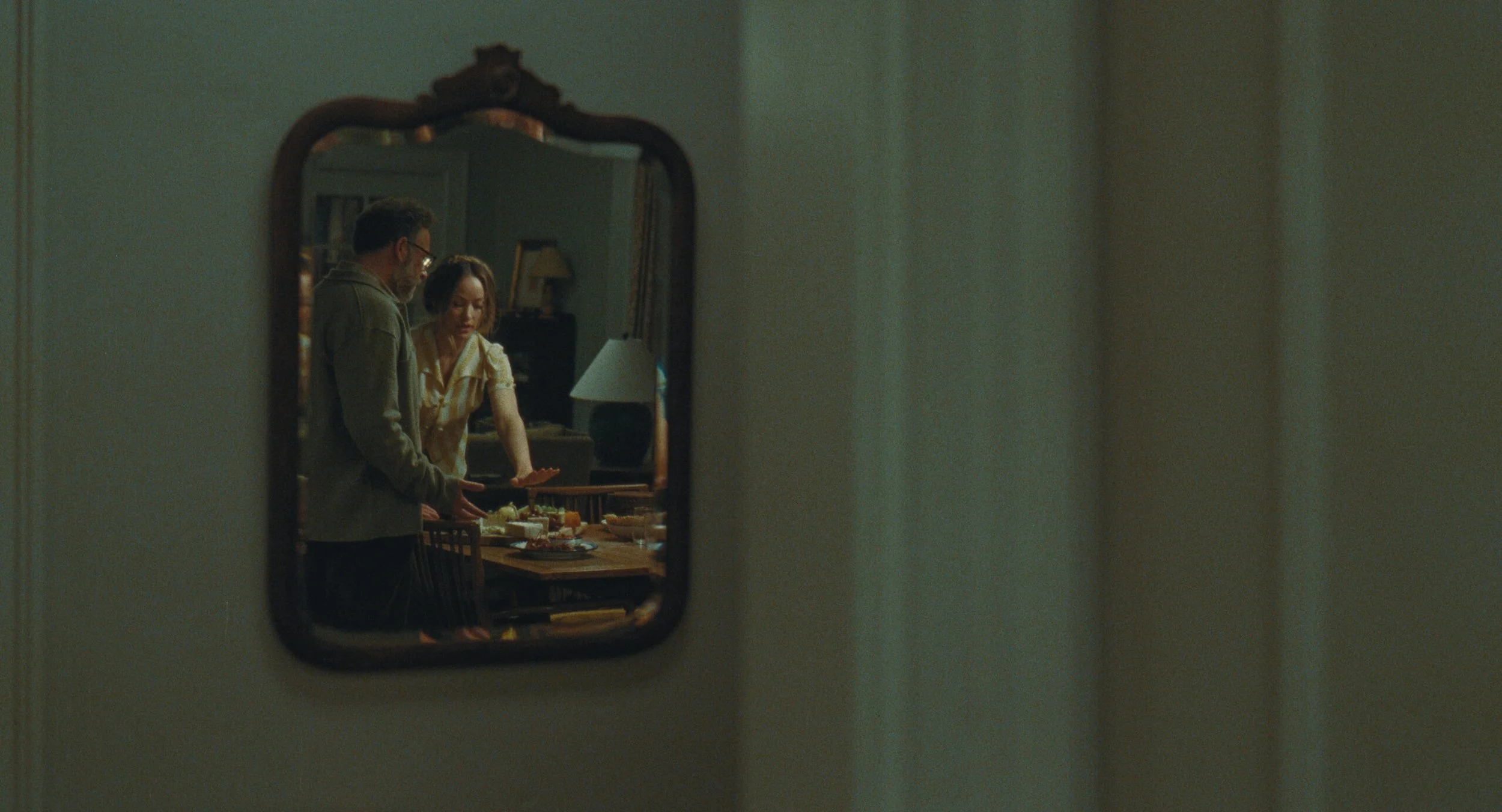
Wilde enforces these stirring characterizations behind the camera with outstanding set design and carefully calculated blocking, creating a setting that feels as tangible as the characters on screen. Taking place all in one exquisitely crafted apartment, the couples move from room to room, poking at stories hidden beneath the surface in the form of old photographs and closed-off pianos, all while Wilde configures strikingly well-composed frames to capture their unspoken intimacy. With such a simple premise shot in a single location, the film could have easily devolved into a derived spectacle of mundanity driven by lackluster characters. Instead, Wilde, Jones, and McCormack craft an impassioned drama that leaves the audience both laughing and weeping, bolstered by outstanding performances, meticulous direction, and fabulously witty dialogue.