
The Odyssey: A Homeric Reckoning
by Emma Batterman
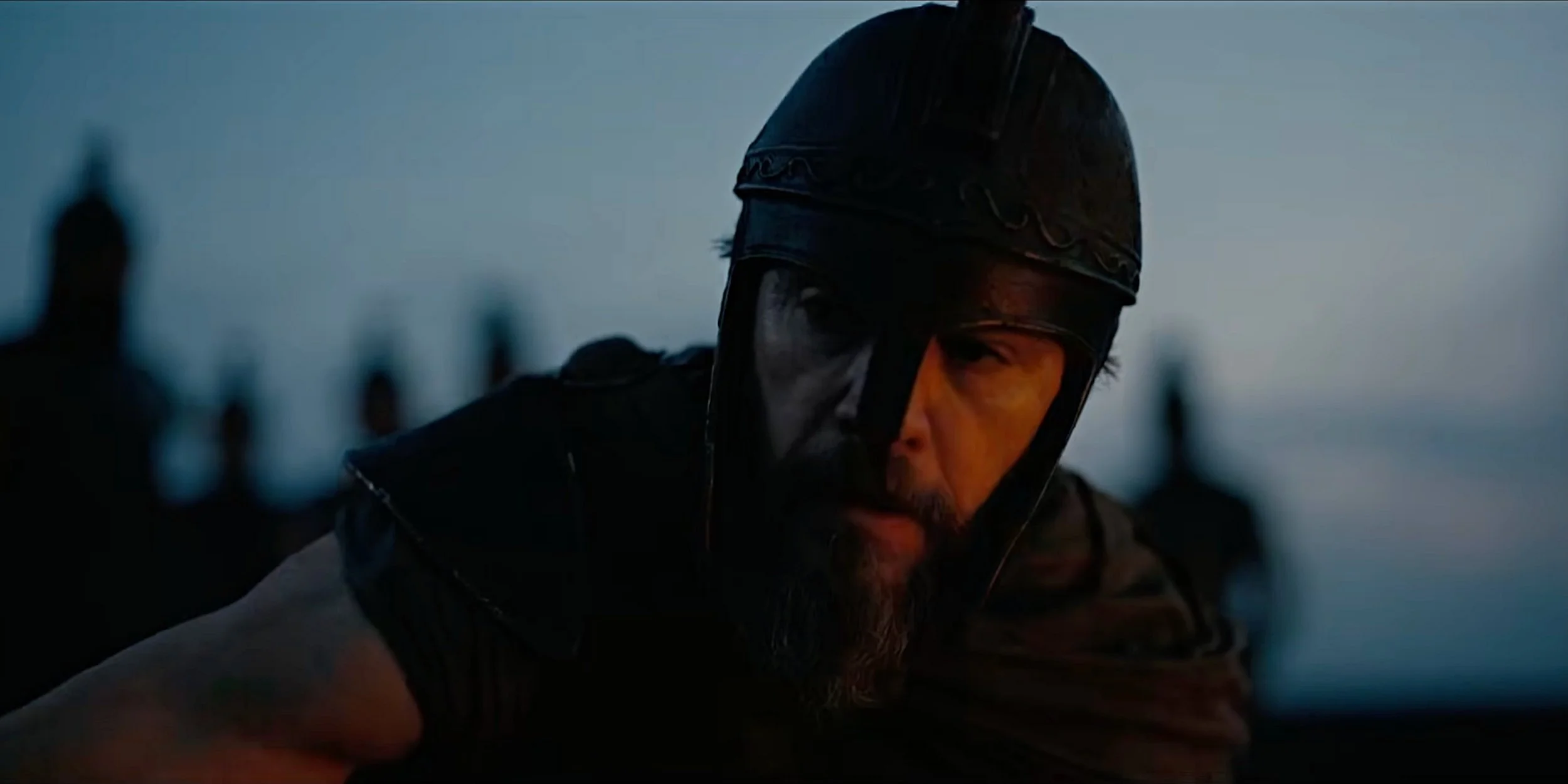
Known for his swooping visual epics and moving narratives, Christopher Nolan seems destined to be the harbinger of one of the pillars of storytelling to the big screen. Homer’s Odyssey has ingrained itself so deeply into the way we think about narrative storytelling, the tropes it’s birthed has spanned generations. Nolan himself has fallen into Homer’s trap, something he acknowledges in an interview for Konbini’s Video Club. “I kept finding my other films in there,” he explains in reference to the epic. “This idea of nostos, you know, characters struggling to get home.” Homecoming may be a prevalent theme in his earlier work (think 2014’s Interstellar or 2010’s Inception), yet the triumph of The Odyssey (2026) lies less in the journey itself, and more in Nolan’s own thematic interpretation of the age-old story.
The Odyssey centers around the titular character of Odysseus (Matt Damon) as he toils his way homeward after his invaluable role in the Greek victory at Troy. Nolan guides the audience through a relatively faithful retelling of the hero's trials at sea, only omitting a select few for runtime’s sake (Aeolus’ bag of winds declines to make an appearance). Meanwhile, almost 20 years have passed on his home isle of Ithaca, where his wife Penelope (Anne Hathaway) and his son Telemachus (Tom Holland) wait impatiently for his return as suitors ruthlessly vie for Penelope’s hand. It’s here where Nolan introduces us to the concept of “Zeus’ Law”––a modern rendition of the Greek concept of xenia––and it’s here where the heart of the story lies.
Xenia, the ancient Greek version of hospitality, serves as the centerpiece for Homer’s Odyssey. It’s prized as a prominent mannerism in discerning friend from foe, acting as a moral compass for many archaic social structures. We see this in Homer’s characterization, Penelope and Telemachus held in high esteem as they welcome suitors into their palace and juxtaposed against the men who desecrate their halls. Nolan appears to follow this formula in the beginning (though he crudely whittles down the term to a simplified variation of the “golden rule”). Yet, as with every Nolan protagonist, Odysseus begins to stray from this principled ideal, starkly separating him from Homer’s hero.
James Joyce’s Ulysses, Martin Scorsese’s After Hours (1985), and even The Spongebob Squarepants Movie (2004) have all delivered versions of Homer’s epic to countless generations and demographics around the globe. It’s where these versions differ that breathe a new life into the familiar epic. Nolan is no different. He even seems to pull on Virgil’s Aeneid, a distinctly anti-Greek narrative of the Trojan War. Burdened by the weight of his victory, Nolan’s Trojan Horse is less a victorious feat of ingenuity and more a violation of Zeus’ Law, of xenia, a rupture in the ethical foundations of society. When Odysseus recounts his actions in the war, it’s a torturous hellscape of rage and fire. Elevated by Ludwig Göransson’s heart-wrenching, muted melody and an earth-shattering appearance from Zendaya as Athena, the scene acts as a devastating confessional to the audience. Where Homer celebrates Odysseus as a hero returned, Nolan admonishes him as a harbinger of death. As heartbreaking as it is harrowing, the writer-director pulls on the thematic foundations of Tenet (2020) and Oppenheimer (2023) and once again asks the audience to reckon with one man’s destruction of the world.
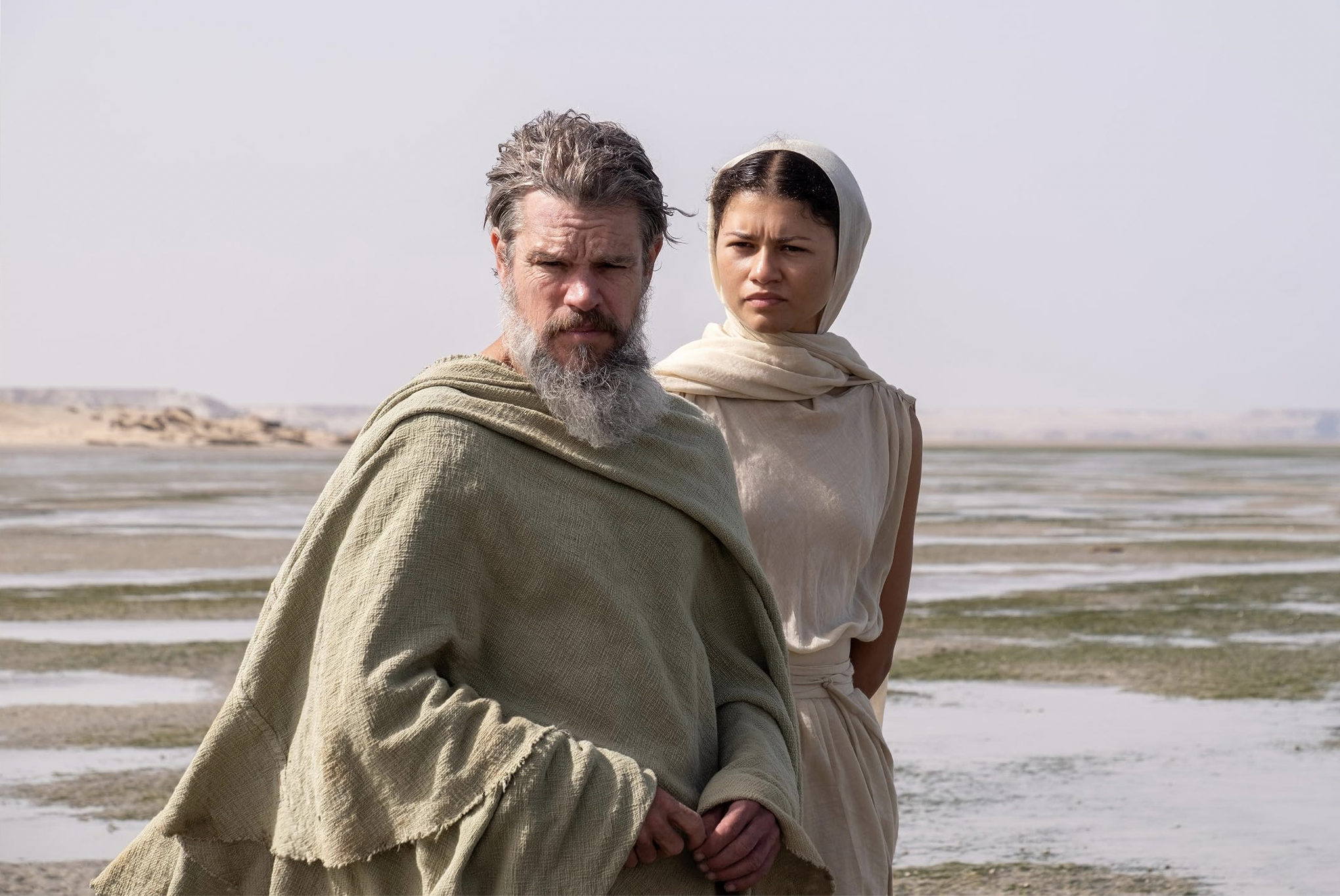
The Odyssey is the first film shot entirely in IMAX 70mm. Nolan’s no stranger to the beast of a camera, which runs so loudly he had to devise a soundproof blimp to surround the notoriously bulky instrument. Yet, the premium quality is undermined when it’s evidently unable to keep two planes of focus, continuously vacillating as it attempts to find the subject. It also restricts the runtime of each take, only allowing for a maximum of three minutes before the roll has to be replaced. This constraint is felt in the frenetic editing, with many lingering moments cut short as we’re thrown in the fray of another conflict. Nolan glosses over beats in the story like a footnote on the bottom of a page, the trial of Charybdis and Scylla feeling like a reluctant obligation to Homer’s narrative. Though the IMAX 70mm format is certainly impressive for an epic of this scale, the technology doesn’t seem to be up to the task quite yet.
Damon, Hathaway, and Holland make up a majority of the runtime amongst a sea of A-list actors, delivering stellar performances in emotionally demanding roles. Hathaway and Holland in particular play off each other’s opposing grievances. Holland’s portrayal of Telemachus’ tight-lipped, passive naiveté paired remarkably with Hathaway’s explosive grief as a hopelessly suffocated Penelope. Samantha Morton also impressed as Circe, both sympathetic and bitter in her portrayal of a woman ravaged by war. The only lackluster act stemmed from Charlize Theron. Her wooden line deliveries, perfectly sculpted eyebrows, and filler-sculpted cheekbones place Calypso in the realm of a 2026 Boho-chic Instagram influencer rather than an ancient sea nymph. Overall, however, The Odyssey overflows with talent, delivering career-defining performances across the board.
Riding on the coattails of Oppenheimer’s Best Picture and Best Director Oscar wins is no easy feat. While that film still proves to be Nolan’s magnum opus, The Odyssey is nevertheless a tremendous achievement. The technical setbacks of the medium and subsequent editing flaws seem miniscule when taking into account Göransson’s outstanding score, fantastic performances, and Nolan’s uncanny ability to to reel in a convoluted, borderline outlandish narrative into a poignant, overarching theme. The Odyssey delivers a devastatingly personal lament on the burden of guilt. Whether it’s in the form of karmic retribution from the gods or a tear-stained glance from a stranger forced to her knees, Nolan crafts a narrative worthy of a 3,000-year-old epic that reckons with the apocalyptic cost of violence.