
The Mysterious Gaze of the Flamingo: Queerness in All Its Grandeur
by Mars Dalys
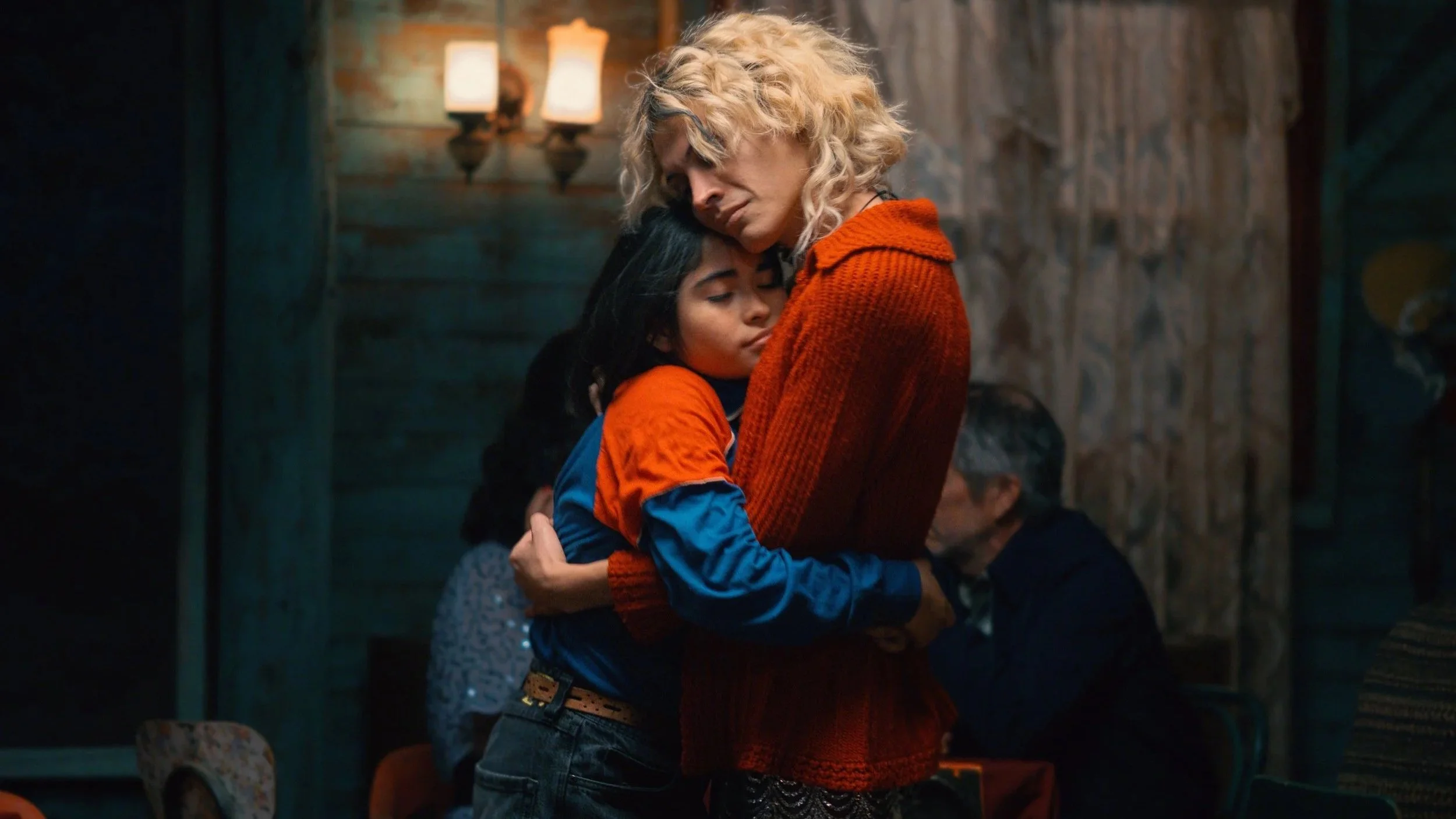
After two successful short films, Chilean Director Diego Céspedes made his feature debut with The Mysterious Gaze of the Flamingo. Presented for the first time in 2025 at the Cannes Film Festival, it won the prize Un Certain Regard.
The film takes us back to 1982, to a remote mining village in northern Chile rhythmed by silences and dust. Lidia (Tamara Cortés), 11 years old, lives in a cabaret with her chosen family: a queer community in which the strongest bonds are not those of blood. When a mysterious and deadly disease starts spreading among the inhabitants, supposedly proliferating through a simple glance, all eyes turn to her family. Lidia’s adoptive mother, Flamenco (Matías Catalán), is particularly affected by the situation and Lidia navigates prejudice and rumors while learning what her own identity means.
“Stop looking at me,” are the first words Lidia says, highlighting how important gazes are in the film. Silences and looks tell the story between characters who don’t need anything more to understand each other. Céspedes gives life to a handful of characters who can be flamboyant without feeling unreal or like caricatures. Mama Boa (Paula Dinamarca), Lioness (Bruna Ramírez), Star (Sirena González), Eagle (Alexa Quijano), and Piranha (Francisco Diaz) make up Lidia’s family and marvelously embody queerness in all its complexity, humanity, and grandeur. Through loss, love, unity, joy, and fear, this family evolves together. Céspedes impressively juggles between allowing bodies to exist without a second thought but also making them desirable when the time is right. It’s a refreshing take as, often with LGBTQIA+ representations, it’s either one or the other.
In this colorful universe, Lidia must find her place and sort through everything whispered about her family. In her quest to talk to Yovani (Pedro Muñoz), who has ties with her mother, she crosses the Atacama Desert and rides on empty roads on her friend Julio’s (Vicente Caballero) motorbike. The Mysterious Gaze of the Flamingo is a reinvented Western, in which the sad and lonely cowboy is replaced with a vengeful teenage girl, and the luxuriant mountains with the scorching plains. It shifts the narrative that we often see today and, far from being about loneliness, the film tells us all about community. Akin to a coming-of-age narrative, Lidia learns about love and the different forms it can take. Through theatrical lip sync performances and quiet naps in the sun, love bleeds through every layer of the film.
It also dazzles with the quality of its images: Despite being in a desert, nothing is dull, and the vibrant colors bring the environment to life. The director subtly plays with symmetry, each shot feeling carefully crafted. Despite being shot in a 4:3 format that reminds us of older films, the image quality is resolutely modern with emphasis on both the endless backgrounds and the softness of faces in close-ups.
The Mysterious Gaze of the Flamingo is a film that is bold and confident without losing its accuracy. Poetic in both its image and characters, it’s a moving and unforgettable watch.