
Project Hail Mary: Full of Grace, Friendship, and Science
by Jeremy Monroy
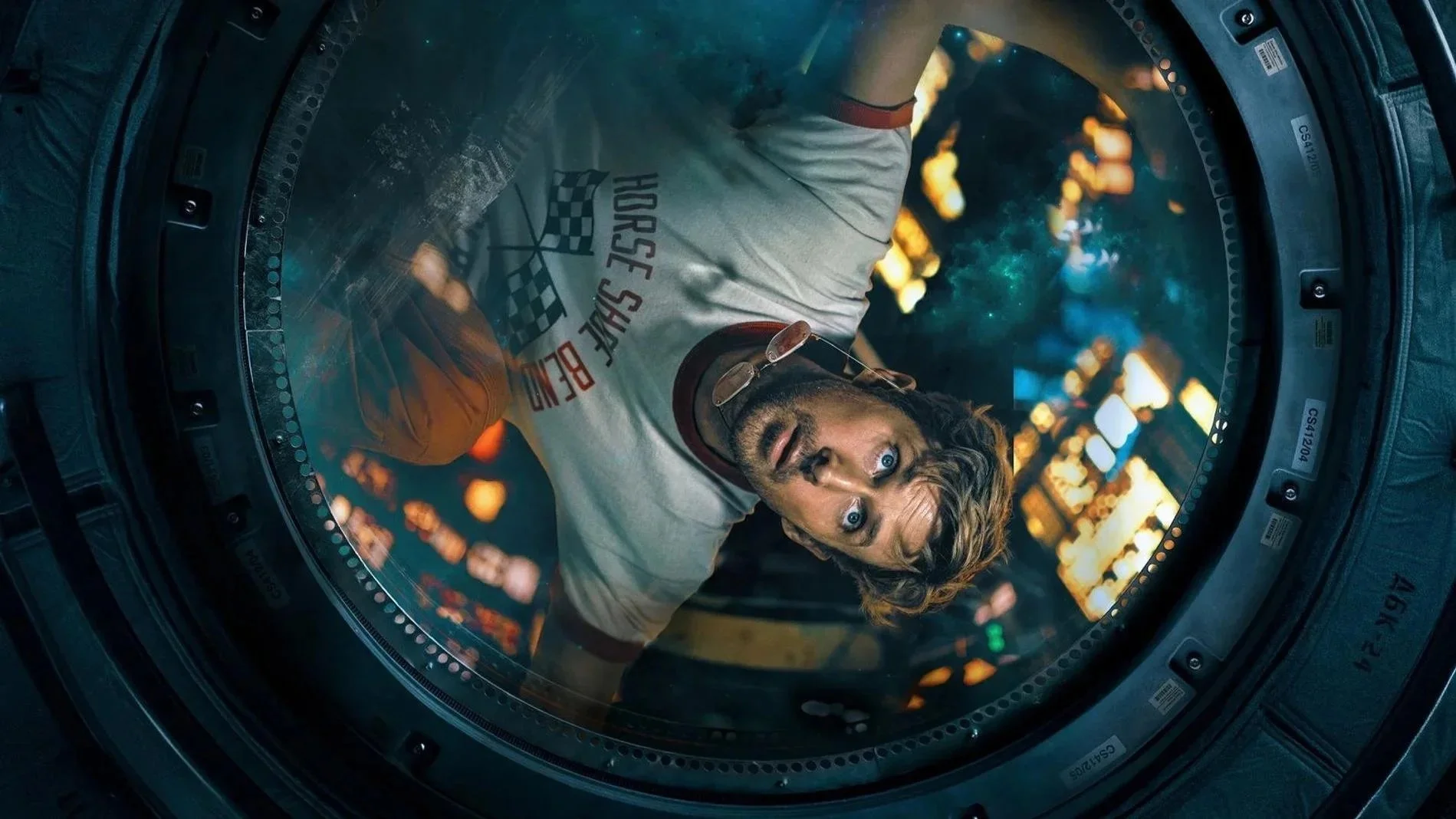
At first glance, Project Hail Mary is your typical “save humanity through a space voyage” film. Nevertheless, we spend nearly 60% of it exploring a relationship centered on communication, empathy, and understanding, rather than on the stakes of a doomed Earth. This brings it closer to the warming calmness of Arrival (2016), while still delivering the stunning visuals and science exploration of Interstellar (2014).
The main premise is simple: We follow science high school teacher and microbiologist Dr. Ryland Grace (Ryan Gosling) as he wakes up alone from a medically induced coma aboard a spaceship, with no recollection of who he is, where he is, or why he was in that state in the first place. Certain actions—and subtle camera tilts—serve as cues to transition into his memories and uncover the past. Astrophage is an unknown life form consuming the light of the sun and nearly every single star in the visible universe except Tau Ceti, the sun of a constellation 11.9 light-years away. As a result, Project Hail Mary is launched as a global effort, led by Eva Strutt (Sandra Hüller)—a straightforward suicide mission to a new solar system to discover why this star remains unaffected, and send back the answer to save humanity.
The true magic of the film, and what makes this story special, lies in the dynamic between Grace and Rocky (voiced and performed by James Ortiz and his team of puppeteers), an alien on a parallel mission to save his own species. Rocky never misses a comedic beat and is endlessly endearing in every scene. Similarly, Ryan Gosling delivers a performance that simply couldn’t be replaced, charming in even the quietest moments with a natural, sincere presence. Neither of them fits the mold of your typical hero; they are dorky, flawed, and brilliant in their own ways. Their growing companionship and mutual sense of wonder become the key to solving the mystery as a series of scientific experiments unfold between present moments and fragmented memories.
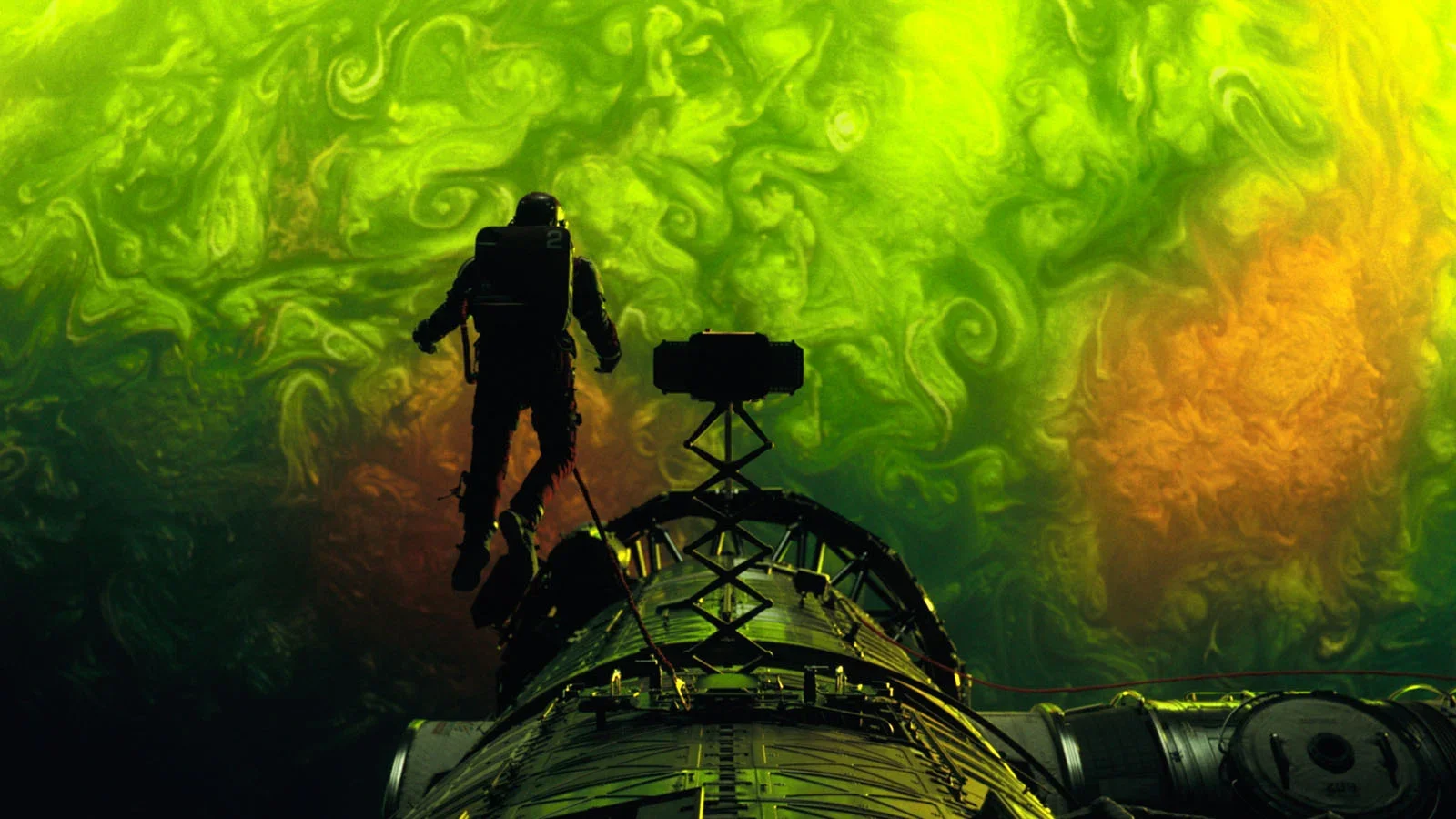
Directed by Christopher Miller and Phil Lord, with a formidable score by Daniel Pemberton and impeccable production design by Charlie Wood, Andy Weir’s novel is brought to life with the purpose of making it a visual experience. Through rich hues of green, red, and yellow, Greig Fraser executes beautiful cinematography, resulting in a film that succeeds on all fronts.
As a fan of the book, one of the defining characteristics of Weir’s work is its humor. This is also evident in The Martian (2015), starring Matt Damon, and it becomes one of Project Hail Mary’s most heartwarming qualities. Drew Goddard’s adaptation successfully translates what makes the novel so beloved. There were moments when I found myself laughing out loud or simply smiling. Even the changes from the source material introduce new, visually striking scenes that are easy to embrace. The pacing and overall narrative are so well handled that every minute of its nearly 3-hour runtime feels earned, carrying the audience through constant emotional highs and lows.
Project Hail Mary is, above all, an experience best lived in theaters. Let the laughs, the sighs, and the shared silent moments of the audience wrap around an atmosphere of connection, compassion, and hope. Step into a cosmic journey that reveals bravery isn’t something we’re born with, but something we can bloom into through others. Whether you’re a fan of the book or discovering the story for the first time, it’s a film that will leave you echoing Rocky’s words: “Amaze, amaze, amaze!”