
Wuthering Heights: Rewritten
by Karen Reyes
Emerald Fennell’s Wuthering Heights has been a topic of controversy ever since its announcement in 2024. The same director who made Promising Young Woman (2020) and the polarizing psychosexual thriller Saltburn (2023) took it upon herself to adapt Emily Brontë’s 1847 classic, prompting book and movie lovers to wonder what her interpretation would look like. Some had high hopes; Saltburn was generally well-received and a similar thriller would fit the gothic horror of Wuthering Heights, while others dreaded her campy style and worried she would miss the target in the interest of modernizing the story to fit her whims. Now that theaters are packed with curious viewers, the verdict is out: It’s bad.
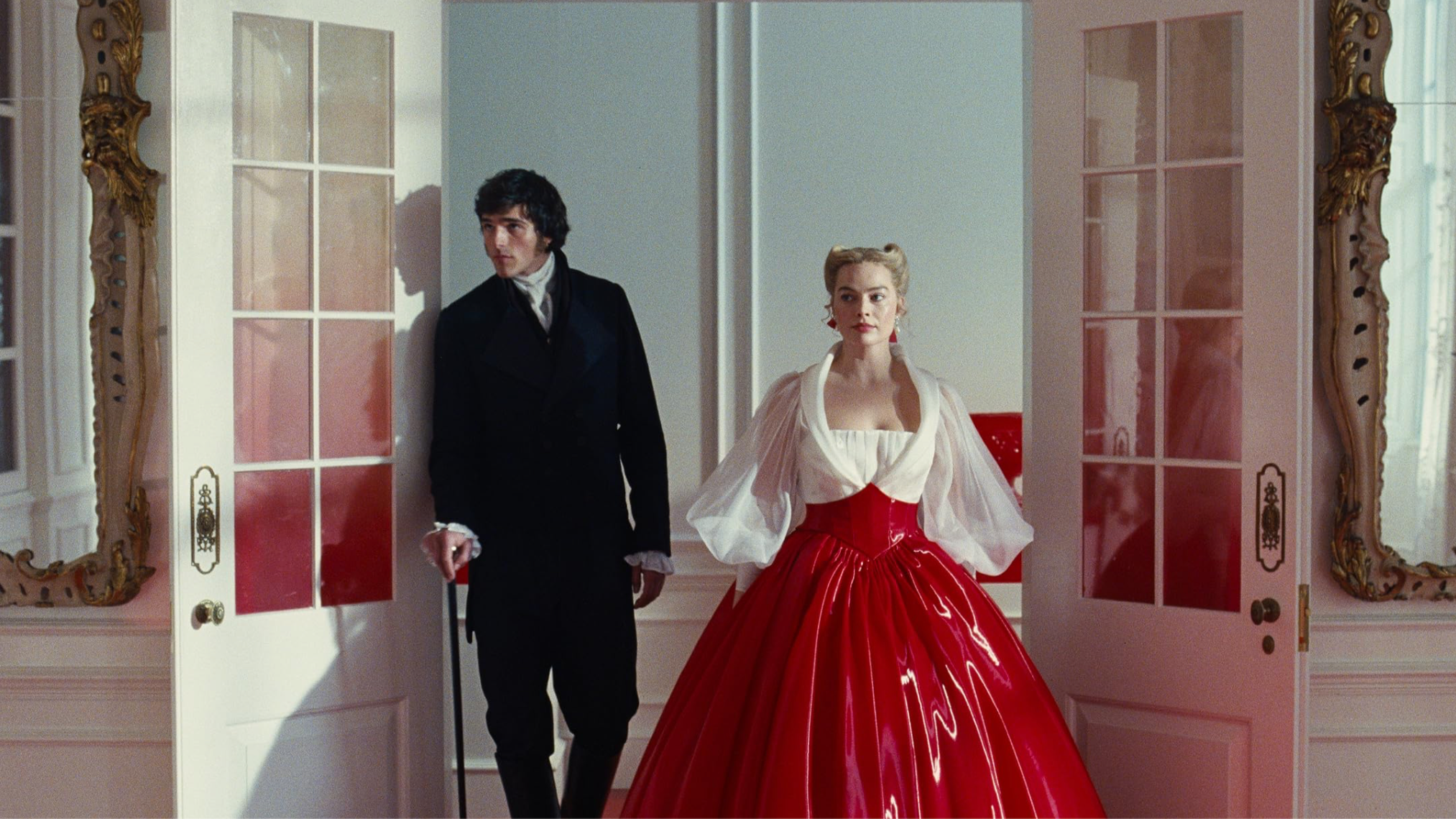
It’s almost not worth relating the original plot of Wuthering Heights because the film completely disregards the second half of the novel and indulges in major changes to the first. This wouldn’t be a problem if it wasn’t marketed so heavily as an adaptation of the book—which has also been selling with the film’s Catherine (Margot Robbie) and Heathcliff (Jacob Elordi) on the cover. But as much as I would like to consider the film as a separate entity, I can’t help but compare Fennell’s version to Brontë’s. The original Wuthering Heights follows the Earnshaw and Linton families’ fated and mostly doomed entanglement. When Catherine Earnshaw’s father brings home an orphaned Heathcliff, they become close friends and grow up together into a disturbingly co-dependent and morally challenged love. Catherine marries Edgar Linton and Heathcliff marries Isabella Linton to spite her. They have children with their respective spouses, though Catherine dies during childbirth, and Heathcliff vows to make the new Earnshaws and Lintons miserable for the way their predecessors raised him and for keeping him from Catherine. The rest of their friends and family deal with the repercussions of their antics and Heathcliff’s physical and psychological torture, resulting in tragedy and death for all but the few characters who learned from the duo’s mistakes and managed to keep their hands clean.
Fennell’s film loosely follows the same plot, but ends when Catherine dies, ignoring the second, and most compelling, half of the book. A major motivator for Heathcliff’s mean countenance (also absent in the movie) is the cruelty and racism he faces for being a person of color, which the film completely disregards as we can see with Jacob Elordi’s casting. Having just come off of filming Frankenstein (2025), he also seemed to struggle to let go of the Creature’s way of speaking and nothing could be done about his doe eyes, he looks much too kind to play Heathcliff convincingly. Margot Robbie’s characterization of Catherine fell flat most times, but she did successfully capture Cathy’s ability to be cruel in scenes like Isabella’s confession of attraction to Heathcliff and teasing her about it in front of him. Other characters were completely mischaracterized: Nelly was more of a silent observer than the very involved caretaker she is in the novel; Isabella for some reason becomes a masochist when she marries Heathcliff, enjoying his torture and humiliation; Joseph is young and having a very explicit and kinky love affair with Zillah; and many other characters, including Catherine’s brother, are missing entirely.
Along with shaky characters, the film’s editing and pacing felt disjointed. To Fennell’s credit, it’s possible that was intentional to reflect the chaos of Catherine and Heathcliff’s relationship, but the depth and tumultuousness of their relationship only makes sense if you’ve read the book. In fact, much of the story requires the viewer to have existing knowledge of the original narrative to understand why and when the characters make choices. Otherwise, the beginning of the film was almost musical in its pacing, like young Catherine was going to burst into song at any moment. Some scenes felt like short, unrelated vignettes cut together in an attempt to quickly contextualize the Earnshaws’ life at Wuthering Heights. Others felt like indulgent fantasies that added nothing to the story except sexually suggestive imagery for the sake of sexually suggestive imagery. These randomly steamy scenes, which were all Fennell’s doing as they don’t appear in the book, don’t do much in the way of defending against claims that her interpretation of Wuthering Heights is shallow fan fiction based on what she remembers from reading the novel as a teenager. While there’s nothing wrong with fan fiction, it’s an interesting creative liberty to take knowing the story does not center Cathy and Heathcliff in a “love story,” but a gothic and psychological one.
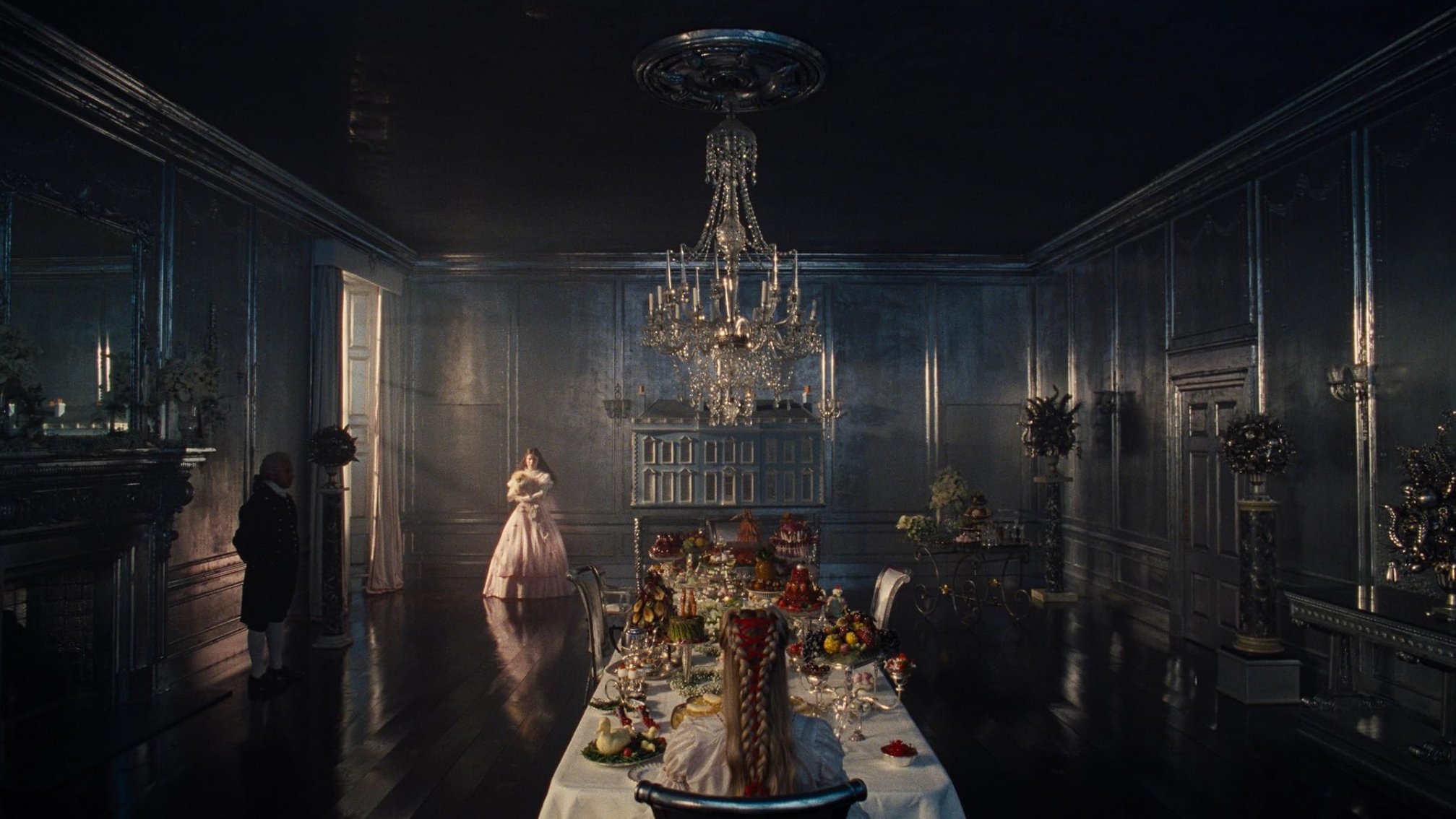
It’s not fair to dig into everything that went wrong in Wuthering Heights without also allowing everything that went right. Cinematographer Linus Sandgren made this a visually beautiful project: stunning composition and lighting, and breathtaking scenery made up for the somewhat lacking performances by giving us something gorgeous to look at. He created a refreshing and engaging soundstage feel to many scenes, adding a flair of drama to the film. The same goes for wardrobe and set design. Jacqueline Durran, whose Oscar and BAFTA-winning work you might have seen in Atonement (2007), Anna Karenina (2012), Little Women (2019), and Barbie (2023), designed and styled between 45 and 50 costumes for Catherine. Taking inspiration from everything spanning Victorian to 1950s to Old Hollywood to modern day styles, Catherine’s stunning dresses did little to take us out of the story and emphasized the sort of absurdist vibe of her life at the Lintons’. The sets were also incredible, if a little on the nose at times—consider the comically large piles of bottles behind Mr. Earnshaw’s body in his death scene and the walls of skin in Catherine’s bedroom—and coordinating outfits to each room made scenes that much more pleasing to the eye.
Enjoying Wuthering Heights as the sum of its parts, however, is quite impossible. Being an adaptation of a famous classic novel means Brontë’s story haunts Fennell’s narrative if you’ve read the book, and it means you’re missing a lot of important context if you haven’t. It may be a fun, nonsensical trip for those who have no prior knowledge of Cathy and Heathcliff, but those of us with the burden of knowing the rest of the story can’t help but feel unsatisfied.