
Julian: An Ode to Queer Love
by May Renault
How soundly can you live your love story in a world that only partly recognizes and accepts it?
Cato Kusters’ Julian (2025) tells the story of Fleur Pierets and Julian Boom who showed the world that queer love is still shaky ground. In 2017, they got married in the 22 countries that recognized same-sex marriage to make a statement about how small that number remained, out of 196 countries. This goal, called Project 22, came to an untimely end when Julian was diagnosed with a brain cancer that led to the end of her life in 2018, after only four weddings.
Fleur Pierets wrote a memoir titled after her late wife and almost a decade later, Cato Kusters adapted it for her debut film. Carried by Nina Meurisse in the role of Fleur and Laurence Roothooft as Julian, the Belgian-Dutch drama beautifully translates the expectations the couple had for gay rights through their unusual project, as well as the hardships of navigating love and grief.
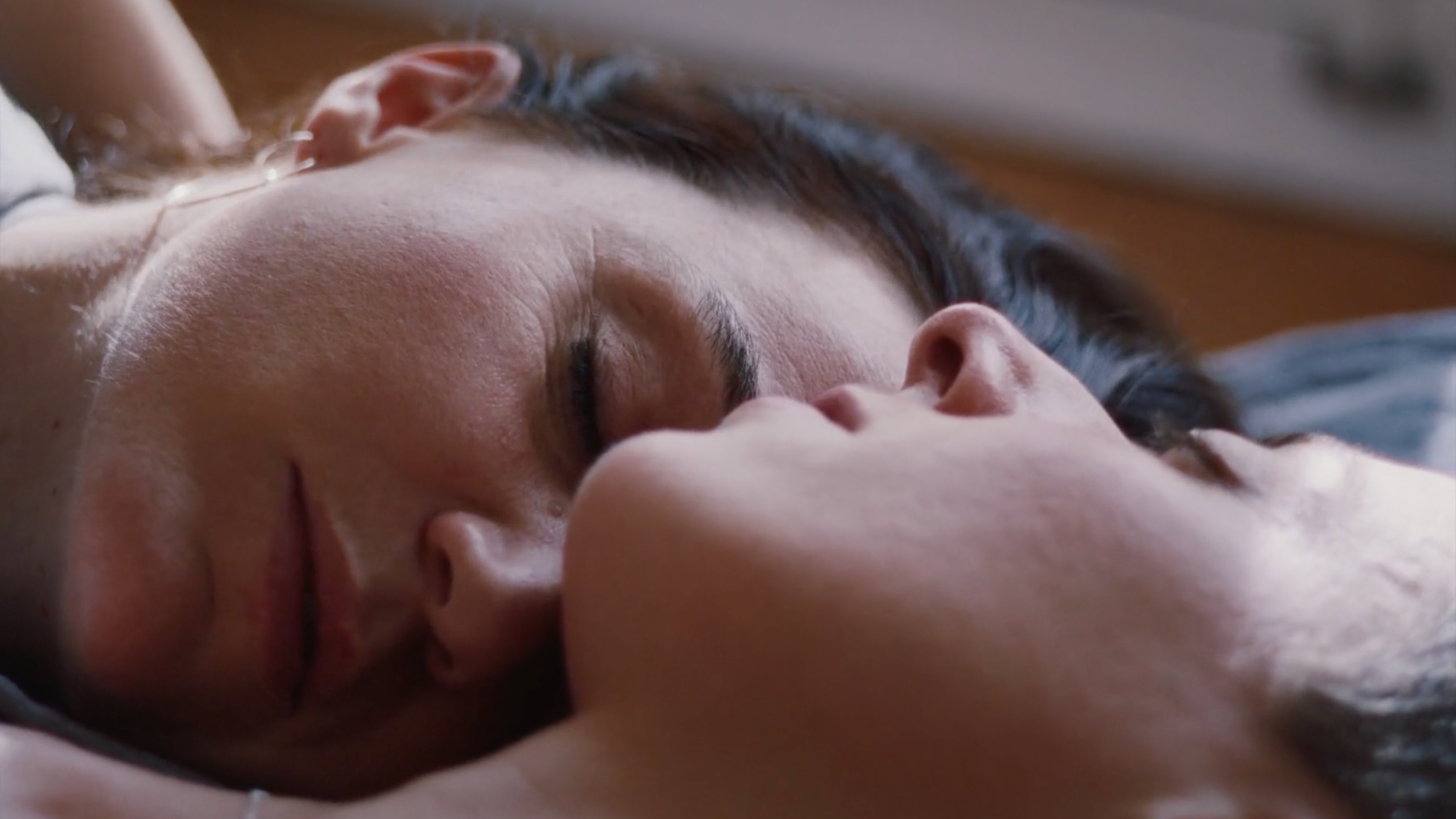
Melding a gorgeous work of cinematography with handheld camera footage filmed by the couple to capture their adventure, we experience Julian through the gaze of her lover. Fleur captures her smile, her hands, their late night talks, and offers us a peek of what being in love with her is like as they travel the world together, and later on as she fades away on a bed. It makes it even more touching that she never stopped filming her, because love is not only about the good moments, but also the harsh memories.
The sweetness of the memories they shared together contrasts with the reality of living as a queer couple in the 21st century, even in Belgium where it is legally accepted. In between the fond glimpses of life, the underlying reminders of how heavy queer identities are to carry remains present throughout the film.
Though the movie centers largely on how unfavorable the world remains to same-sex marriage, Julian also navigates the conflicts inside families and the trauma dealt within those circles. It deals with the ignorance of the average individual when it comes to the struggles of homosexual couples, as Julian and Fleur’s friends suggest they get married in countries that do not even recognize homosexuality.
The movie’s slow pace allows the gaze of the audience to linger on every character and soak in their every emotion. One of its strongest elements is its relatability to both the bliss and the anguish of going through sweet slices of life and the fear of losing one so dear.
Grief is a central conversation in Julian, and it touches on it beautifully. The movie intertwines two timelines: the following of their project, where they plan their trips, travel, and get married, and Fleur in New York City, a year after Julian’s death, as she prepares to give a TED Talk on their story and their project. Her hair is cut short and there is an unshakable sadness in her eyes that seems to carry all of the unfailing pain of losing her lover. And yet she goes on, for her.
Julian shows how grief is not just about regretting the person you have lost, but to appreciate that you got to know them, even if it was all too temporary. More than telling the story of how and why they came up with Project 22, Fleur tells the story of the woman she loves, so that her memory lives on, “And it's just me now. But I need you all to know about her. I was lucky to have found her.” And just like that, we are mourning Julian with her.
This film is an ode to queer love. Devastating but filled with the hope and love of two individuals that a whole community can resonate with, it is a most important picture that serves as a reminder of how far we have come but also what we have to keep fighting for. As of today, 38 countries recognize same sex marriage, a number that we hope does nothing but increase.