
The Christophers: Soderbergh's Artistic Dialogue
by Emma Batterman
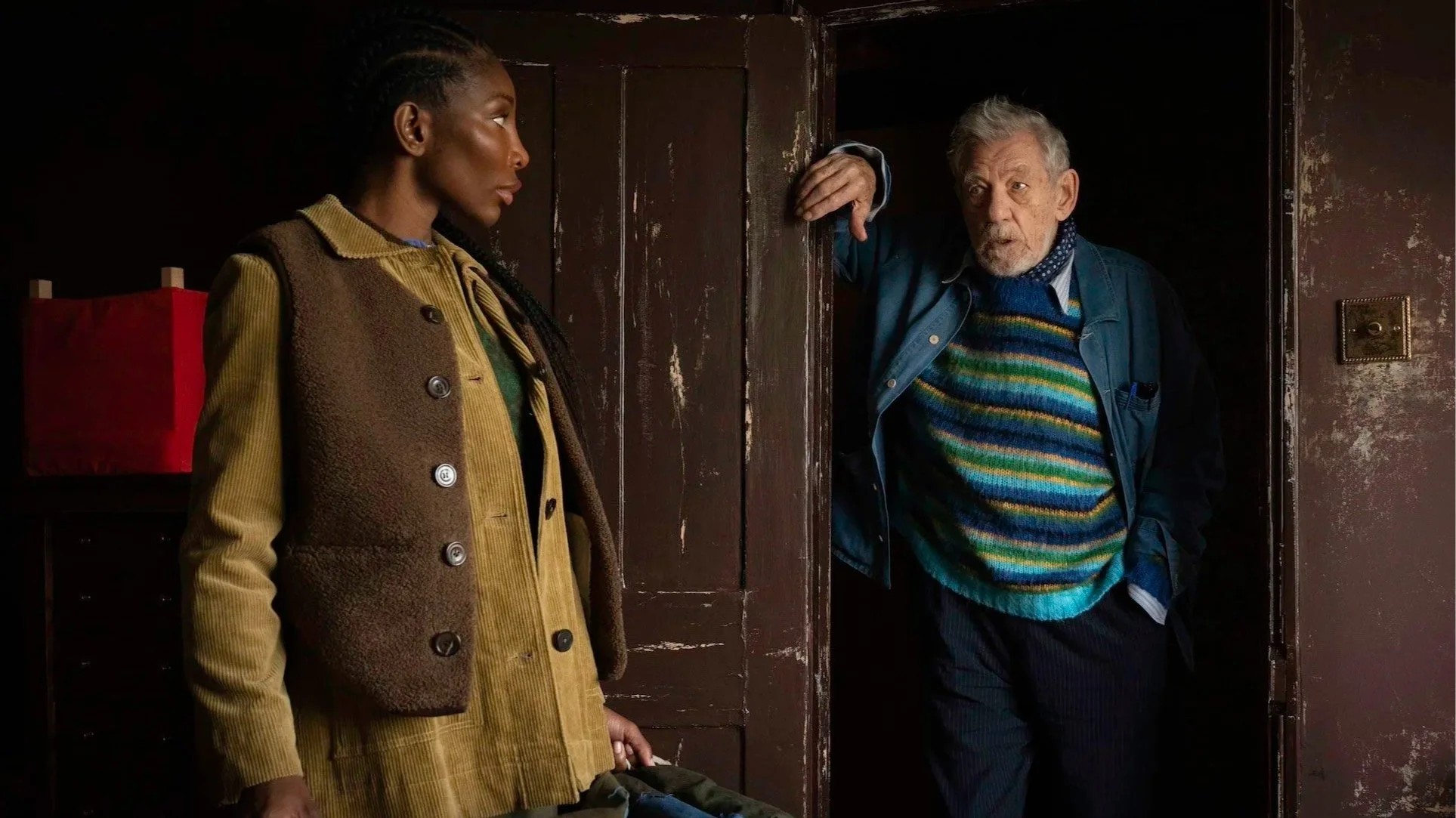
Director Steven Soderbergh’s latest film, The Christophers, stars an 86-year-old Ian McKellan as Julian Sklar, a once-revered painter past his prime, unconcerned with the outside world. Disgraced by the public for his unapologetically disparaging attitude that led to him being “justifiably cancelled,” the aging artist now sits in his laughably large London townhouse performing Cameos under a ring light. Lori Butler (Michaela Coel), an artist and concession stand worker, is hired by Julian’s egocentric children to forge the third and final set of unfinished paintings collecting dust in Julian’s locked studio, a series titled “The Christophers.” Desperately grasping for his elusive estate as his health declines, Lori poses as the artist’s assistant after she warily agrees to complete the portraits behind the abrasive man’s back. As the two grow reluctantly closer, the consequences of the covert operation are stubbornly dragged towards the light, leaving both Lori and Julian to reexamine their capacity for compassion.
McKellan mesmerizes in his most captivating role in well over a decade. Sklar is flamboyant, politically incorrect, and unwilling to confront his past. “I ask questions. It’s the answers I can’t be bothered with,” he declares, cutting off Lori’s sentence as she attempts to introduce herself. McKellan’s charisma is overflowing with each line of dialogue, his bombastic physicality punching through the screen as he struts from room to room. Coel’s grounded performance not only allows space for McKellan’s flashy temperament to shine, but builds on the characters’ narrative foils with a poignant chemistry that elevates the film above its rather monotonous simplicity.
Unlike Soderbergh’s previous film, 2025’s sexy spy thriller Black Bag, the director takes a more muted, intimate approach as he attempts to find the connection between art and relationships. Soderbergh positions “The Christophers” series at the center of Lori and Julian’s connection with each other. Their animosity and eventual friendship are dictated entirely by the outcome of the titular series of unfinished paintings as Lori is consistently frustrated with Julian’s blindness. Soderbergh places an emphasis on the concept of art as a relationship––as a communication between the canvas and the artist. Like his approach to the question and answer, Julian is not concerned with what the meaning of art when it leaves his hands, much to Lori’s frustration. Even their artistic influences brilliantly reflect this dynamic. The stylistic influence of 19th-century romanticism dictates much of Julian’s work as opposed to Lori’s more conceptual, contemporary paintings, widening their rift as Soderbergh hammers in the metaphor.
The excellent performances and fleshed out analogies, however, aren’t enough to mask the developmental inadequacy of the characters. With an hour-and-40-minute runtime, arcs are abruptly broken off at what feels like the precipice towards a deeper connection between the two protagonists. While the ending clearly emphasizes their relationship as the emotional and metaphorical centerpiece of the film, Soderbergh doesn’t allow for that final push that would let the audience be truly moved by the bittersweet finale. Despite this middling setback, however, The Christophers remains an impassioned drama with impeccable performances that lingers through its profound questions on the nature of creation and kinship.