
Die My Love: Unfiltered Humanity
by Jasmine Edwards
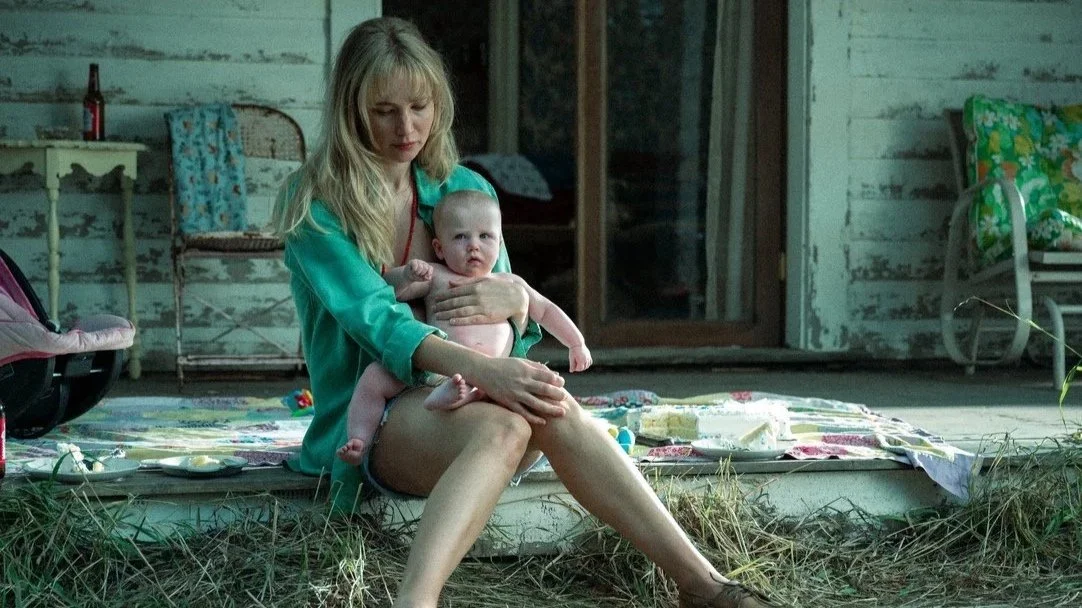
What does it take to finally make someone snap? To finally make yourself feel alive? Die My Love (2025), starring Jennifer Lawrence as Grace and Robert Pattinson as Jackson, is a strange slice of life film skewed sideways into an uncomfortably funny thriller.
Director Lynne Ramsay splices together mundane moments and madness to depict Grace’s issues with newfound motherhood. Left in a pressure cooker of obligation, resentment, and listlessness, the struggling writer desperately seeks any opportunity or catalyst to reignite both her own creativity and passion in her relationship. What follows is a quiet, all-consuming wildfire.
Alone in a hot and far too empty Montana farm house, Grace is forced to look after her infant son all day—and later, a yapping dog, which only furthers Grace’s own desires to embrace her animalistic nature. Knife-wielding, potentially hallucinating, and fascinated by violence, Grace can barely take care of herself, let alone her family.
But should she have to? Despite how much she loves her baby son, thwarted ambitions don’t quite match the expectations of her gender or the reality of the situation. Nobody understands her. Not her, not Jackson, and certainly not the audience.
What makes Die My Love most intriguing is its ambiguity. It’s unclear whether or not Grace’s mental health problems are postpartum depression or inherent in her personality. It would be too easy to blame it all on trauma; instead, this is just unfiltered humanity. And it kind of sucks to watch (in a good way).
Grace is ill-equipped yet cares deeply, self-critical yet also self-obsessed and superior. She is inspirational in some scenes but scarily self-destructive in others. The audience can’t always be sure if her visions of mute motorcyclists, midnight-black stallions, and her ailing in-laws in the woods are even real. When she accuses her husband of cheating, it could be delusion and paranoia, or it could be completely valid.
We wonder and we wander through chaos, confusion, and clips of increasingly tense and terribly understandable—though often reprehensible—reactions to a concept of self that has been completely annihilated. Nobody can really know how they’d react to the death of their old way of life until they are actively forced to mourn it. Unfortunately for Grace, she must grieve (and contend with suicidal ideation, making the death of peace of mind more physical than mental) while also keeping a tiny human alive.
Losing her mind comes with consequences. As viewers, we must watch her choices and their inevitable outcomes; yet it feels wrong to judge. We shrink away even as we lean forward, morbidly curious. Hoping things get better, we also want the worst to happen. After all, that’s entertainment. Perhaps part of me wishes it weren’t so bleak, but then again, would I have watched it otherwise?
Ultimately, Die My Love is a difficult watch. It needs to be. The characters are fragile, fraying at the seams. Audience members who want to pick sides or moralize their stories will have a hard time fully rooting for anyone once confronted with this film’s unruly, ugly protagonists. Like a sensational, shocking painting, Die My Love straddles the line between realism and absurdity. The film could be considered a modern art sculpture come to life—made to get a strong reaction, leaving absolutely no room for middling opinions.