
Wicked: For Good: Ready for a Last Dance in Oz?
by May Renault
This review may contain spoilers.
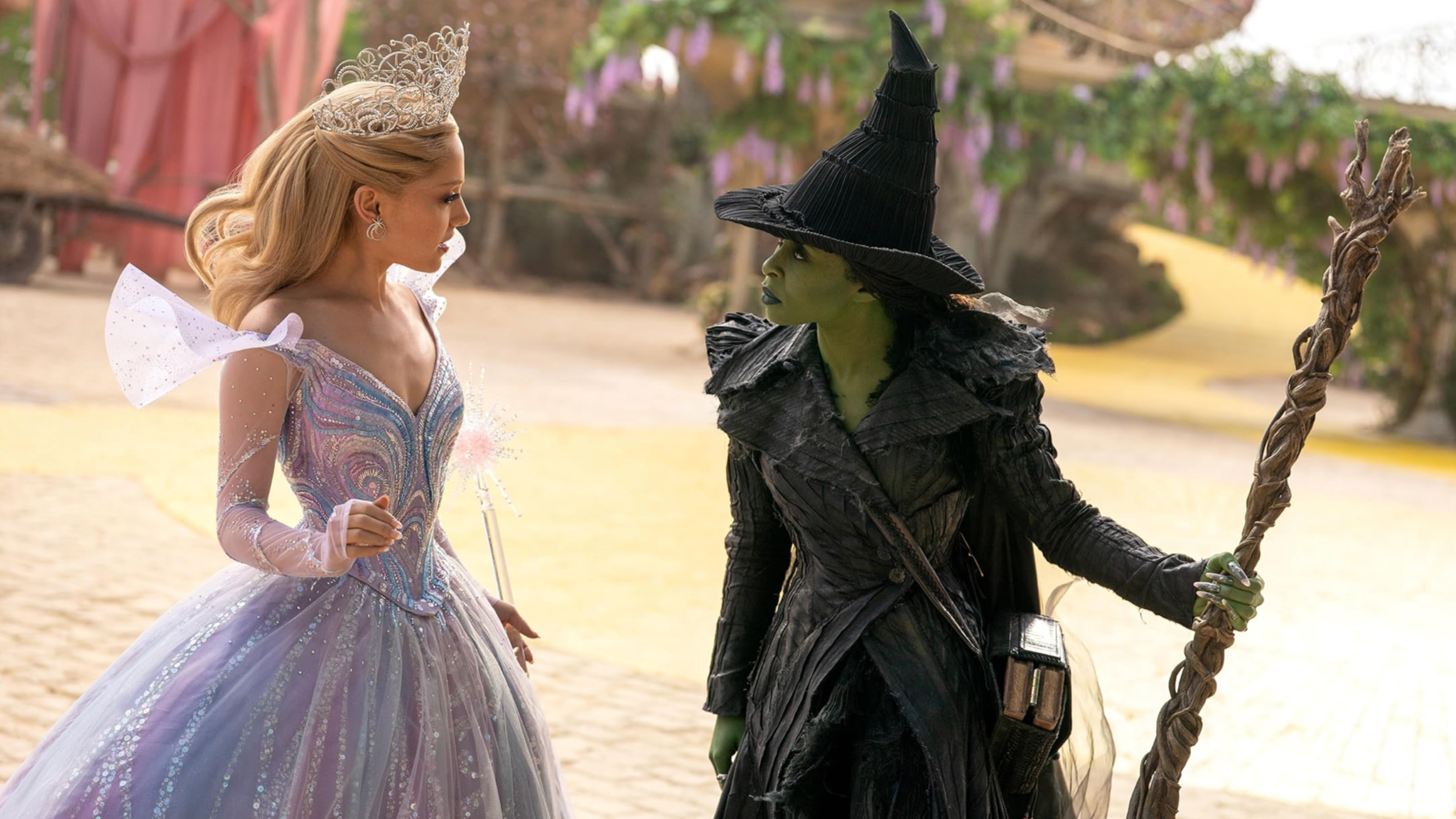
With its name and actors plastered on every billboard, soda can, and even detergent bottle over the last month, you could hardly have missed it. Director John M. Chu’s long-awaited Wicked (2024) sequel is finally here, and it promises to take us back to Oz one last time for a magical ride through Elphaba’s (Cynthia Erivo) journey as the feared Wicked Witch of the West. Antagonized by the machinations of her former teacher Madame Morrible (Michelle Yeoh) and the wonderful Wizard of Oz (Jeff Goldblum), and finding herself in confrontation with her dearest friend Glinda (Ariana Grande), she tries to do what is right and save the animals from the somber fate that awaits them under the Emerald City’s politics.
On paper, it has everything audiences have been waiting for: the continuation of the characters’ story that we grew attached to in the first opus, new songs to enchant the end of the year’s celebrations, and the introduction of the iconic Dorothy from the Wizard of Oz (1939). But does it stick the landing? Debatable.
Audiences were warned beforehand, both by the die-hard fans and the film crew, that the second act of the musical was a bit more tenuous than the first and not without its faults, and was therefore more of a challenge to adapt to the screen. I have not seen the musical, and dare not be too opinionated on that front. This is purely from a film perspective, as someone who enjoyed the first part.
A major fantasy blockbuster of the 2020s, Wicked was acclaimed for its grandiose production design, and good-looking costumes. Wicked: For Good follows in the steps of its predecessor by showcasing some interesting new locations, like Glinda’s all-pink art deco style apartment in the Emerald City that reflected the character well. While Elphaba’s new home among the trees was also interesting in design, it lacked a visual appeal that touches a deeper problem within this production.
If there is one thing that most agree on about the Wicked movies, it is that the color-grading is not good, an issue that they unfortunately did not care to fix in the sequel. While the wonderfully crafted costumes enrich the global visual atmosphere, the new places Elphaba finds herself throughout her journey are poorly lit, which does little justice to the design exploration meant to show another part of Oz. Most scenes suffer a real lack of care on a cinematography level, and it shows from the very beginning.
In this video essay, Why Movies Just Don’t Feel “Real” Anymore, the creator takes a deep dive into why movies today feel shallower than they used to. His main point is that the new way of filming on digital keeps the focus on faces while blurring the background, keeping us from getting immersed in the world. As I watched Wicked: For Good, my mind kept going back to this video—why doesn’t a movie set in a fantasy world allow the viewer to see what it is made of? It was a huge disappointment to realize the director did not do justice to the impressive practical sets that were built with the combined over $300 million budget for both movies, and to see the amount of CGI that made frames feel suffocating at times.
Apart from its visual issues, my main regret is how poorly they handled the storytelling. The movie supposedly starts five years after the first one, something I learned while scrolling on social media the next day because the film never mentions it. The time jump is noticeable because the characters are aged up, and not attending university anymore, but all of that information is thrown in our faces in a way that is quite confusing when you don’t know anything about the source material. While the songs are beautifully performed and as enjoyable as the ones from the first movie, they are balanced with dialogue that feels flat and unfinished, which is problematic for a sequel known for its darker tone and tougher plot. Going into it blind, I was expecting a storyline dealing with political and social issues, as the first movie leaves us with a showdown of state speech manipulation, crowd control, and repression of the animals of Oz. On the contrary, all of those topics were quickly swept under the rug to prioritize the love story between Elphaba and Prince Fiyero (Jonathan Bailey), and hastily introduce the characters from the original Wizard of Oz—an inclusion that was also poorly treated.
Wicked: For Good is about 30 minutes shorter than Wicked, and while they did what they could with the source material, it would have been nice for them to match the run time simply by writing longer, more meaningful dialogue, or building a proper introduction to the time jump.
As I exited the cinema with my brows furrowed, upset to not have enjoyed this long-awaited movie, I gave some thought to what really bothered me. For Good's biggest issue is that it fails to consider the implication of adapting a stage musical as a movie. A movie—especially a fantasy one—needs proper worldbuilding, a total immersion in the cultures and the customs of the world, especially with the Munchkins. We learn that they are discriminated against and barred from society without knowing what makes them different and eligible to hate from others.
A movie should visually take the time to tell the audience what is going on and properly establish the plot through its dialogue. Especially a film so mainstream that it will undoubtedly reach people who are not knowledgeable about the original story. Starting plots to not finish them narratively might work in a live performance that is entirely sung, as we are more focused on the dance, the stage, and the music, but that is something that is famously frowned upon in movies.
Wicked: For Good is fun enough to watch if you do not overthink it, but the questionable pacing of this movie was the icing on the cake—not even the great chemistry and talent that Cynthia Erivo and Ariana Grande delivered once again were enough to make up for John M. Chu’s butchering of the visual artistry of a magical world and disregard for the directorial requirements of a movie adaptation.