
In Conversation: ‘Rehearsals for a Revolution’ Director Pegah Ahangarani
by Irene Milea
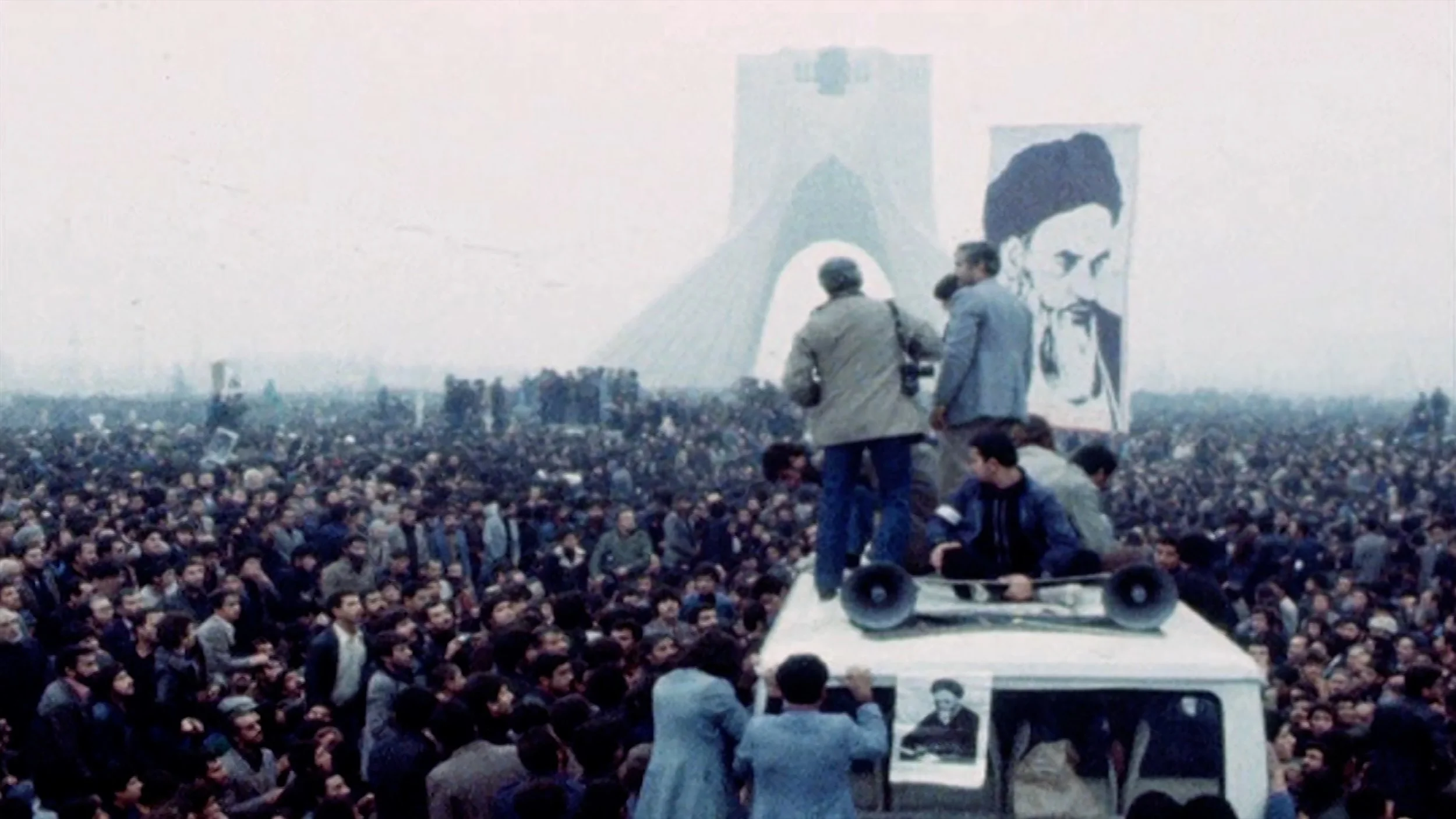
After winning Cannes’ L'Œil d'Or documentary prize, Rehearsals for a Revolution, went on to screen at the 2026 Toronto International Film Festival where we had the opportunity to chat with Director Pegah Ahangarani about her process and journey in the making of this film. She retraces events that have influenced and shaped her personal and familial history alongside that of Iran and its people, reflecting on the significance of memory, the future, and the lives of those who refuse to give up.
The documentary includes different events, dates, and words, and it is divided into chapters. The chapters are arranged chronologically, from your parents meeting and your childhood to adulthood and becoming a mother. Your life and your family’s life run in parallel with the history of Iran. During this journey through time, did you discover anything new or unexpected about yourself or your country?
I discovered many things during the process of making this film. Some of them were very personal, things about the people I talk about in the film, and even things about my own family background. Some of these discoveries were very important and even surprising to me, but I decided not to include them because I felt they didn’t help the main story of the film.
But maybe the biggest discovery came when I started putting all these historical events next to each other. I had personally lived through some of these important moments, but living through an event is very different from looking at it in a historical context.
When I put these events together, what surprised me most was seeing the continuous effort of Iranian people to achieve freedom. There are several important uprisings and historical moments that I couldn’t include in the film, but even with the ones I did include, I started to see many patterns.
I saw many similarities between these uprisings, both in the way people protested and in the way the government suppressed them. But I also saw an important difference. As history moves forward, I feel that people’s actions become more mature and more conscious. It is as if after every suppression, something remains: an experience, a collective memory, and a kind of awareness that is carried into the next movement.
For me, it was very important to realize that history doesn’t simply repeat itself; people also learn from history. A movement can be suppressed, but its experience and memory cannot be completely erased. And when I saw all these moments together, I understood more clearly how long, continuous, and deeply rooted this struggle for freedom has been.
Just as a diary tells the life and feelings of one person, your personal story also contains the story of millions of people in Iran. How did you balance the personal story with a more universal story? And while making the film, did you feel a responsibility to represent the lives of Iranian people for audiences who may know very little about your country?
I never wanted to say that my story is the story of all Iranian people, or that I can represent millions of Iranians. From the beginning, it was important for me to start from my own personal experience. This is the only story I can tell with confidence and honesty.
But when I started looking back at my life, I realized that in Iran, it is almost impossible to separate personal life from political history. Politics and historical events have entered the most private parts of our lives again and again. When I talk about my father, my teacher, my uncle, my friends, or myself, I am talking about specific people. But the events that changed their lives are also part of a much bigger collective experience.
So I didn’t really try to find a balance between the personal and the universal. I just tried to stay as personal and honest as possible. I think sometimes the more personal and specific a story is, the more universal it can become. You don’t need to be Iranian or know the whole history of Iran to connect with fear, hope, loss, family, migration, or the struggle for freedom.
Of course, I felt a responsibility toward audiences who may know very little about Iran, but not in the sense that I had to explain the whole history of the country to them. This film is not a history lesson. My responsibility was more about being honest and faithful to the people and memories I bring into the film.
It was also very important for me not to show Iran only through repression and violence. When a country is seen through the news for many years, its people can easily become numbers, victims, or images of protests. But behind all these images, there is life. There are families, friendships, love, humor, hope, failure, and the courage to try again.
Maybe that is why the film begins with a very personal story, but I hope in the end it becomes something bigger than my own life. Not because my story is the story of every Iranian, but because my life is also part of this collective memory.
Throughout the film, we see your father, your mother, and you each taking part in or witnessing different revolutions and periods of change. Do you think the idea of revolution can become part of a person’s identity or legacy? Is it something that can be passed from one generation to another?
I don’t think revolution itself is something that simply passes from one generation to another, but I do think memory, experience, and the desire for change can be passed on.
This was something I thought about a lot while making the film. My parents’ generation experienced the 1979 revolution. My generation grew up with the consequences of that
revolution and then experienced other uprisings and protests. And now I have a daughter, so naturally I think about what will be passed on to her generation from all this history.
I think every generation doesn’t start from zero. Even if we don’t consciously talk about the past, some part of it stays in our families, in our memories, in our fears, in the way we behave, and even in the things we remain silent about. The next generation receives these things, but they don’t simply repeat them. They take the experience of the previous generation and create something new from it.
I can see this in the recent history of Iran. Many of the demands have remained the same across generations, but the language and the form of resistance have changed. For example, when I look at the Woman, Life, Freedom movement, I see a young generation that has learned from the experience of previous movements, but at the same time has found its own language, its own courage, and its own way of resisting.
So maybe what passes from one generation to another is not revolution itself, but a collective memory and an unfinished desire for change.
And maybe this is why becoming a mother is important at the end of the film. My daughter is not simply a continuation of my story, and I don’t want to put the past or the struggles of my generation on her shoulders. I hope her generation will not have to repeat the same struggles we went through. But I think my responsibility is to preserve the memory and pass the story on to her. What she does with that memory should be her own choice.
Did you inherit anything from your parents’ approach to filmmaking?
I can’t say that I inherited my filmmaking style or taste from my parents. I think each of us has our own way of looking at cinema. But I learned two very important things from them that have helped me a lot as a filmmaker.
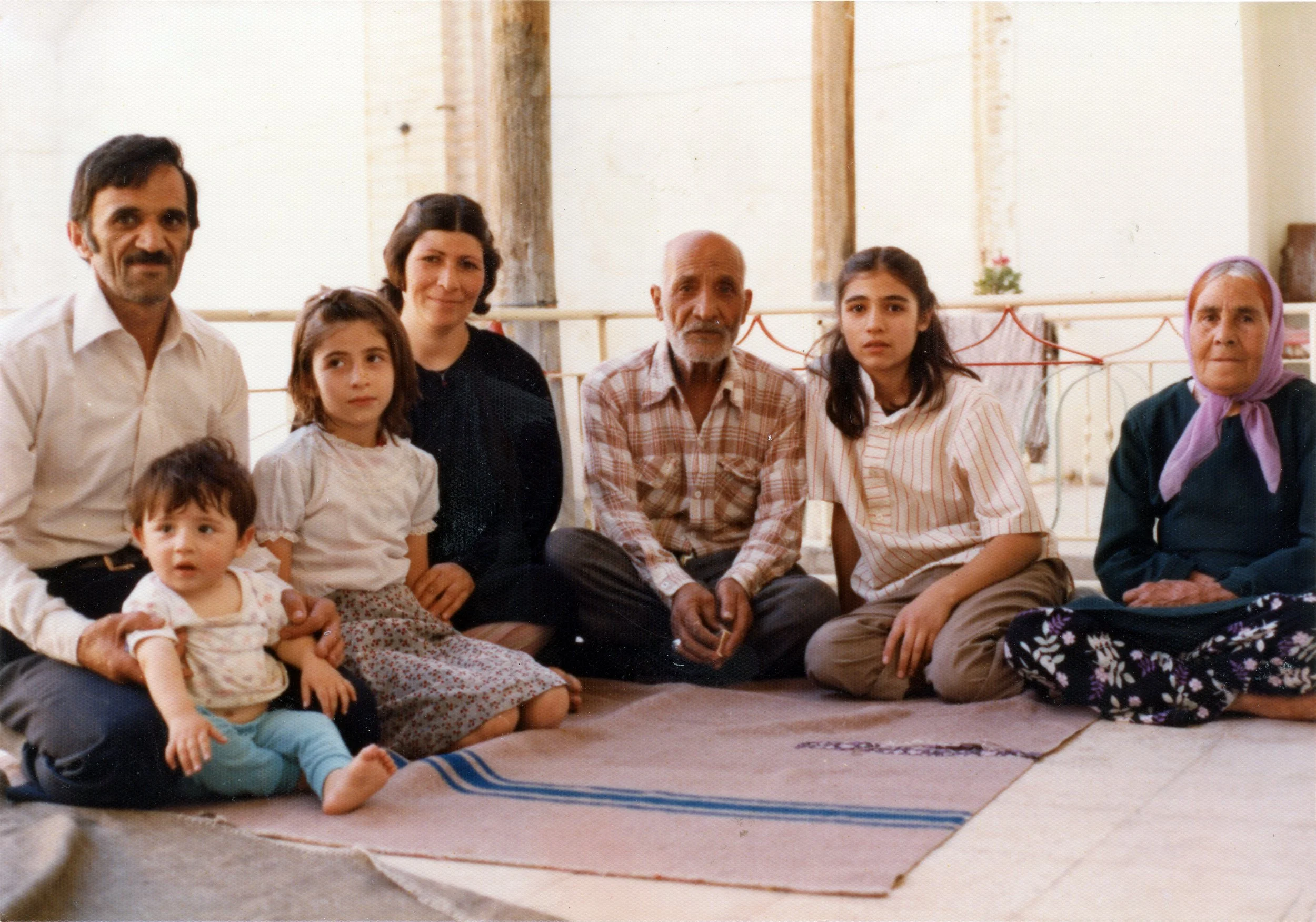
From my father, I learned the importance of documenting things. He was almost obsessed with documenting everything, just like me. He took photos, filmed things, and kept everything. At the time, many of these things may not have seemed important, but years later, you realize that these simple images and documents become part of your memory and sometimes even part of history. I think I got this need to document and preserve things from him, and of course it had a huge influence on this film.
And from my mother, I learned persistence and not giving up. I watched her for years, both in her life and in her work, facing many difficulties but always finding a way to continue.
So maybe I didn’t inherit my cinematic language directly from them, but I inherited two things that are just as important for me as a filmmaker: from my father, the need to document and preserve, and from my mother, the strength to keep going.
Rashid says, “History will no longer have books. Now sound is evidence.” That made me think, especially today, when technology and media constantly give us more news and images in real time. Do you think this gives us more opportunities to connect with one another and become closer, or does it make people more indifferent and numb?
I think both things are happening at the same time. On one hand, technology has brought us closer to events that, in the past, we might never have been able to witness. Today, someone with a phone can document something, and a few minutes later millions of people around the world can see it. This is a very powerful thing, especially in countries where the government tries to control information or create its own version of what happened.
In Iran, this is especially important to me. During many protests, ordinary people with their phones became the people documenting history. They were not only filming for social media. Maybe they didn’t even know it at that moment, but they were creating evidence and historical memory. These images can remain for years and stand against the official version of history.
That is why Rashid’s sentence, “Now sound is evidence,” is so important to me. Today, we can say that sound, images, and even a few seconds of video recorded on a phone can become historical evidence.
But at the same time, there is a contradiction. Every day we see so many images of war, violence, repression, and death. Sometimes we see something that should deeply affect us, but a few seconds later we move on to the next image. This endless flow of images can make us numb.
So I don’t think technology alone brings us closer together or makes us more disconnected. The question is what we do with these images. Do we just see them and move on, or do we stop, remember, and allow them to become part of our memory?
Maybe for me, as a filmmaker, this is one of the roles of cinema. Cinema can take an image out of the fast and endless flow of news, give it time and context again, and ask the audience to really look at it. Because documenting is important, but remembering is what keeps that documentation alive.
Your film is about the past and present of your country, but also about your life outside Iran and your daughter, so in a way it is also about the future. Different women seem to have had an important influence on your life. What would you like women who see your film to take away from it? What would you like the film to leave with them?
I tried to make the women in my film strong, but I think much of this happened naturally, maybe even unconsciously. When I look at my own life, the women I have met have often been much stronger than the men I have known. The women in my family, my friends, and many other women I have met over the years have shown me this strength in different ways. So naturally, this perspective became part of the film.
Becoming a mother also changed the way I looked at the past and the future. When my daughter was born, I started thinking more about what we pass from one generation to another. Not only our difficult history, but also our memories, our strength, and our hope. I don’t know what relationship my daughter will have with Iran or with this history when she grows up, and I don’t want to decide that for her. But I want her to know where she comes from and to know something about the generations of women who came before her and the path they have taken.
And when I think about that path, of course I think about the Woman, Life, Freedom movement. For me, it is one of the most progressive and important movements in the recent history of Iran. There is no specific chapter about this movement in the film, but I feel that its spirit is present throughout the film. Actually, in several Q&As, people have mentioned that they could feel the strong presence of Iranian women throughout the story. I think this happened because the strength of women is already deeply connected to the history I am telling.
At the same time, I don’t want my film to tell women that they have to be strong. Women, especially Iranian women, have already been forced to be strong enough. What I would like instead is for the film to remind us of the strength that is already there. The strength of women who have resisted, lived, created, and continued despite all the pressure.
And if women I personally admire watch the film and can feel some of this strength and the presence of Iranian women in it, that would mean a lot to me.
Maybe in the end, this is what I would like women to take away from the film. Not a specific message or lesson, but a reminder of the strength that already exists within them and in the women who came before them.
The idea that people are constantly rehearsing for a revolution that will truly succeed, is very interesting. What do you think is necessary for a revolution to happen? Is it even possible to come close to something like a “perfect revolution?” And do you see making this film itself as a kind of revolution?
I honestly don’t know if something like a “perfect revolution” really exists. Maybe I am even a little afraid of this idea, because when we think a revolution should reach some perfect and final point, we may get close again to the dangerous idea of one absolute truth.
For me, the title Rehearsals for a Revolution is more about a process than a destination. When I look at the recent history of Iran, I see people who have tried again and again, who have failed, who have been suppressed, but who have come back and tried again. And each time, they carry something from the previous experience with them. It is as if every uprising teaches something to the next one.
That is why the word “rehearsal” is very important to me. In a rehearsal, you make mistakes, you fail, you learn something, and you start again. But at the same time, a rehearsal is not only preparation for something that will happen in the future. The rehearsal itself is also part of the process. Maybe freedom is not only a moment that we will reach one day. Maybe trying for freedom, learning it, and practicing it are already part of being free.
And I think if real change is going to happen, changing a government is not enough. Maybe the hardest part of any revolution is changing society itself. Changing the way we think, the way we relate to each other, and the way we think about power, women, freedom, and other people’s right to choose. And this kind of change begins long before the moment we call a revolution.
Do I think making this film is itself a revolution? No, I wouldn’t make that claim. But I do think it can be a political act and maybe a small form of resistance. One of the things an authoritarian government tries to control is memory. It tries to erase the past, make certain people disappear from our memory, and replace history with its own version.
For me, making this film was a way of resisting that forgetting. It was a way to preserve people, images, and memories that could be erased from the official version of history. If remembering itself can be a political act, then maybe making a film about remembering can also become part of that resistance.
So I don’t see this film as a revolution. I see it more as one of those rehearsals.