
In Conversation: ‘Rogue Trooper’ VFX Supervisor Marty Waters
by Mars Dalys
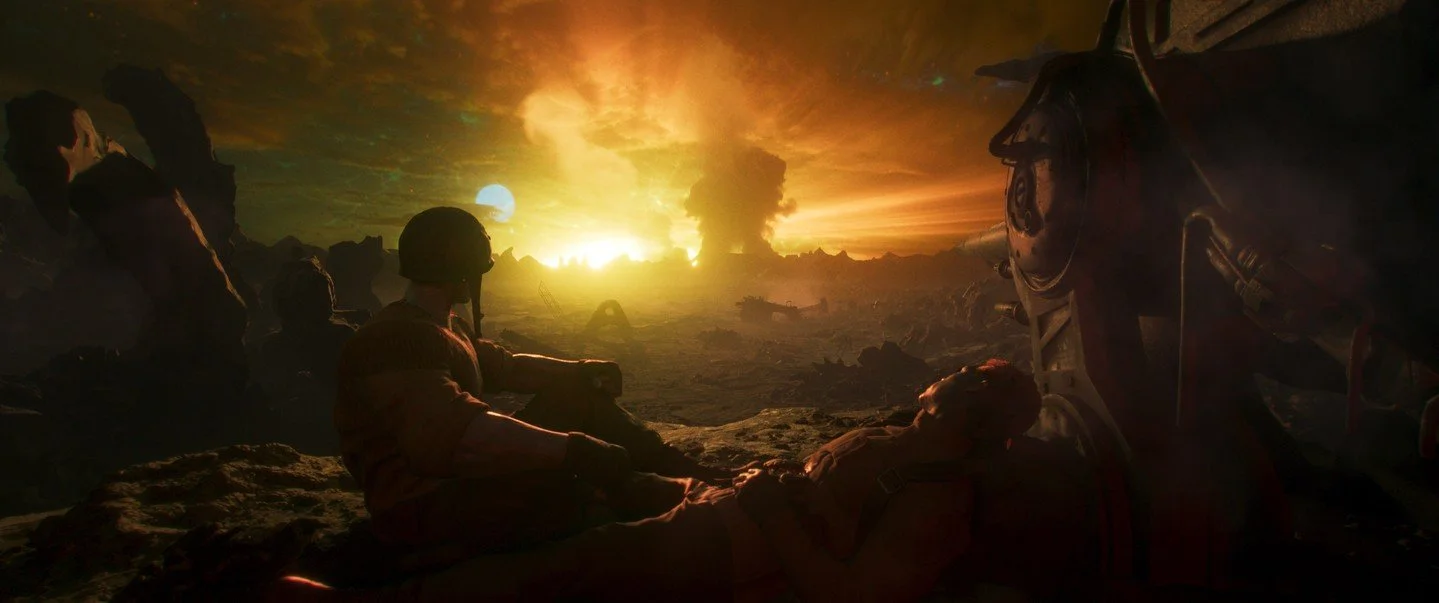
After a career directing live-action films such as Moon (2009) and Mute (2018), Duncan Jones stepped into the world of animation with his latest work: Rogue Trooper (2026). Based on the eponymous 2000 AD comic strip by Gerry Finley-Day and Dave Gibbons, the film is an explosive cocktail of science fiction, action, and comedy.
19, a genetically modified soldier, finds himself the sole survivor of a failed operation and is alone on a deserted planet. Wishing to seek revenge on the traitor who sold them out and save his squadmates, whose personalities have been stored in his equipment, he embarks on a journey towards enemy lines.
Marty Waters, the VFX Supervisor of the film, had the mission to recreate the war-torn planet of Nu Earth and its toxic atmosphere. To do so, he used over 1300 VFX shots built through Unreal Engine, as he explains on his website. In June 2026, Rogue Trooper had its world premiere at the Annecy International Animation Film Festival, and I got the chance to speak with him about the process.
Could you give us an overview of how you got into visual effects? Did you always aspire to become a VFX supervisor?
I started out by doing a Bachelor of Multimedia, which offered a major in 3D animation, primarily for the gaming industry. However, instead of moving into gaming, I took a job in documentaries and started my TV [and] film career there. Becoming a VFX supervisor was never really my end game, however, once I got into film, I felt drawn towards the role.
Despite the use of motion capture and Unreal Engine, the film’s final look doesn’t resemble a video game. I feel like the visual effects play a big part in this phenomenon. How did you achieve that?
One of the first things I did when I came on the film was change the workflow from being finished in Unreal, to a more traditional VFX pipeline. We kept Unreal as the main piece of software and the render engine, however used traditional DMP (Digital Matte Painting) and 2D compositing for the finish. This gave us a hybrid look in the end which stayed true to the look of the comic.
You’ve mainly worked on live-action films in the past. Was there a difference in your approach with Rogue Trooper?
Yes, there was a lot more trouble shooting with Unreal Engine and making sure it behaved. We were really pushing it to its limits and sometimes it felt like both a technical and creative task. Rogue also gave us a lot of freedom to explore with the look, we were not chasing photorealism or having to match to a plate, so we had a lot of creative freedom. Something I think a lot of the team enjoyed taking part in.
It is your second collaboration with Director Duncan Jones, after Mute (2018). Could you tell us about how you started working together and what it’s like?
I love working with Duncan. He is very aware of what’s possible but also very fair when it comes to what is being asked. On Rogue, we had a huge task in creating the world, and at times we had to make compromises. Duncan is very sympathetic to this and happy to work out a solution. At the same time, he is also very sure in his vision and not afraid to keep pushing for it.
How was the original Rogue Trooper comic strip used in your work? You had to (re)create a super stylized atmosphere using the tools of cinema, was it challenging?
We had concept art created for every scene in the movie which really captured the essence of the comics. We used this as our library to ensure we stayed consistent to the look. As mentioned above, having this hybrid workflow of Unreal, DMP, [and] Nuke compositing really allowed us to explore our looks and create something unique.
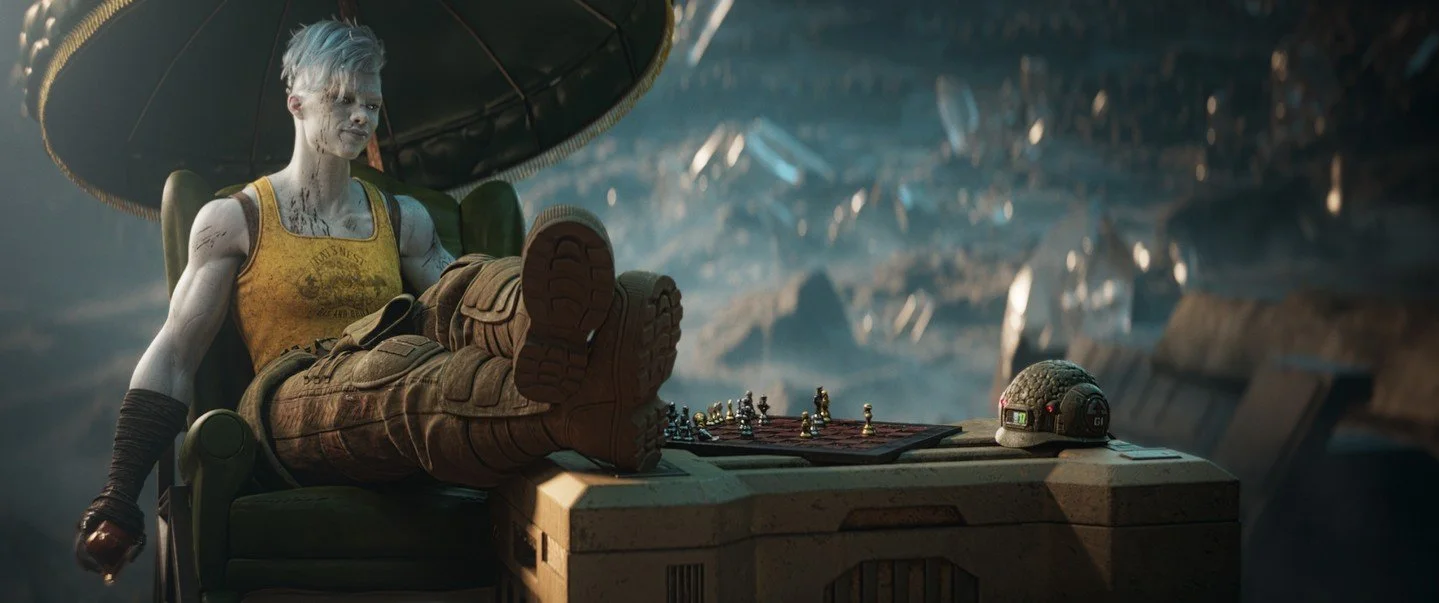
Rogue Trooper premiered at Annecy to much excitement from the crew. After years working on the film, Waters shared that the initial audience reactions had been a relief, the applause after the screening lasted for several minutes and was accompanied by enthusiastic cheers around the room.
Waters teased that his next project brings him back to live action as he is set to adapt a classic animated TV series.