
Motion Capture: A Guide to an Acting Revolution
by May Renault
Acting is one of the very few sectors of the film industry unshaken by time. Already a millenia-old art by the time movies came to be, there was little that could be done to attempt a revolution at its core. The only major change that comes to mind is the transition from mute to speaking cinema, which unraveled who was and was not made for the big screen. Since then, acting has remained the only artistic field unbothered by industry changes that come from the never-ending progress technology has to offer. But nobody anticipated the stir that motion capture would create.
Today, the process of motion capture, or mocap, is well known: a performer wears a suit with reference markers and sensors on key joints and on their face, so that the cameras can digitally record them and turn them into a 3D model to insert into a desired scene. Over the past two decades, it has become synonymous with realism, transcribing human movements and expressions with an accuracy the animation medium has trouble achieving.
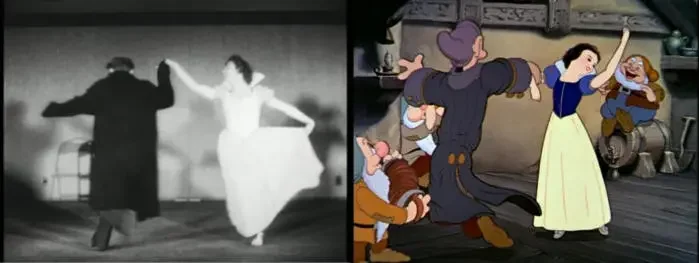
Snow White and the seven dwarves rotoscoping
Motion capture was stuck as a concept until animators saw its potential. Walt Disney started using rotoscoping, a technique that traces over motion pictures to create realistic animated motion, in Snow White and the Seven Dwarfs (1937) along with other animated features for a period spanning 60 years. It wasn’t until the 1970s that rotoscoping was brought into the light by the experiments of various filmmakers such as Ralph Bakshi with his animated Lord of the Rings movie in 1978. However, none of this had a real impact on the industry at the time.
Lee Harrison III, a name that not many people know, held both a fine art and a mechanical engineering degree. Inspired by the old technique of rotoscoping, his academic skills led to a decade of working on an analog computer animation system supported by a suit that tracks the movements of the wearer to render it on screen in the 1960s. The finished product was manufactured under the name of the company he created for this project, Scanimate, and he won an Emmy in 1972 for his work. This was the blueprint for modern mocap softwares.
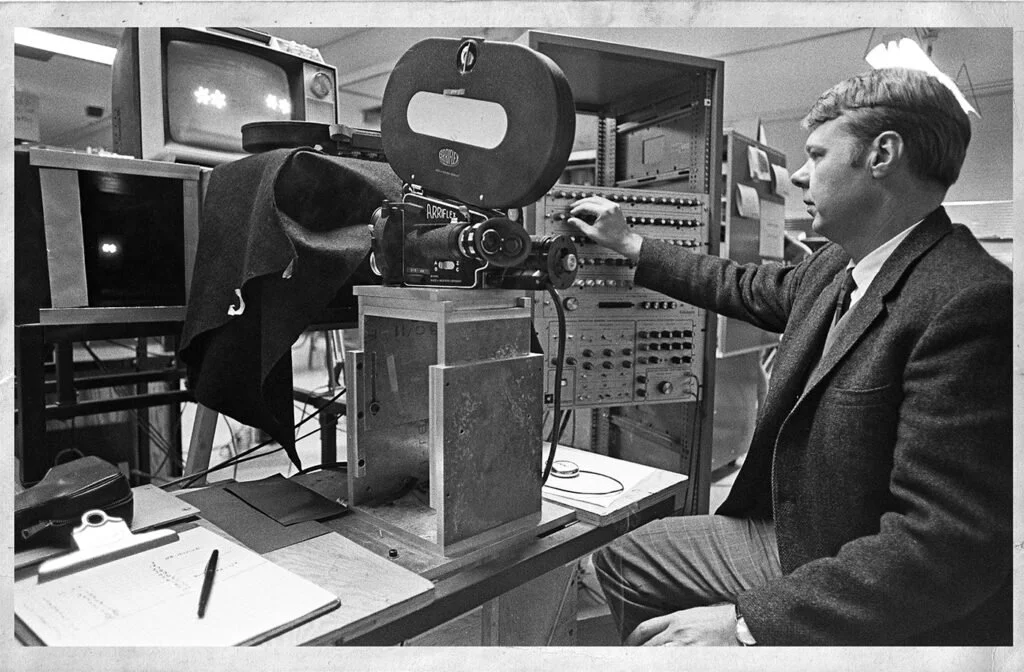
Lee Harrison III
But the real turnover happened at the junction of the new millennium. Sinbad: Before the Veil of Mists (2000) was the first movie made entirely with motion-capture performances, and despite being widely ignored by audiences and grossing only $30,000 of its $30 million budget, it was an eye opener for professionals. That film proved that motion capture could give realistic on-screen results—and it opened a portal to a new form of acting.
At first costly and time consuming, studios used motion capture for minor elements. Ridley Scott took advantage of the technology to multiply the performances of 2,000 extras into a humongous crowd worthy of the Colosseum in Gladiator, and George Lucas digitally captured the movements of Ahmed Best for Jar-Jar Binks in Star Wars: The Phantom Menace (1999), which paved the way for the future of motion capture in action films.
The real acting revolution started in 2002, with the release of the second opus of The Lord of the Rings trilogy, The Two Towers, and the debut of Andy Serkis’ Gollum. Non-human characters were previously made with animation or CGI, and in the few previous attempts at motion capture, the roles were small enough that the performer’s acting would go unnoticed. While Jar-Jar Binks’ movements were fluid-looking and aged well, his facial expressions look rather stiff, and his eyes emotionless. What makes Gollum so memorable is how real he feels, especially next to the other characters. His facial expressions, the shift in his dual personality, and the way his skin stretches around his mouth makes you forget that he is entirely digitally rendered. This is because Wēta Digital, the company behind the CGI of the trilogy, was the first to figure out how to use motion capture while the actors were performing on set. Prior to The Lord of the Rings trilogy, the only way to record motion capture was in a separate studio equipped with all the necessary gear, isolated from the rest of the set.
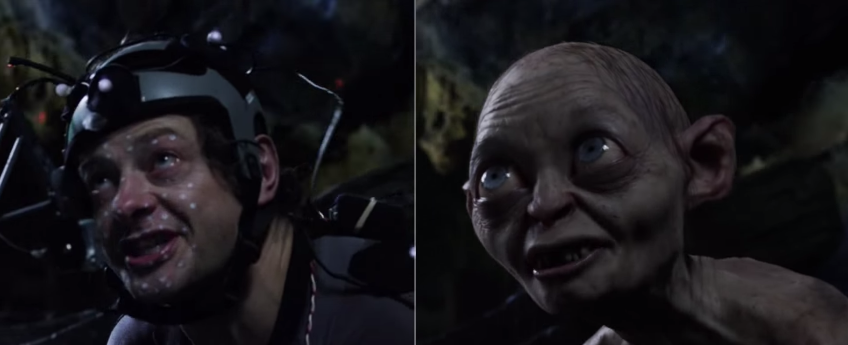
Andy Serkis as Gollum
Once this technology was established, the additional elements like the evolution of realism, micro-expressions, and in-scenery character insertion progressed quickly. Motion-capture performances became a matter of casting skilled actors, as the technology was becoming more and more accurate. Over time, names like Lupita Nyong’o or Bill Nighy made their way into roles that shaped them into entirely digitally made entities. This is how we ended up with unforgettable motion-capture performances like Davy Jones in Pirates of the Caribbean (2006–2007), Caesar in The Planet of the Apes saga (2011–2024), and the revolutionary Avatar movies (2009–2025). Motion capture became so admired by the public that there are calls from both inside and outside the industry to officially recognize and award motion-capture performances at the Academy Awards, a request that has yet to be considered today.
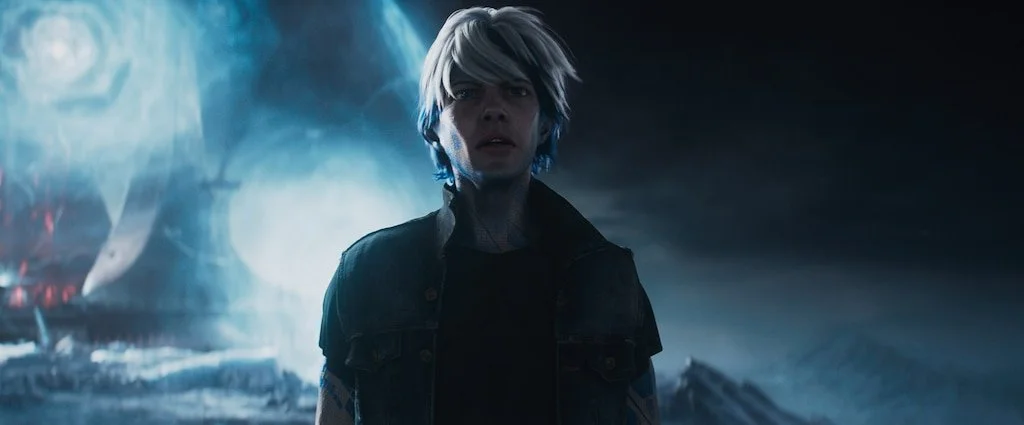
Parzival from Ready Player One
There are debates about the legitimacy of acting in motion-capture performances. Some argue that since the actor’s face is “hidden” under layers of digital effects, it is not really acting. However, the wonder of motion capture comes from the fact that the acting performances are combined with the skills of digital artists to produce a final 3D enhanced product. One cannot work without the other, and that may be what makes this filmmaking technique so unique and impressive to audiences.
Since motion capture draws its strength from the accuracy with which it renders the smallest facial expressions and complex body movements, it is safe to say it brought on an acting revolution. It revealed new talents and changed the careers of those who believed in its creative capacities. Breaking the spell of consistency in the acting world, motion capture re-invented on-screen performances and how we perceive them. With new challenges to acting arising in the industry, like the use of generative AI, motion capture and its evolution is something to look out for as an indicator of the persistence of human art and creativity.