
Different Shades of Nude: How ‘Heated Rivalry’ Is Changing the Narrative Around the Romance Genre
by Pal. V
While the world celebrated Christmas, television show fanatics were looking forward to the last week of 2025 for a different reason. The highly anticipated season finale for the first season of Heated Rivalry dropped at midnight between Christmas Day and Friday. This came right on the heels of its penultimate episode earning a perfect 10.0 ranking on IMDb and becoming one of the highest rated episodes of television of all time. The Canadian production—a Crave original—is an adaptation of the Game Changers series by author Rachel Reid. Focused on LGBTQ+ hockey players that play on the MLH (the fictional representation of the NHL), it explores themes of being closeted, mental health, toxic masculinity, otherisation due to national or ethnic identity, and the very specific struggles of being different in the casually homophobic and rigid world of men’s sports.
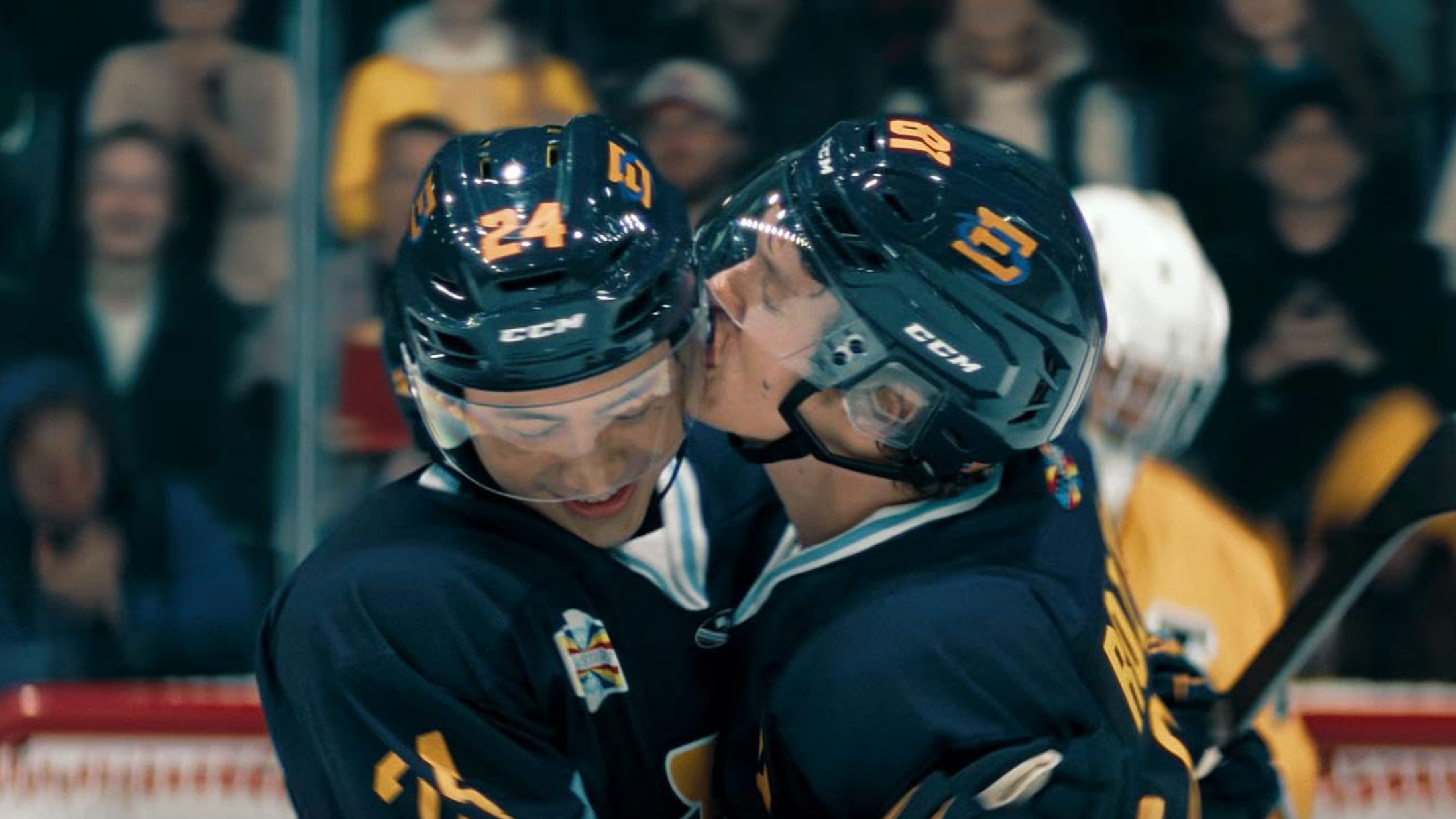
When the show was first announced, both romance book readers and the general public anticipated a smutty sports romance, especially with the crew wholeheartedly embracing the truth that “sex sells.” In the typical attitude directed towards romance stories, there was an expectation for the show to be a cheesy and lighthearted watch. Something to pass the time and engage with for entertainment more than art.
However, showrunner Jacob Tierney has shown the world one thing. Sex does sell, but what this show is selling is more than sex. It’s selling the truth that sex can be beautiful, sex can be healthy, sex can be intimate, and sex can be a powerful narrative tool for character exploration. While tons of people tuned in for a fun time (and it has been a fantastically fun time), many also walked away awed by the show’s production and execution, cementing its position higher up the scale of what’s considered premium television and storytelling.
How To Tell a Story
If there’s one thing Heated Rivalry has absolutely finessed, it’s the ability to adapt a book. The show found a way to add its own flavours, plot points, dialogue, and depth to existing characters without detracting the books. As most book readers have pointed out, they feel incredibly seen, not just because the team behind the show honoured their contributions and love, but also because the show captured the very parts of the book that drew the fans to this story in the first place. A lot of dialogues and pivotal scenes in the show are directly lifted from Rachel Reid’s source material, putting to rest the idea that the show could sustain itself without relying on the book. Instead of contributing to the existing narrative about romance books (“shallow,” “vapid,” “incapable of eliciting emotional responses”), the show highlighted almost the entirety of the book, not just picking and choosing what looks most appealing.
With a limited budget, Jacob Tierney and the entire production team have created a masterpiece, a true artwork. The time jumps are masterfully handled, slowing down to let us feel how time drags on for these characters, while also rapidly flying by in the moments of the relationship that feel whirlwind. Props are also relevant to the time period, the clothes reflect the fashion of the era and the characters’ styles. If you think it’s just Connor Storrie’s excellent accent and quick learning of Russian that sells his rendition of Ilya Rozanov, you’re mistaken. The clothes and hair sell it, too.
The same holds true for the clothing choices for Shane Hollander (played by Hudson Williams), who sticks to what feels safe and comfortable. His character is happy to follow an in-universe stylist to tell him the rules (following them like a recipe, sometimes), who clearly cares for his clothes to the point of making them last for years. We see the worlds these two come from and how they carry it with them on their physical being. The hair and makeup department also showed them aging without jarring shifts. It might not be evident episode to episode, but take a still from the season finale and put it against one from their first episode, and you would believe in a heartbeat that this romance has been brewing for a decade.
The show’s production was smart with their budget, investing in the areas that elevate the final product, while working cleverly in the places they had to dial back. Scenes that relied on shooting in front of a video screen were lit smartly, and the actors transitioned from different stages of their character arc while shooting multiple scenes in the same location to make the most of what they had available. Lighting not only kept the scene feeling grounded but also told the characters’ stories. Illicit meetings in dark rooms with passionate red lighting, emotionally distanced dialogue washed in cool blue, vulnerability threatening to burst open with warm edges, and joy and safety encompassed in yellows and oranges.
The combination of lighting, scene blocking, and parallels takes the audience through the character journey in a visceral manner. There are artistic callbacks to show how far Ilya and Shane have come (shoes touching under tables, personal details remembered as a sign of caring about each other). We see them go from being shrouded in the dark, unable to even meet each other’s eyes, to accepting the comfort of togetherness in a cottage where sunshine streams in through floor to ceiling windows, their love finally laid bare.
Another aspect that adds to this visceral immersion is the use of long takes and audio design. There are instrumentals and needle drops to compliment scenes, but a lot of scenes also take place without any music. Instead, we hear the surrounding noises, especially in scenes blocked to highlight where the characters are. In scenes where there is a vast divide between Ilya and Shane, we can hear fans and teammates all around. When they’re at Shane’s cottage, we only hear the peace and quiet. Even a scene as simple as Shane picking up Ilya from the airport is filmed through the windshield of his car, where we can see people milling about them and chatting, adding to the weight of terror they must feel about being recognised.
Some of the scenes that particularly stood out with their audio design and scene blocking are the ones where Ilya is conversing with his family or in Russia.
In the fifth episode, we see Ilya Rozanov’s character deal with his family after the passing of his father. Right before he attends the wake, we see him standing in his apartment for the last time. A possible creative choice for this scene could’ve been sad instrumental music, something to evoke pain within the viewer. Instead, the sound design team made the impactful creative decision to show instead of tell. We’re sucked into Ilya’s world, only hearing the sounds of the wind rushing outside, able to feel the eye of the storm that Ilya is stuck in. We realise along with him that this is the last moment of quiet before everything changes forever.
This is not the first time visual and audio is used to create the constant sense of foreboding that surrounds the Rozanov family. Throughout the show, Ilya—an otherwise assertive and loud character—is minimised in the presence of his family. Phone calls require him to leave the room, voice low and hissing. When he’s forced to attend a call while Shane is in his house, Ilya appears small and helpless, the white walls almost trapping him. Whenever Ilya speaks to his brother Alexei, he is either hidden behind mirrors or pillars, or shrouded in darkness. The scenes make the viewer feel like a child that is hiding behind a corner, or crouching and eavesdropping on a fight in their own home.
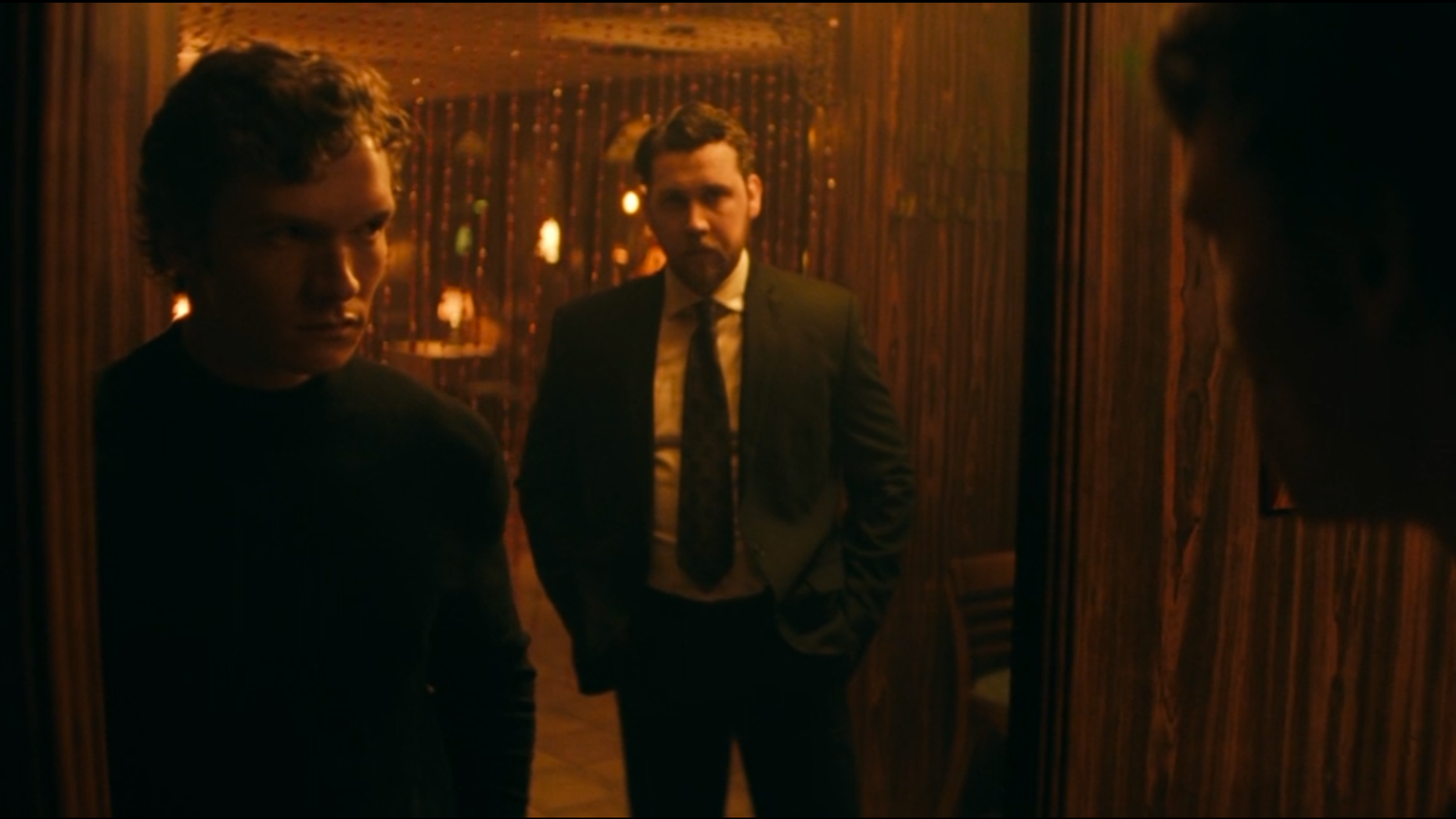
The first time we see Ilya and Alexei meet face to face, they are shown to us through a reflection. We literally see how they forcibly hold a mirror up to each other, forcing each other to confront themselves. In the end, Ilya turns away from his own reflection because he can no longer stomach the side of himself that his family brings out. Meanwhile, Alexei is forced to stare at his own reflection and fix himself before he returns to a family he keeps failing.
Of course, none of this would’ve been delivered as efficiently and impactfully as it was without the cast’s performances. Each of them brings a profound understanding of the character they portray, reading between the lines and delivering performances that force audiences to pick up cues and get to know these characters beyond the script. While Connor Storrie presents a masterclass in accent and language work, combined with bodying the emotional volatility of Ilya Rozanov, Hudson Williams succinctly delivers the inner turbulence that Shane Hollander keeps tightly masked. François Arnaud and Robbie G.K. also bring to life the endearing vulnerability and gentle confidence that wraps around their respective characters, Scott Hunter and Christopher “Kip” Grady. Sophie Nélisse, Christina Chang, Dylan Walsh, Ksenia Daniela Kharlamova, and Nadine Bhabha also bring everything to the table with powerful supporting performances creating memorable characters.
Sex Sells…?
The same love for the art is evident in the way the show handles sex. “Sex sells” is only the tip of the iceberg. It has certainly been the entry point for a lot of viewers, proving itself true. There has also been no shame about this, nor should there be, since it was no secret that the books are based on sexually explicit novels. If anything, the cast and showrunners’ constant commendation for their intimacy coordinator is a breath of fresh air at a time when there’s a mistaken narrative that intimacy coordinators are unnecessary. The show has shown us exactly why they’re not, their hard work not only creating a safe environment for the cast and crew, but also helping convey the emotions that go into the characters engaging in intimate scenes.
Nudity is a narrative tool on the show. The initial episodes depict physical nudity in an unabashed manner. No distracting music, no sweeping cuts to forcibly create a swell of emotion. Instead, we get to be in the room with the characters and see how they grow from timid and bolstered confidence to genuinely comfortable and passionate in their chemistry. The story takes us through characters experiencing lust-driven adrenaline rushes and making irresponsible decisions, to consciously choosing someone who lets them be comfortable in a way they aren’t anywhere else.
As the episodes progress, the focus shifts to their physical proximity, to their expressions, to their emotional intimacy. We go from having an out-of-body experience watching these characters make a career-ending mistake to feeling the emotional rush of them slowly but surely falling in love. By the end of the first season, there is very little nudity, and the explicit sex scenes are focused on the playful, relaxed nature of a couple as well as the emotional dam that has burst inside them and finally swept them away.
The show could’ve taken a safer path, a path more palatable to wider audiences who accept explicit heterosexual sex but get overtly critical and uncomfortable with queer sex. However, the show’s decision to keep the steaminess gives us two important messages.
One: There is no shame in the nature of the book the show is adapted from. Sex is a healthy part of many relationships, and does not exist in a vacuum. It, too, can be an effective narrative tool to show the nature of a relationship and the thought processes of a character. It creates a space where a character is forced to be stripped and vulnerable, and also gives them a chance to show the real armour they keep on aside from their clothes.
The second message: Adult romance stories driven by LGBTQ+ characters are allowed to take up spaces reserved for heterosexual artistry. The need for these stories is evident in the way the fandom is driven by women, people of colour, the LGBTQ+ community, as well as mental health advocates (given the show's depictions of neurodivergency, grief, loss, and more topics to explore in future seasons). It forcibly confronts audiences with the importance of romance, and how romantic relationships, personal identity, and growth are more likely to be symbiotic than not. They inform each other and cannot exist in a neatly compartmentalised manner. Even in the toxically masculine world of men's sports, which firmly upholds patriarchal ideas of strength, we are given two characters who are painfully human, who don’t see love as a weakness. Rather, their love is their strength and the constant that pulls them through, and the real obstacle is a world around them that fails to understand its power and importance.
Heated Rivalry is hardly the first LGBTQ+ show aired in recent history that dares to depict explicit sex. Social media users are not shy about pointing out other shows that use nudity and sex to explore LGBTQ+ relationships. However, Heated Rivalry has become a springboard for an important discussion that has been a long time coming: whether LGBTQ+ is a genre.
While not a perfectly linear parallel, LGBTQ+ media is susceptible to getting the same treatment as anime, which is considered a genre more than a medium. A person who might enjoy one anime is often suggested another with no consideration for variance in themes or plot. Heated Rivalry has also been met with potentially one-dimensional comparisons to other LGBTQ+ media, despite the massive divide between themes explored in each show. It has sparked the much-needed assertion that LGBTQ+ characters are characters first, not plot devices and tropes. They are capable of existing in different story settings with vastly different narrative goals, moods, and motifs. It widens the space LGBTQ+ media takes, from being one column in a list of genres, and expands it into an umbrella with its own set of genre variations. It is potentially opening doors for more stories without the pressure of being clubbed into one chaotic bag.
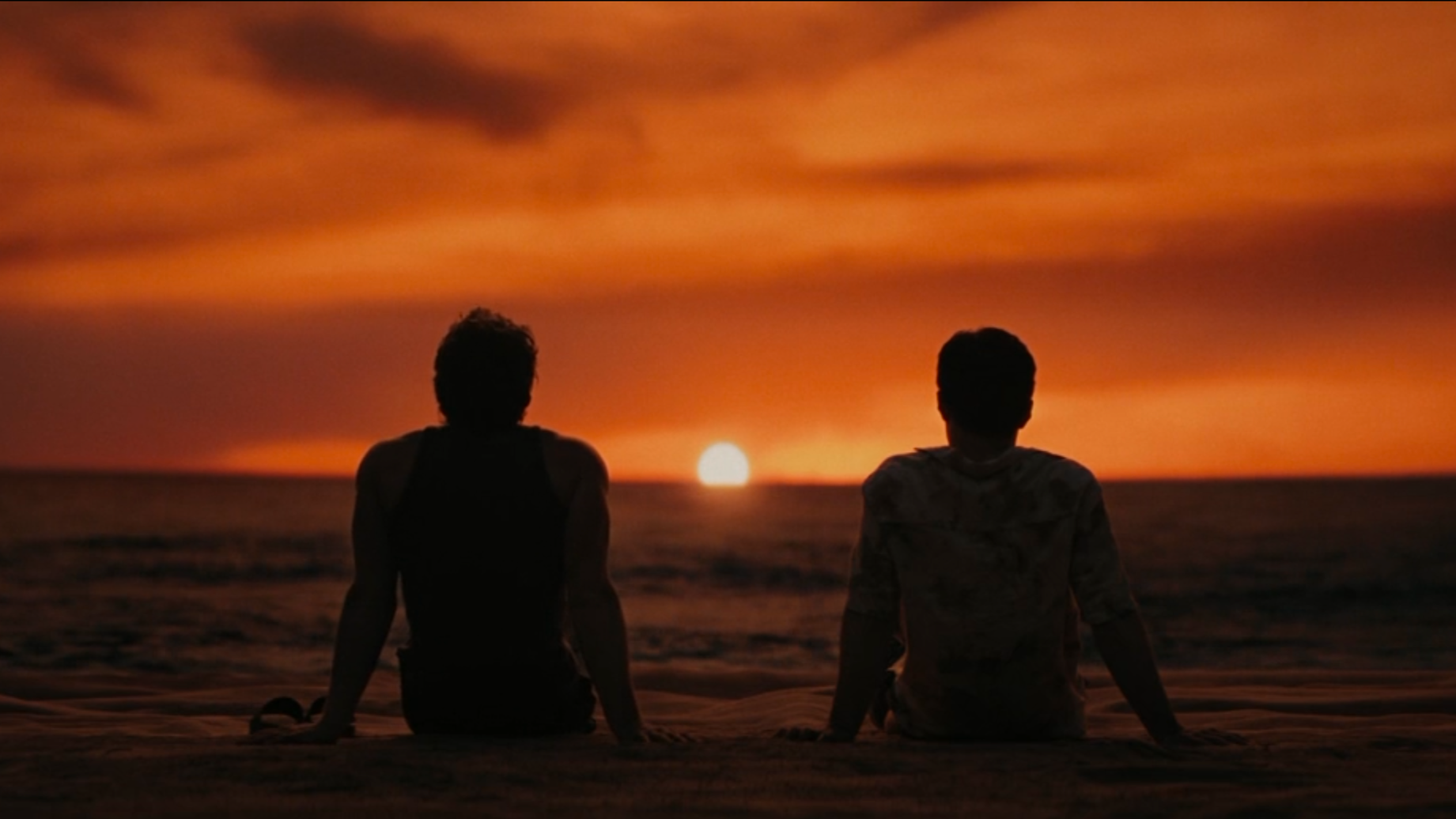
While we wait for a new season, Heated Rivalry is the gift that keeps giving, and with a hiatus between seasons, fans have more chances to return to the show and discover more hidden motifs and themes that are inserted into the final art piece. This is especially true for newer incoming waves of fans as the show’s streaming rights continue to be rapidly picked up across the world. It goes to show that art is a state of mind as much as it is access to resources, and the entire team behind the show has brought with them the love for the material and for their professions.
As for the show itself, scripts are yet to be written for the second season but fans have faith that the production team won’t unnecessarily drag the time between seasons. What we do know is that Shane Hollander and Ilya Rozanov’s story is far from over, and we can expect to see them—and maybe even more characters from the Game Changers universe—back on our screens in the (hopefully near) future.