
Don’t Judge a Cowboy by His Revolver
by Mars Dalys
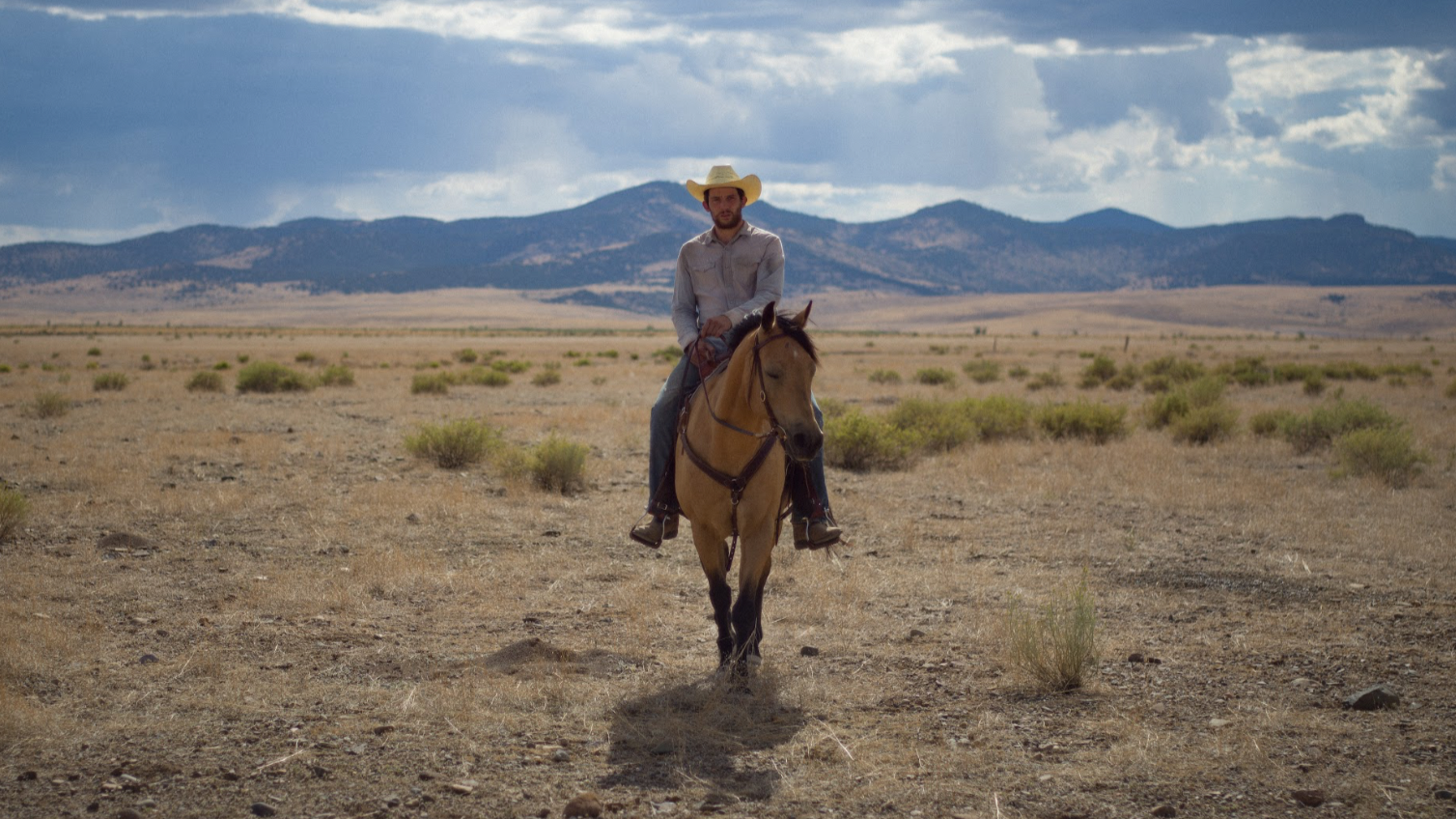
Rebuilding dir. Max Walker-Silverman
Gun belts, wide hats, and sunset duels, the cowboy has fueled the imagination of many authors, both in literature and film. Yet, the vision we have of these lonesome riders is not so faithful in depicting the real-life workers.
Dime novels, a type of cheap, popular fiction published in the United States, appeared in the late 19th century and brought a new type of narrative regarding western culture that set the pace for the cowboy trope. Most of the time, these stories depicted a white man arriving to an “untamed” area and saving a woman from a group of people—often Asians, Native Americans, Mexicans, or Jews. These stories featured infamous names like Kit Carson or Buffalo Bill, giving readers someone to latch onto. With sculptures, paintings, and the first lengthy novel The Virginian (1902) by Owen Wister, the cowboy became an American icon. It created an amalgam of reality, which was much less romanticized: A “real cowboy” was a person who worked with cattle, often struggling with poverty and being disregarded, without any links to fighting outlaws.
Today, the western archetype remains deeply ingrained in people’s minds. When the time came to invent a cinematic language and produce spectacular stories, it was easy for filmmakers to pick up the look and narrative foundation of the genre. Without checking how actual cowboys worked, spoke, or dressed, directors contributed to making up a fantasy of saloons and duels. The Great Train Robbery (1903) by Edwin S. Porter is an early example of the dynamic action that became associated with cowboys, which granted him an unprecedented commercial success.
As with many tropes, Hollywood’s role has been crucial in shaping a collective imagination. The massive industry and its heavy focus on entertainment found great interest in the fictionalization of the cowboy. They multiplied western films, building a world full of chivalrous heroes and glorifying the traditional values of the United States in the process. Suddenly, screens were full of epic train chases and damsels in distress. And, as with many minorities, Hollywood also furthered the development of racism towards Native Americans and indigenous cultures as a whole. By depicting them negatively in content mostly targeted towards adolescents, some directors caused direct harm to people. Despite still being considered a classic today, Stagecoach (1939) by John Ford falls right in these stereotypes with Apache tribes portrayed as bloodthirsty attackers and women only serving the plot to be love interests.
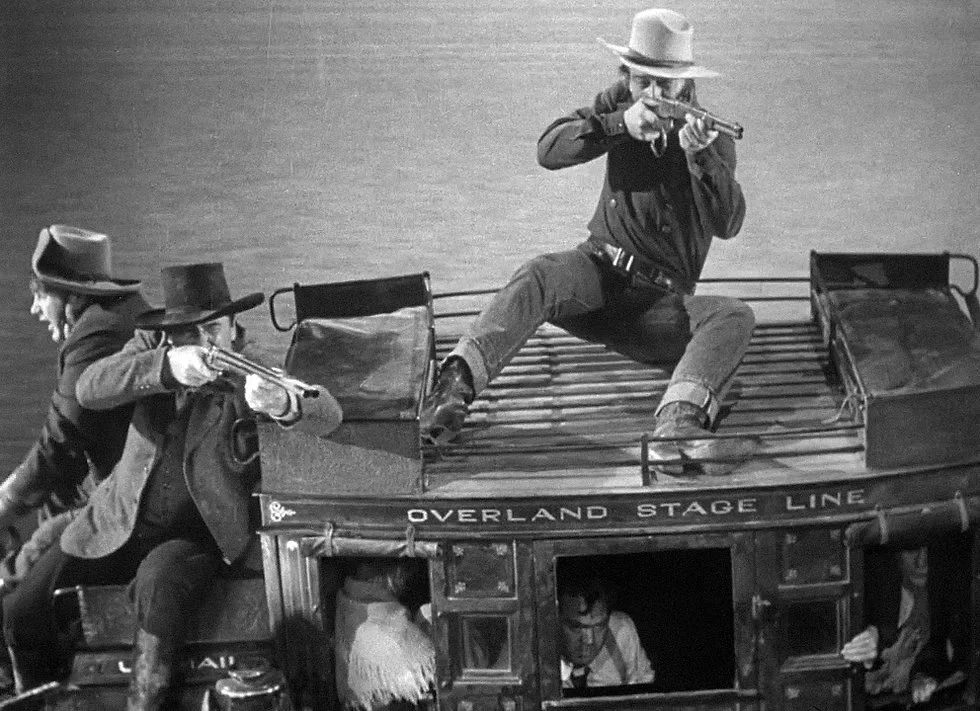
Stagecoach dir. John Ford
Later, a different kind of representation emerged and shifted the narrative again. Called the “spaghetti western,” the Italian genre blossomed between 1963 and 1978. Notably parent to the mythical The Good, the Bad and the Ugly (1966)and Once Upon a Time in the West (1968) by Sergio Leone, it was an example of reappropriation: At the time, the western as a genre had started to decline and it got back on its feet thanks to these productions. Despite having mostly been a critical failure, it brought something new to the cowboy—even if still not accurate to reality. It was the start of morally grey characters and dark humor. Far from the moral values of American cinema, protagonists were examples of individualism. Violence was sought after, especially towards women, and theft was the protagonists’ lot. The period put an end to the black-and-white psychology of the cowboy while also bringing aesthetic novelties to the genre, such as a bigger emphasis on music.
As time passed, some more accurate representation started to emerge sparingly, especially where we would not expect it. As an example, Spirit: Stallion of the Cimarron (2002) by Kelly Asbury and Lorna Cook positions a Lakota tribe against the US cavalry instead of falling into the typical clichés. Where we would have expected a classical “Cowboys vs. Indians” fight, the antagonist of the film is the army itself which denounces the colonization that was actually happening.
But all these examples are not as opposed as we might think and, despite their contradictory appearance, they all have something in common. Since the beginning, the focus has been on external conflicts, with clear sides and oppositions, and battles fought with shotguns, rifles, and revolvers. However, if we take a look at more recent works, we find that a shift has occurred. The figure of the cowboy became more poetic, with a focus on internal or social conflicts.
Now, western films can be associated with wide landscapes and a slower rhythm. Forests, mountains, or plains like those of the Colorado Plateau’s Monument Valley act as canvas for reflection and introspection. In their subjects, films allow themselves to go beyond the epic battles. The image of the lonely cowboy, moving places and struggling to maintain connections, is born.
In 2005, Ang Lee directed Brokeback Mountain, which returns to a more accurate reality, where workers toiled with animals in difficult conditions to gain money. For many of them, the main enemy was the weather. In his memoir, We Pointed Them North: Recollections of a Cowpuncher, E.C. Abbott recalls, “One night it come up an awful storm. It took all four of us to hold the cattle and we didn't hold them, and when morning come there was one man missing,” reaffirming the accuracy of a similar scene from the film. In addition to its accuracy, Brokeback Mountain introduced more emotive cowboys: The plot is based on the relationship between the characters and their internal turmoil. A large part of the story is also told in wide shots and silences, far from the fast-paced westerns.
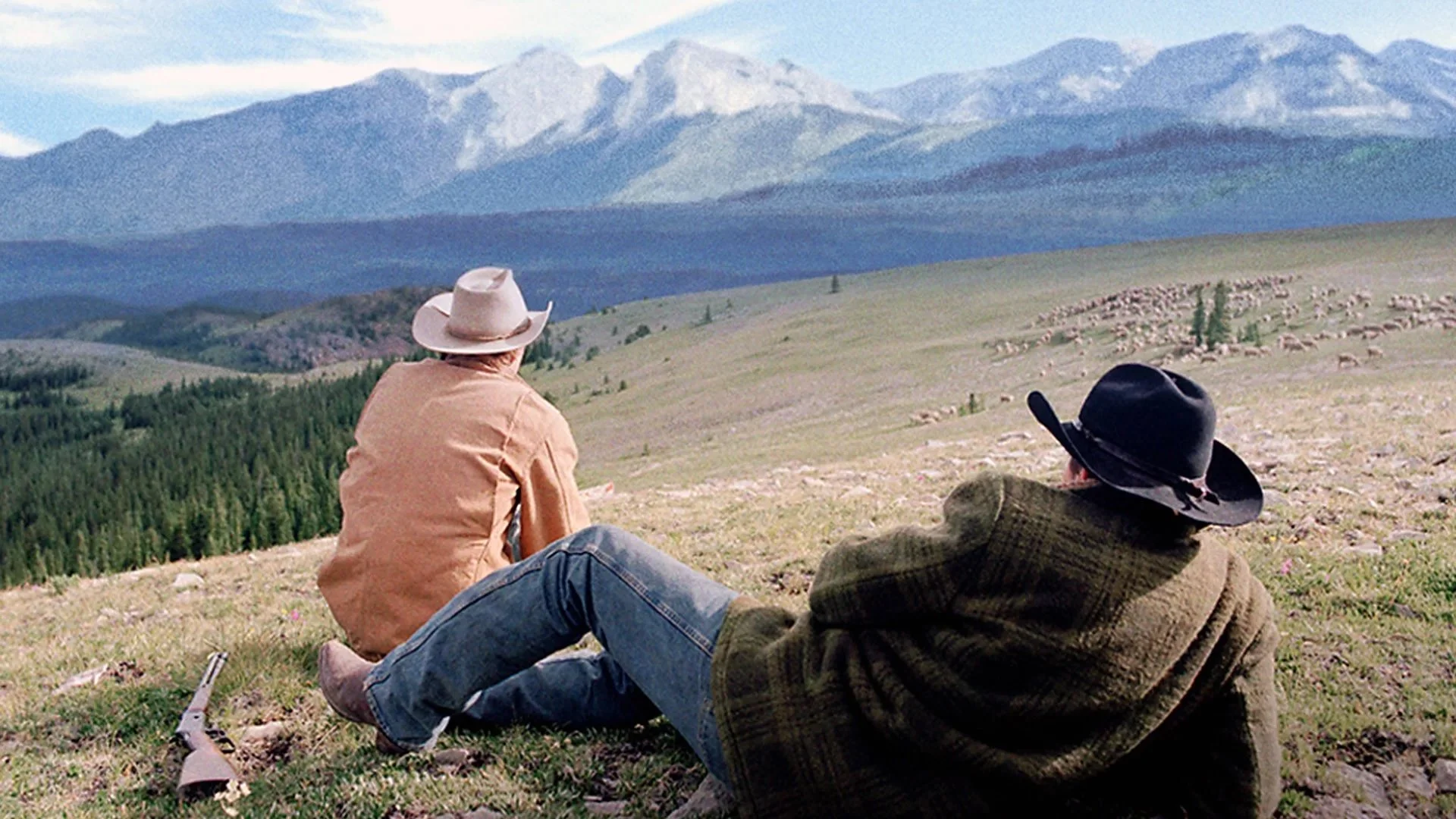
Brokeback Mountain dir. Ang Lee
We find the same idea in the recent Rebuilding (2025) by Max Walker-Silverman. Western elements like the ranch, the wide hat, or the mountains are present but the focus of the film is on the main character’s young daughter. It tells us about finding community after having lost everything, and the knots people weave together in resilience. After having been courageous, treacherous, and angry, the cowboys now allow themselves to be melancholic and grieving. Even if there is still a marginal representation of women and ethnic minorities, directors are making choices more aligned with historical realities.
Moreover, some films do have a desire to reappropriate the codes of the genre. Django Unchained (2012), directed by Quentin Tarantino, precisely highlights a more social question. The film features the vengeance of a former slave who recovered his liberty and is looking to get his wife back. A commercial and critical hit, Django Unchained proves that a western can focus on marginalized groups and be a success. In the future, it could encourage directors to follow in its footsteps and be more daring in their choices of representation.
Despite flying under the radar and not adhering to a specific time period, the western has also been a playground for exploring LGBTQ+ stories. In more or less explicit ways, films like Calamity Jane (1953) by David Butler, Lonesome Cowboys (1968) by Andy Warhol and Paul Morrissey, Desert Hearts (1985) by Donna Deitch, or Strange Way of Life (2023) by Pedro Almodóvar tells us about queer characters.
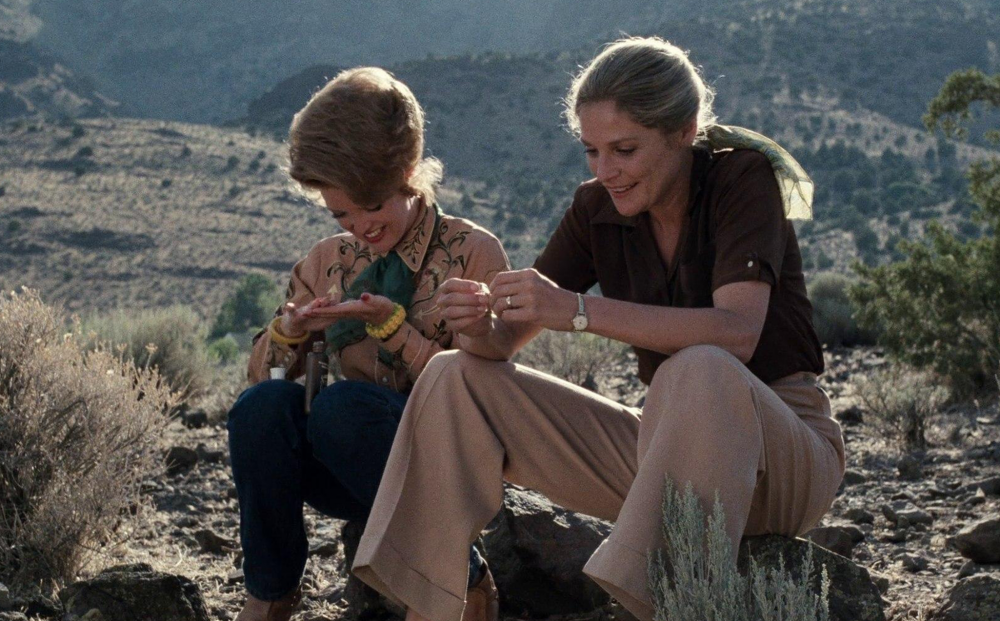
Desert Hearts dir. Donna Deitch
Even if, in its globality, the cowboy has always been mischaracterized and romanticized, there has been an encouraging will to shake things up over the years. We can hope to see even more facets of these characters in future films, exploring more political and social issues.