
2.0 by BTS: ‘Oldboy’ and the Art of Longevity
by Emma Batterman
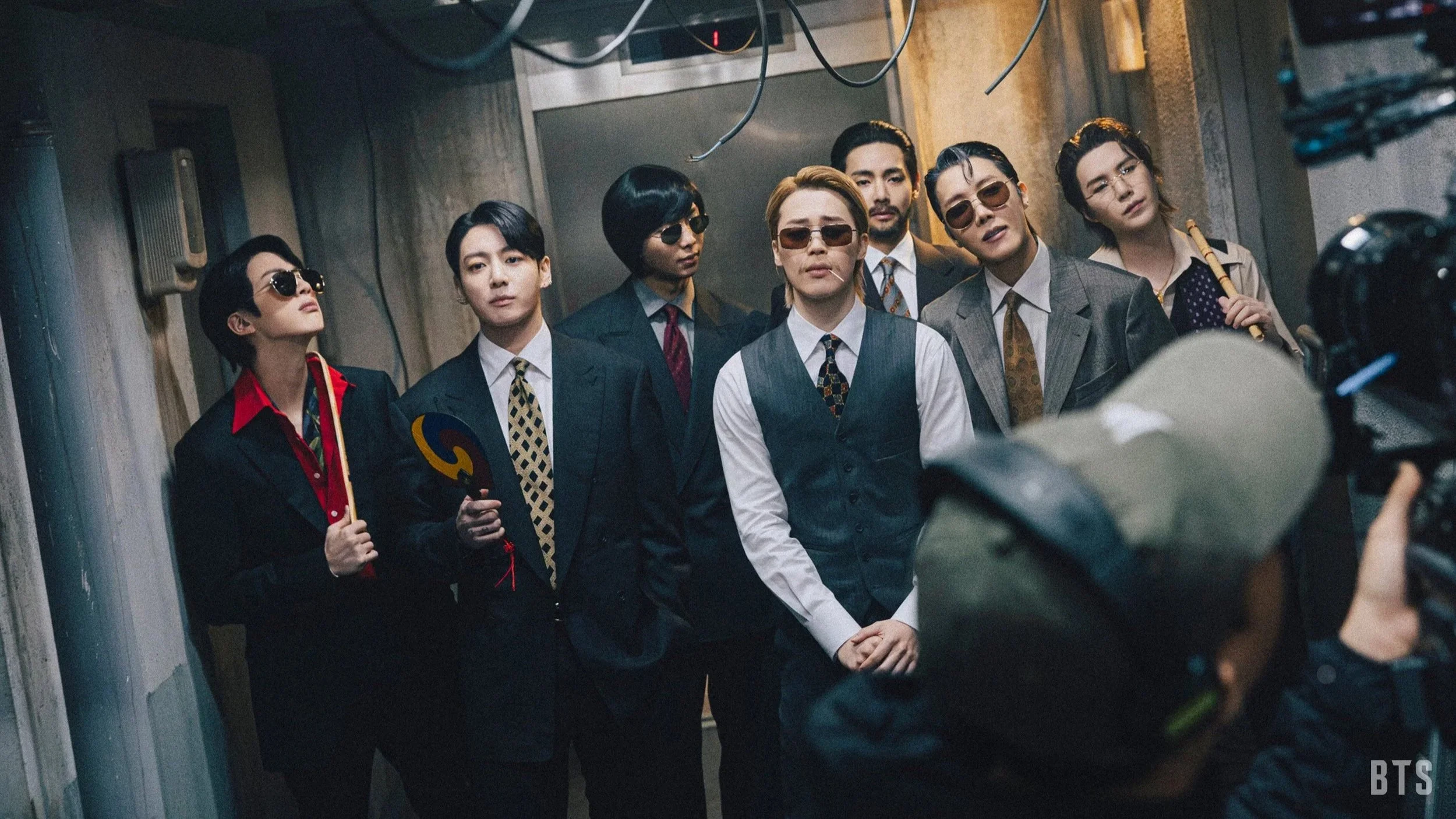
BTS are unabashedly cocky throughout the bass-heavy runtime of their latest single, “2.0,” alluding to their abiding legacy as one of the world’s largest selling musicians—even after their 3-year hiatus from group activities. Marking the band’s second chapter now that they’ve returned from their mandatory military service, “2.0” calls on this triumphant return. The recognizably dingy set pieces of Park Chanwook’s 2003 cult-classic, Oldboy, serve as the setting for BTS’ boastful narrative in the track’s new music video. The 7-member boygroup playfully dons Korean gangster garb, sauntering their way through an iconic dilapidated hallway towards a group of gaping mobsters. As the video features their tightest choreography to date alongside biting lyrics calling attention to their status as an irreplaceable powerhouse, the imitation begs the question: How does Park’s film factor into BTS’ long-awaited comeback?
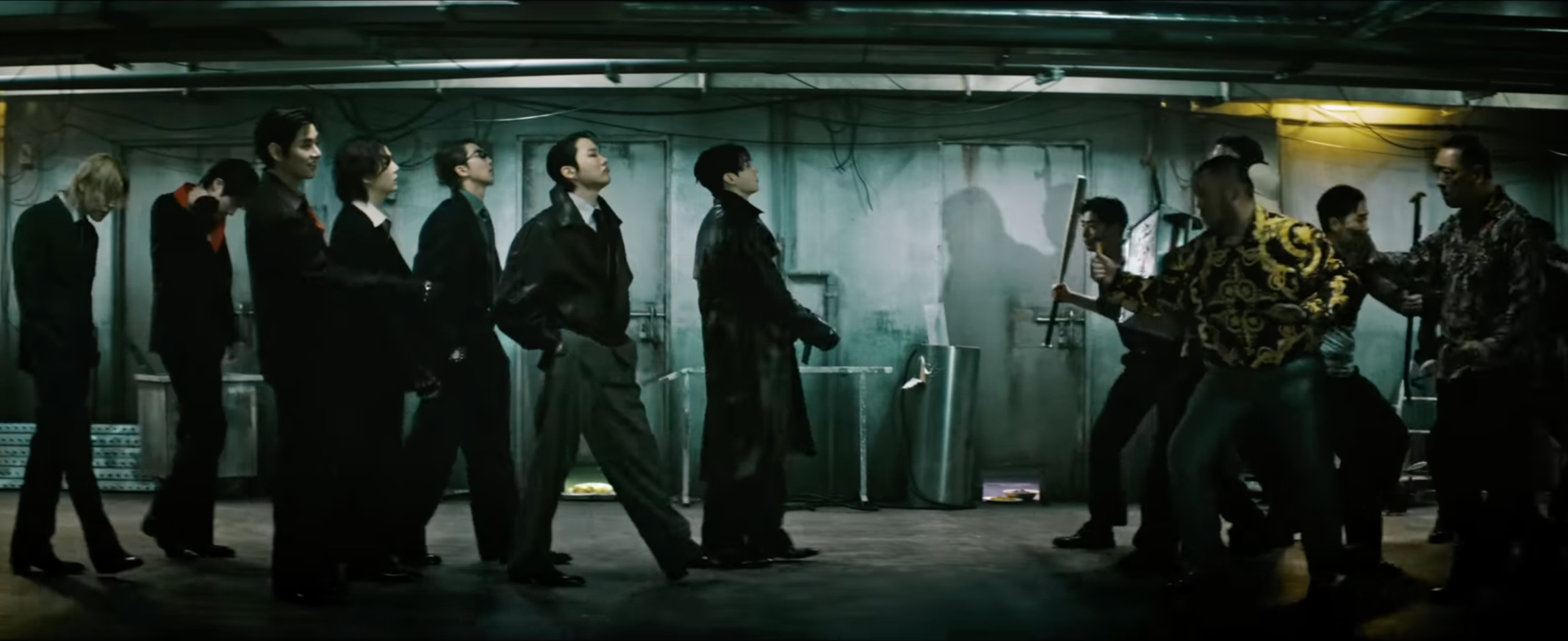
Oldboy features a frenzied protagonist by the name of Oh Daesu (Choi Minsik) as he attempts to identify the man responsible for his kidnapping and subsequent 15-year imprisonment, Lee Woojin (Yoo Jitae). “2.0”mirrors the eerie calm of Daesu’s initial footsteps. The camera follows the band’s sharp movements, imitating Park’s stylized framing and erratic editing style while the members jeer at the viewer. “‘Yeah, just like BTS,’ sure sounds easy,” SUGA mocks as he directs the choreography from the center, the mobsters cowering in the peripheral. “We’re like a vault, who’s going to jump over us?” After inserting themselves in the skirmish along the film’s iconic corridor, the group ends up in Woojin’s gaudy penthouse as the audience is plunged into the setting of Daesu’s violent rages.
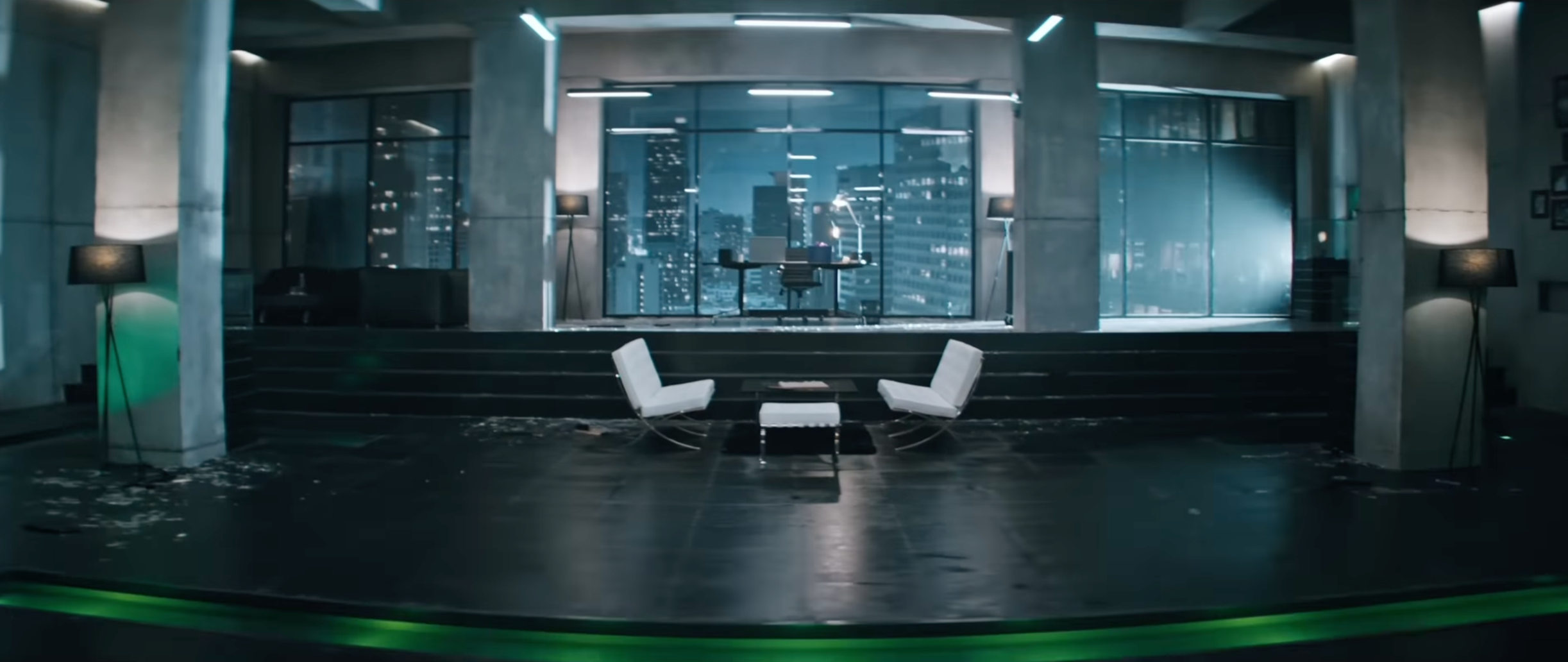
Park’s grungy revenge drama bares a stark contrast to the vibrant image BTS may conjure to the uninitiated. Gritty set pieces, nauseating narrative twists, and the stylized hyper-violence seems far removed from the beloved K-pop boyband. Yet, BTS has referenced the film before. A sample of Oldboy’s orchestral score contrasts the aggressive tonal vigor in the title track of the group’s first mini album, “N.O.,” released less than three months after their debut in 2013. Their emphatic, fast-rapping early days as a scrappy hip-hop group may be over a decade behind them, yet something about the film lingered into the present day. Throughout the film, Daesu literally pulls no punches, clawing his way towards his wealthy torturer through a sea of blood-soaked hammers and discarded bodies in a desperate attempt to find answers. BTS deliberately place themselves in Daesu’s shoes as he wreaks havoc, comparing themselves to the disheveled protagonist while they follow his path through the hallway, up the elevator, and towards the penthouse. Daesu is only able to confront Woojin through his incessant willingness to survive. He scrapes his way towards the top of the ladder with the resolute, exhausted mentality of someone who has nothing to lose. “This Oh Daesu person has confidence no matter what situation he’s in,” Park explains. “That . . . strange optimism.” Like BTS, Daesu manages to plant himself in opposition to his foe’s attacks, succeeding against all odds in a turbulent display of endurance.
Since the group’s absence from the world’s stage, the K-pop industry has stagnated, with many physical album sales entering a noticeable decline in the last two years. While the big Korean entertainment companies have attempted to keep up the demand (many even blatantly citing their commercially viable groups as some variation of “the next BTS”), it’s clear BTS’ dominance remains firm. With the release of their newest album, ARIRANG, the group continues their unprecedented legacy by becoming the first artist in history to occupy the entire Top 10 on the Billboard Global chart. They may be the face of K-Pop, but by metric standards, they’re also its revitalization.
Both Daesu and BTS are upsetting the status quo by simply existing, a struck match amidst a tidal wave of antagonism determined to extinguish its flame. The goons and the Woojins of the real world seem to shrink more and more into the shadows as the band enters their 13th year. Not only have they survived their years-long hiatus (frequently a band’s death sentence), but the members have also returned to the charts in full force, confidently anticipating their triumph in wreaking havoc on a system intent on their demise. “Knock, knock, knock, knock,” the seven musicians taunt as they kick through the broken glass born from Daesu’s retaliatory frenzy. “Had your little fun, fella?” While certainly presumptuous to plan such an intrepid release before experiencing said success, it’s this perspective that allows both BTS and Daesu to survive; that strange optimism strikes again.
Park describes the fight between the two forces within the film as a fight with destiny, a visualization of the struggle of life. The manic protagonist and the K-pop supergroup both contain a tenacious perspective within this struggle: longevity as a form of revenge. While still capturing the playfulness of Park’s absurdist directorial flare, BTS’ new music video for “2.0” harnesses the crux of Oldboy’s vengeful conflict and makes it their own, demonstrating the unique, unrelenting power of their growth and perseverance in the face of a jaded industry.