
25 Years of Gorillaz: Cycles and Rebirth
by Mars Dalys
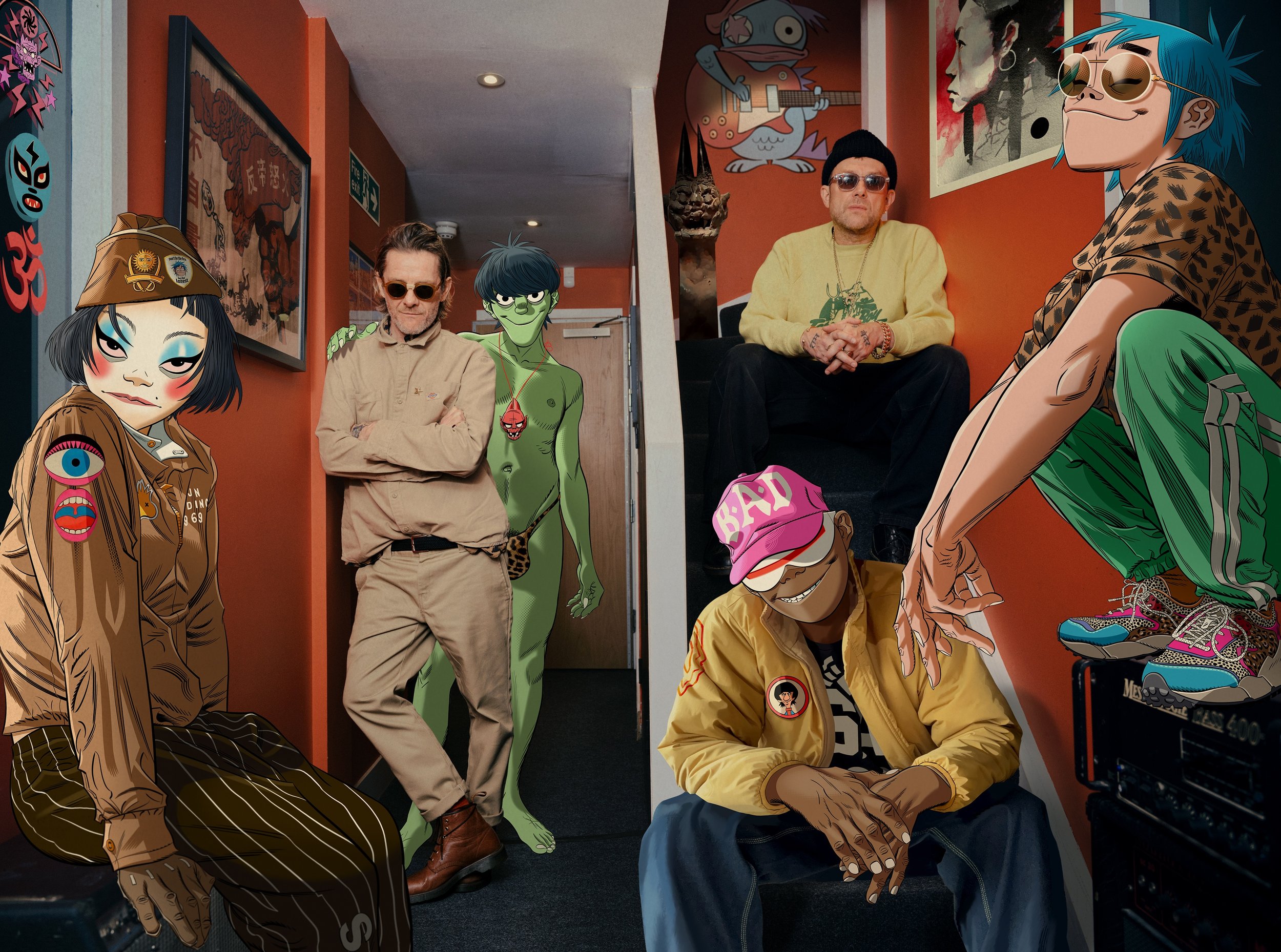
Gorillaz might not have been the first virtual band—this role surprisingly belongs to Ross Bagdasarian’s Alvin and the Chipmunks in 1958—but they widely popularized the concept in 2001 with their first self-titled album. Entirely fictional and animated, the members of the band are known for their energy and effervescence. Coming straight from the brains of musician Damon Albarn of English rock band Blur and illustrator Jamie Hewlett best known for his work on the comic Tank Girl, the four characters are brightly colored in their looks and in their personality. Between the blue-haired singer Stuart “2D” Pot, the satanist bassist Murdoc Niccals, the martial arts expert guitarist Noodle, and Russel Hobbs, the drummer haunted by the ghost of his friend, they are designed to mark the spirit.
Gorillaz was created by Murdoc when he sold his soul to Satan in exchange for his bass guitar, El Diablo, and recruited 2D and Russel before being joined by Noodle, shipped from Japan in a FedEx crate. But in reality, Albarn was the frontman of Blur when the idea came to him to make something entirely different from the popular manufactured boy bands. And who better than Hewlett as a comic illustrator to complete the vision? Motivated by Albarn’s musical identity crisis and Hewlett’s will to make a group with substance, they created Gorillaz. Their combined imagination has been fueling the band for 25 years. Beyond their music, the band's adventures have created an entire universe where their antics move their story along—Murdoc became the leader of a cult, 2D got swallowed by a whale, Noodle tracked down and killed an ancient demon from Hell, and Russel temporarily became a giant due to toxic chemicals.
They followed their debut record, Gorillaz (2001), with eight more albums including Demon Days (2005), Plastic Beach (2010), and the most recent The Mountain. Gorillaz have ingrained themselves in pop culture with diverse and innovative sounds by collaborating with artists like De La Soul, MF Doom, Elton John, and Bad Bunny. Their universe also consists of mixtapes, artbooks, biographies, radio sessions, and video games. The Gorillaz magic recipe explains how they stay relevant year after year without losing what makes them unique.
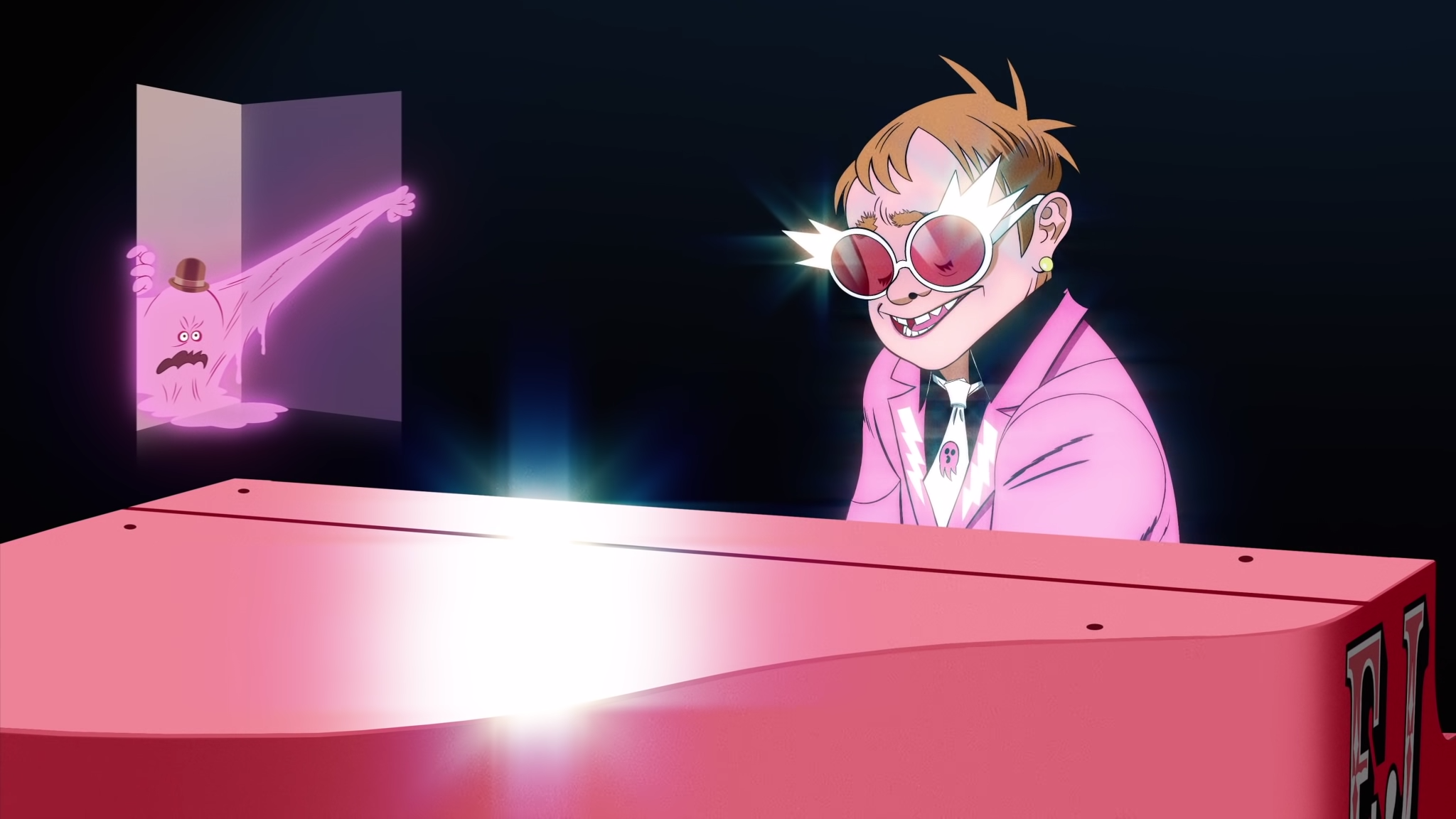
Elton John in “The Pink Phantom”
It all comes back to Albarn’s talent: Not only does he handle 2D’s vocals, he also plays the guitar, piano, violin, recorder, bass guitar, and drums. Gorillaz was designed to be as different as possible from Blur, a far cry from the typical britpop. Influenced by various styles, they experimented with classical music by collaborating with The Syrian National Orchestra For Arabic Music, dug into underground rock with songs like “Punk” or “White Light,” and explored pop, ska, and electro in many of their hit songs.
They also traveled from Mali to Congo, taking inspiration from many countries, and even dedicated their entire last album to India. The result is a musical universe so rich and diverse that anyone is guaranteed to find something they like.
But music alone is not enough to explain why the band’s identity is so captivating. Hewlett’s visuals are a primary factor in what makes their trademark style: angular features, exaggerated proportions, and surreal elements influenced by American and British comic illustrators. From Noodle’s striped tops to Russel’s baggy jeans and 2D’s high-waisted pants, their fashion choices are unmistakable as Gorillaz. In their universe, time passes in phases, with each phase corresponding approximately to an album. The characters grow, evolve, and change style—all through Hewlett’s illustrations. It makes it difficult not to see them as real-life people. Moreover, with each of these phases come wild adventures that listeners can’t help but follow.
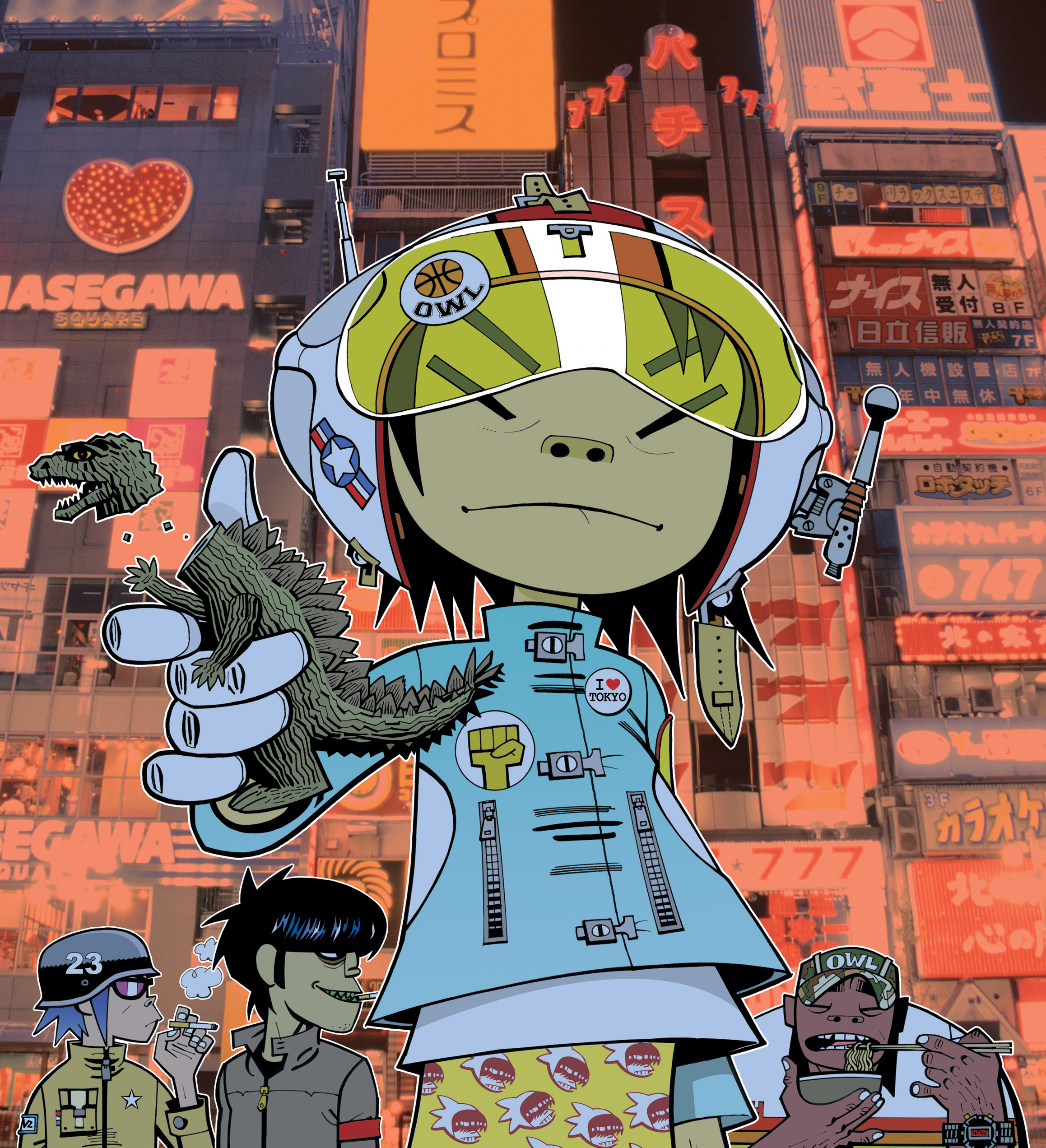
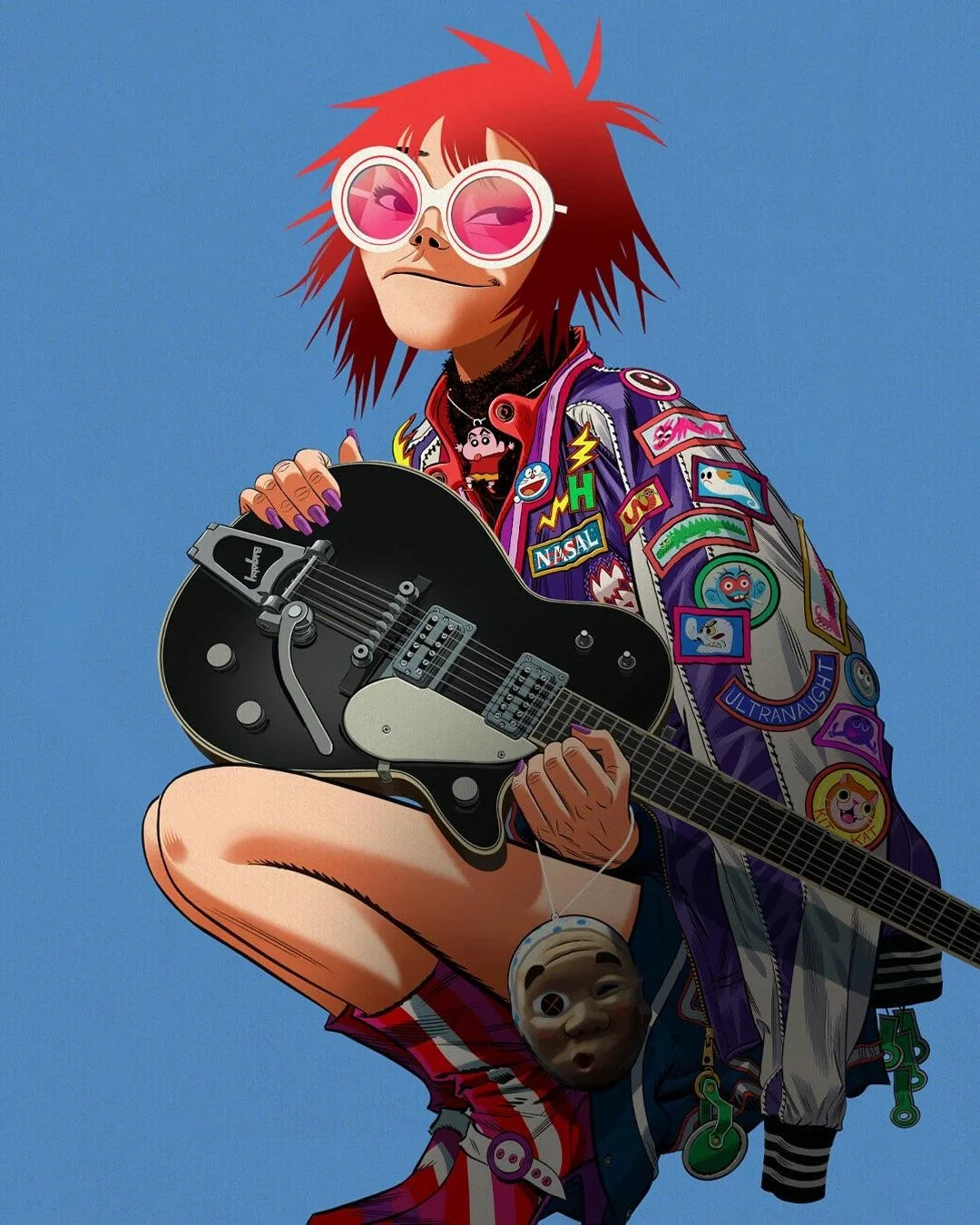
Noodle in phase 2 and in phase 6
The last ingredient in Gorillaz’s recipe is their soul. They are loved because, behind all the glitter, there is a deep reality and message to their art. Engaged and committed artists since their beginning, they have proved over and over where they stand on political issues. “Dirty Harry” called out wars in West Asia in 2005, Plastic Beach addressed ocean pollution, and “Damascus” was performed in support of Palestine at the “Together for Palestine” fundraising concert on September 17th at Wembley Arena with the London Arab Orchestra in 2025. They choose to carry openness, simplicity, and compassion, demonstrated with The Fall’s free release in 2010. In every action, they choose humanity and convey messages of peace, acceptance, and a resolutely supportive and inspiring spirituality.
It is also worth mentioning that their illustrations are always done by Hewlett and actual human hands. Despite the rise of generative AI, Gorillaz released a hand-made animated 8-minute video this year, “The Mountain, The Moon Cave and The Sad God.” In an interview for No Intervals, Hewlett shared, “AI art is all a bit sickening, it is necessary to show how wonderful something can look when it’s made by people.”
In its foundations, The Mountain is all about a journey: The members of the band travelled to India, discovering more about themselves in the process. Albarn and Hewlett tagged along and India revealed itself to be an eye-opening place for the two artists who had both recently lost someone close. Learning a whole new philosophy and way of interpreting death, they made it the center point of the album. For many fans, this project is a return to the foundation of what makes Gorillaz what it is: a total musical and friendly compatibility between the duo.
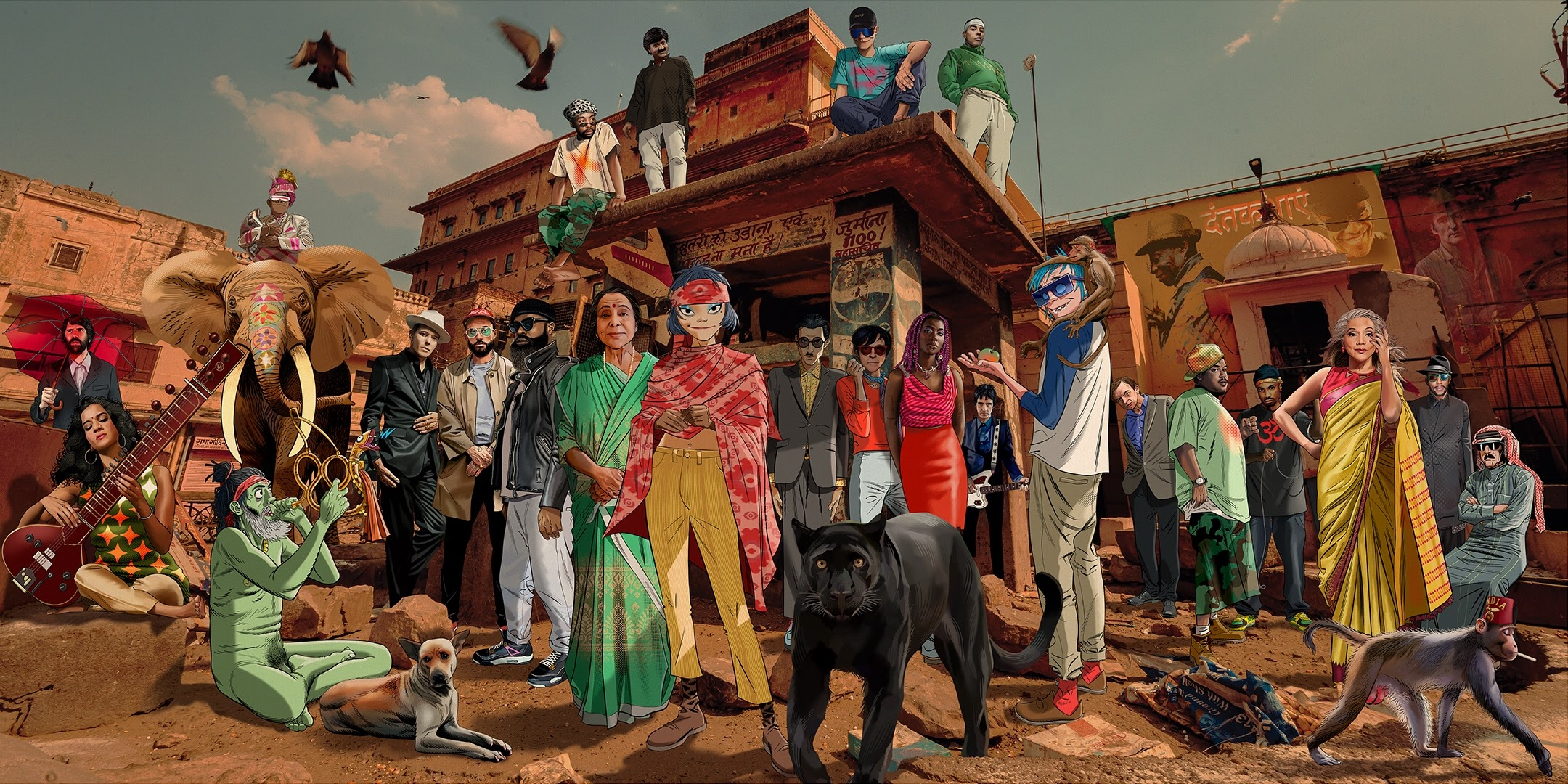
Gorillaz in India
In The Mountain, fans reunite with bold sounds, vibrant visuals, and eclectic collaborations. For some tracks, Albarn even used unreleased vocals of late artists like Tony Allen in “The Hardest Thing” or David Jolicoeur in “The Moon Cave.”
Death is also explored in “The Mountain, The Moon Cave and The Sad God” where the four members meet up and climb a mountain together. Arriving at the top, they take a boat with a ferryman before jumping in the water and slowly sinking. This represents reincarnation, a natural next step forward for them. In the beginning of the short film, we also briefly see Noodle as a child before she grows back to her actual age as she swims in a lake, indicating the idea of cycles and rebirth. This reinvention is not only the theme of the album but also a leitmotif in their career. The creativity they exhibit with this album is an indicator of the larger phenomenon that is Gorillaz: always growing back from their own ashes, reimagining themselves, and taking new shapes.
The Mountain proves that the secret recipe behind Gorillaz is still the same 25 years later: passion, dedication, and a true love for music and connection. As Albarn shared in an interview with Liam McEwan of the Associated Press, “We’ll pass it on to the next generation. Why not? The cartoon is more important than the people [behind the scenes], although the people are very important.”