
Sukkwan Island: Love Out in the Cold
by Mars Dalys
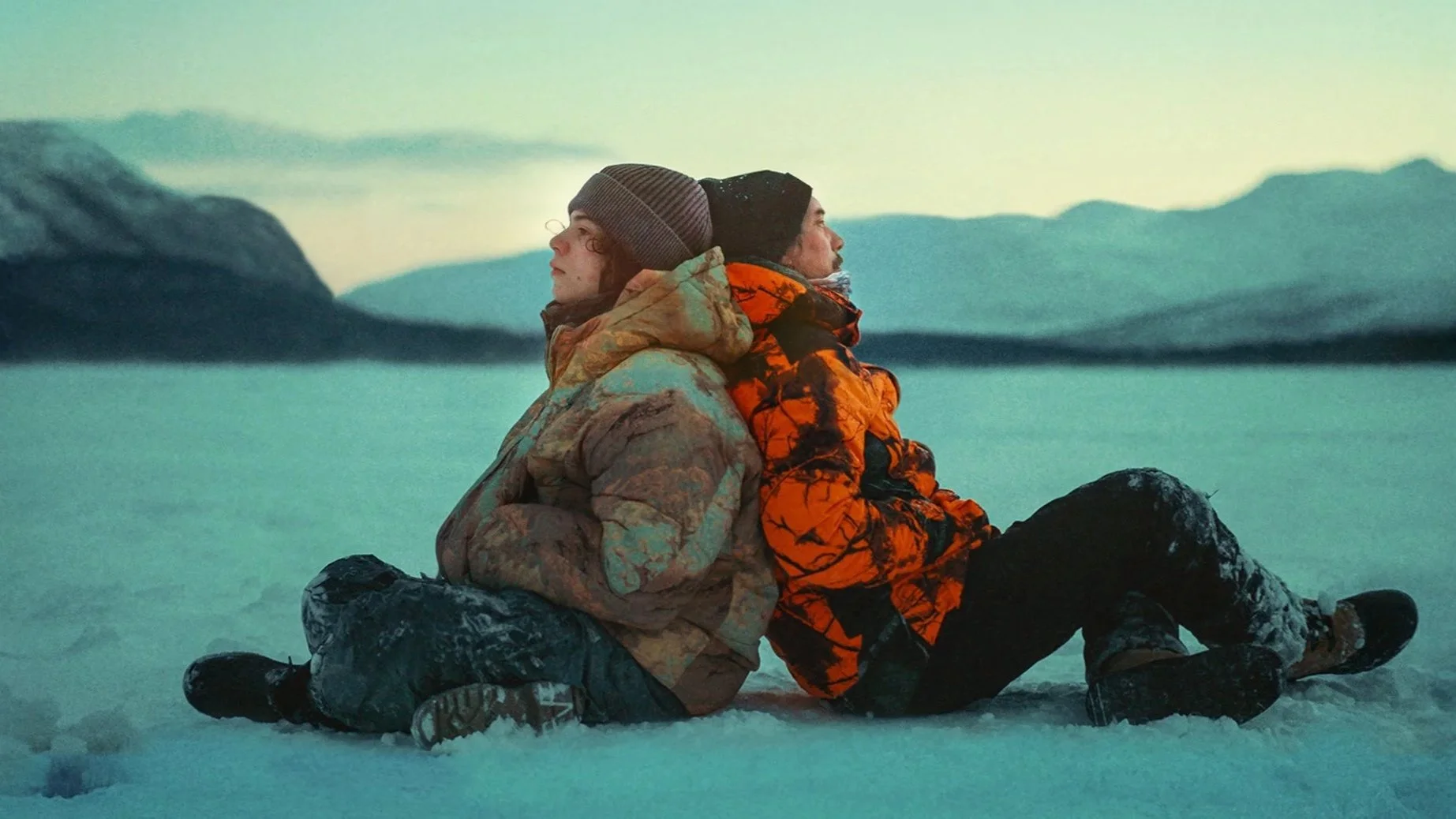
What would you do to reconnect with your son after a divorce? Tom’s (Swann Arlaud) answer to this question takes the form of a 1-year trip to an isolated island in the Norwegian fjords. His 13-year-old son, Roy (Woody Norman), follows him to a decaying cabin on Sukkwan Island with the prospect of getting to know him better. But as winter dawns, their adventure takes a difficult turn and forces them to rely on their fragile bond. Whether their relationship is strong enough to withstand it becomes the main interrogation, upon which their survival depends.
Directed by Vladimir de Fontenay, Sukkwan Island is an adaptation of the novel by American author David Vann. After struggling with financing, the film managed to get a theatrical release in France in 2026. The screen is mainly shared by Arlaud and Norman, with additional appearances by Alma Pöyati, Ruaridh Mollica, and Tuppence Middleton.
Survival films tend to create amazing opportunities for stories about human relationships: In hardships and fears, the connections between characters become crucial and develop fast. Sukkwan Island exploits this idea brilliantly and Tom and Roy’s bond grows deeper as their situation becomes more desperate. There is a clear shift as snow begins to fall—external dangers accumulate and merge with Tom’s changing psyche into an explosive cocktail.
After a long career with supporting roles, Arlaud’s talents are finally omnipresent on screen. Shifting seamlessly between a chilling anger and a playful energy, his performance as Tom leaves the audience feeling like we should walk on eggshells. By his side, Norman evens the score by serving us an impressive performance for such a young actor. Our feelings are rhythmed by his own, growing more intense as the film goes on.
The tension throughout the story is wonderfully controlled by de Fontenay who took the film from a coming-of-age narrative to an immersive thriller in a matter of moments. Visually, he created a stunning universe by giving a blue tint to the images and sometimes blurring the backgrounds, giving scenes a dreamlike quality. At first, the fast-paced hand-held shots can feel disorienting but they alternate with wide shots, giving us a look at desolate landscapes and the faces of the characters at our own pace. Naked trees, a frozen lake, wild animals—everything becomes novelty under the gaze of the camera.
By keeping the mysterious undertone surrounding the island until the final twist, the film respects the original story and depicts it in a flattering light and when it ends, we immediately want to get our hands on a copy of the novel. Despite being made into a graphic novel by Ugo Bienvenu in 2014, it’s clear why Sukkwan Island also needed a film: to see the breathtaking beauty of the island.
Regardless of the medium, Sukkwan Island is a surprising and engaging piece of work. But as a film, it is an especially moving watch, its originality not necessarily lying in its subjects but in the way it approaches them.