
Half Man: Violent Delights, Violent Ends
by Jasmine Edwards
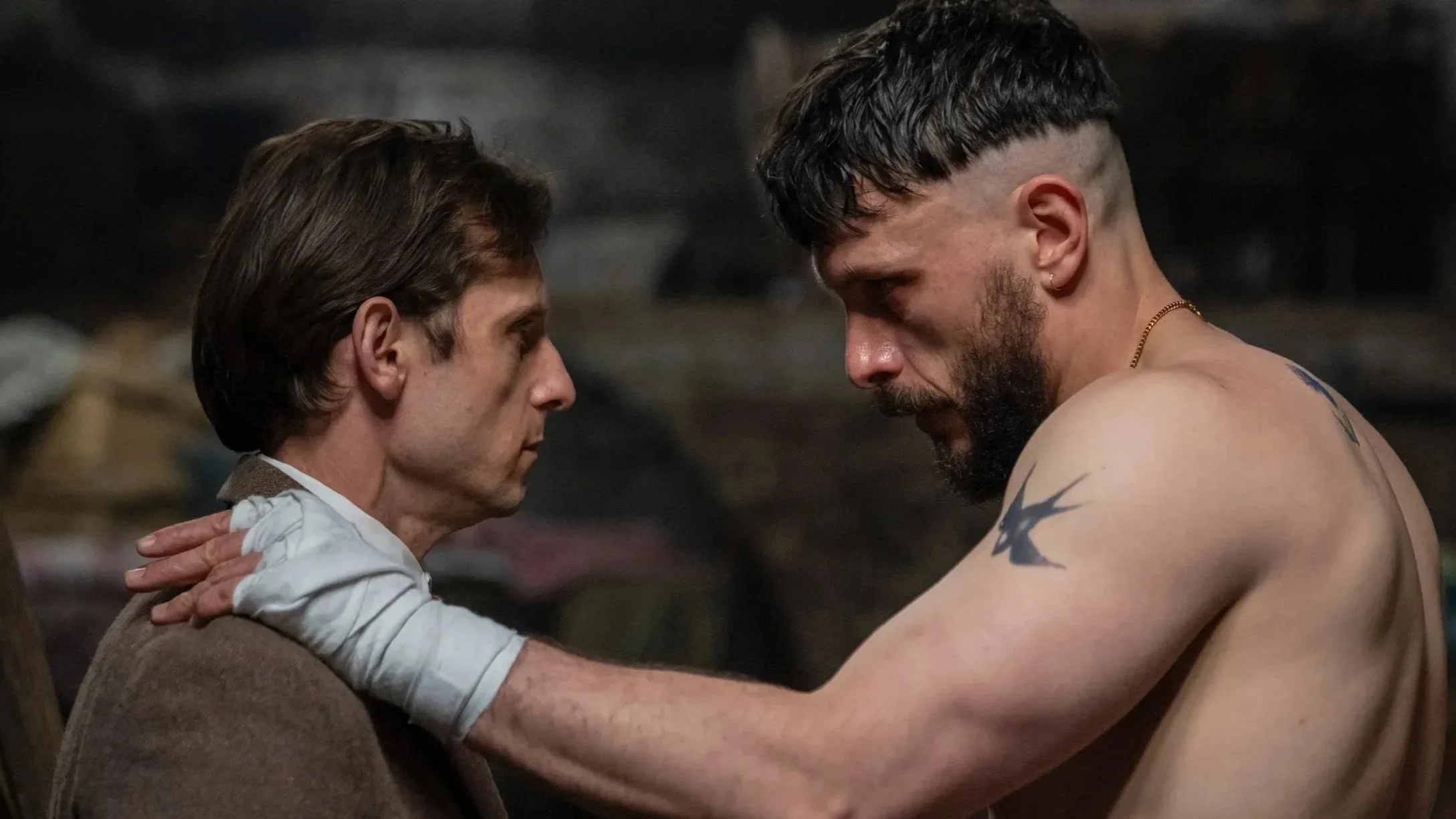
In a world of safe television, HBO's Half Man thrives off risk. It makes the quiet parts loud, elevating danger to an art form. Every episode feels like running a marathon through a mountain. The audience spends each hour and a half surging forward before tumbling head over heels into a valley, clutching at their chest and wondering what they just witnessed. Well, what they just witnessed is a prestige drama which stands far above the rest.
The non-linear series follows Niall (Mitchell Robertson and Jamie Bell) and Ruben (Stuart Campbell and Richard Gadd) through adolescence and adulthood as they navigate a toxic, intoxicating, and codependent relationship. They are “brothers” by virtue of their mothers dating—a conceit that adds to the tense, tragic, Romeo-and Juliet-style atmosphere of forbidden desire. Both men are liars, manipulators, and total messes who weaponize both ambivalent sexism and outright misogyny to get what they want. While Niall and Ruben are both survivors of intense trauma, they constantly inflict their stress and victimhood on the people—especially the women—around them. Fortunately, the female characters are just as flawed and dynamic as their male counterparts, allowing misogyny to exist in the story without it bleeding through the cracks of the external showrunning itself.
But where it could take measures to insulate itself from criticism or social media outrage, Half Man never apologizes for itself. It depicts people making selfish decisions and all the wrong choices—not simply to be sensational, but to paint a grounded, gritty, and realistic portrayal of toxic masculinity. Half Man could have taken the easy route to bemoan a nonexistent “male loneliness epidemic.” However, its scathing, sympathetic, nuanced writing instead portrays an inescapable cycle of violence. The choices these men make for themselves and others perpetuate their own rage and repression. Abuse in all forms is terrifying. But showcasing abuse without the veneer of noble suffering or therapized, ideal, perfectly cured and content characters? That's outstanding, and something we sorely need in modern media.
That is not to say Half Man doesn't have its hopeful moments. At every turn, the series subverts expectations. Richard Gadd flexes his comedy background in dark jokes and dazzling scenes full of emotional whiplash. And it gives glimpses into happier times, happier lives . . . before wrenching those possibilities away in another instant. This is TV writing at its finest. It’s only a shame that there were a somewhat insufficient six episodes. Half Man could have benefited from more time to wrestle with its themes and messaging. Unfortunately, with such a limited runtime, it was forced to make a few concessions with clunky, dialogue-fed exposition, no follow-through for the most intense fallouts, and abrupt timeline jumps.
Still, all minor pacing mistakes can be forgiven when everything else—the acting, script, costuming, cinematography—are so brilliant. We can only hope that whatever Richard Gadd decides to do next is just as mindblowing, or we might be mourning the loss of Half Man on our screens for a long, long time.