
Fjord: The Forgiving Cold
By Rohan Connolly
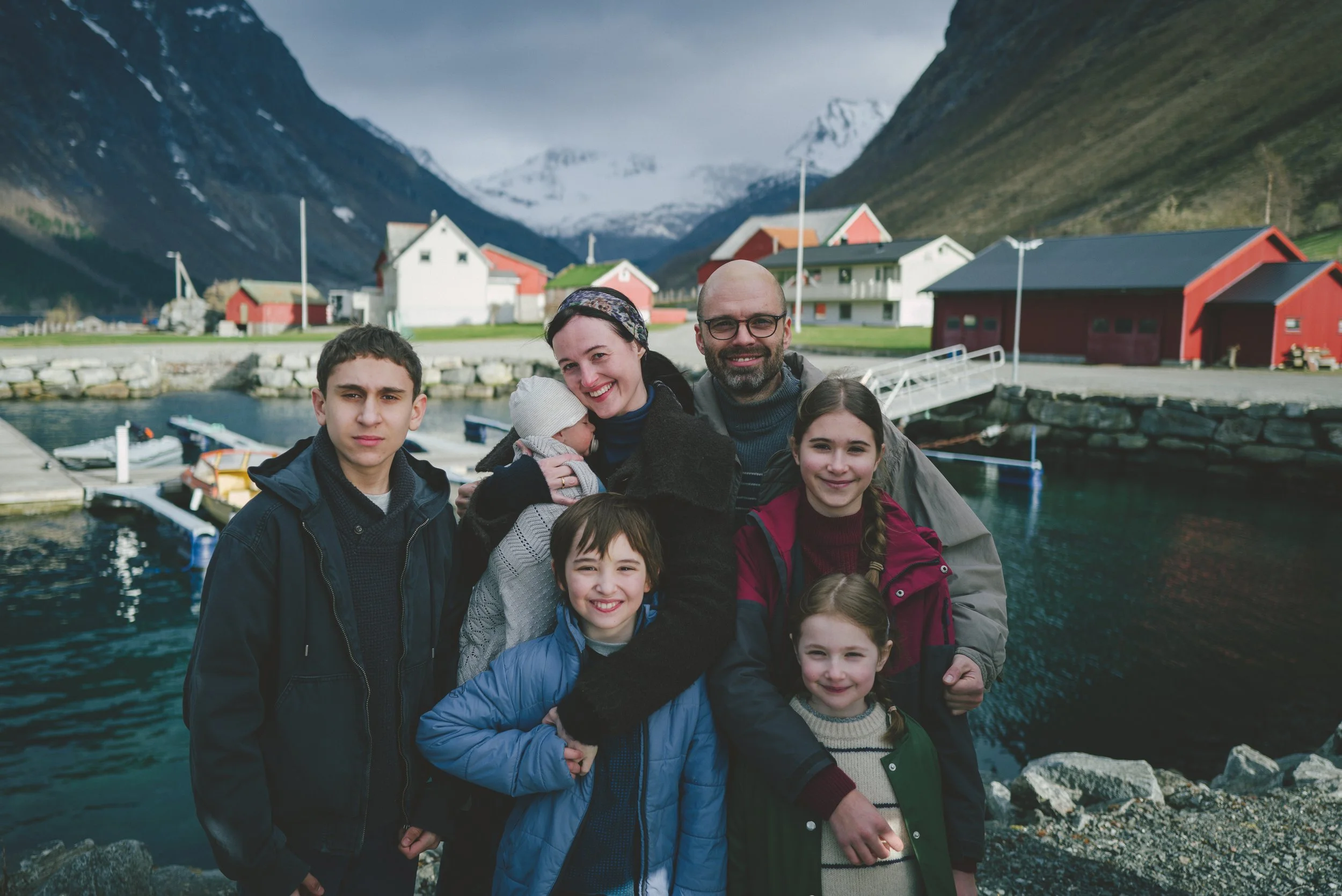
Cristian Mungiu’s second Palme d’Or winning film Fjord (2026) is already causing quite a stir among audiences and critics alike. The film—which just had its North American premiere at the Toronto International Film Festival—follows the Gheorghiu family as they settle into life in a small Norwegian town after moving from Romania. For wife and mother Lisbet (Renate Reinsve) this is a homecoming move where she reunites with her family and can raise her five children in her own language. For husband and father Mihai (Sebastian Stan) it is more difficult. Mihai deals with language barriers and cultural differences as his Romanian identity clashes with his new life. This new life is flipped upside down when teachers at school notice bruises on eldest daughter Elia (Vanessa Ceban) leading to a child abuse investigation on the family. The film follows Lisbet and Mihai’s struggle to prove their innocence and maintain their traditional, conservative values when faced with a system that they feel is out to get them. It asks the audience to sympathize with a family we may disagree with, and forces us to confront our own biases and beliefs—but not always in the film’s favour.
Fjord, in many ways, is very similar to another Palme d’Or winner, Anatomy of a Fall (2023), which follows a similar premise—a woman’s husband dies, and throughout the trial accusing her of murder, the audience must decide whether they believe she did it or not. It has other similarities such as its rural European winter setting, the main characters going through a foreign legal system in a language they struggle to speak, and sprinkles of deadpan humour that throw you off guard. However, the core difference of the films lies in the success of their execution. Anatomy of a Fall basks in its ambiguity, providing the viewer with an array of possible causes of death, reasons she might have done it, reasons she might not have, and exposes a lifetime's worth of tension simmering within each character. Fjord on the other hand, acknowledges that Mihai has hit his children multiple times and Lisbet at least once, the question it asks the audience is if the family’s values justify the hitting.
Over the course of the trial, Lisbet and Mihai gain the support of conservatives across the globe who believe they are being discriminated against for their religion and Romanian identity by a prejudiced liberal system. In this way, it sparks interesting discussion. Audiences must ask themselves where they draw the line, what is considered abuse and what is simply tradition. Most would agree that hitting is a form of abuse, but some—like Mihai—would differentiate that from spanking. It can quickly become a slippery slope: Others may consider not allowing teenagers to have phones or video games a form of abuse, and even more would think the same of going to church or a prayer group. But if that church encourages homophobia, does raising children while telling them all gay people will end up in hell constitute abuse? Should the state be allowed to take those children away from their family? There are no definitive answers to these questions both in legal and theoretical contexts. It is up to the individual to decide where they draw the line, and Fjord wants you to decide.
Where the execution falls flat is in Mungiu’s depiction of the state itself. Throughout the film, Mihai and Lisbet are shown to be dynamic, flawed people who, yes, have hurt their children, but love them nonetheless. The love that they hold for their children is never called into question, and the opportunity for the audience to grant them grace for their parenting methods is offered repeatedly during Fjord’s runtime. This same grace is not granted to the people whose job it is to protect children from harm. It is alluded to over the course of the film that the Norwegian Child Protection service operates almost above the law and holds egregious amounts of power. These allusions lead the family and possibly viewers to conclude that it is not just the bruises that led to the investigation but a private agenda against them due to their cultural beliefs and practices. There is no grace given to the organization who should be investigating every possible case of child abuse no matter how small the clues may be. Is it not better safe than sorry? Is the repercussion of making sure a child is safe truly worse than the fate of a child left in a dangerous environment?
It could be argued that these questions are more gray areas to be discussed by audiences and I wouldn’t say it is entirely invaluable. These conversations are critical in shaping our individual and societal beliefs. We must always investigate why we react to certain stories or events and question our ways of thinking. And Fjord is rife with questions.