
by Ankit Kuchhangi
This review may contain spoilers.
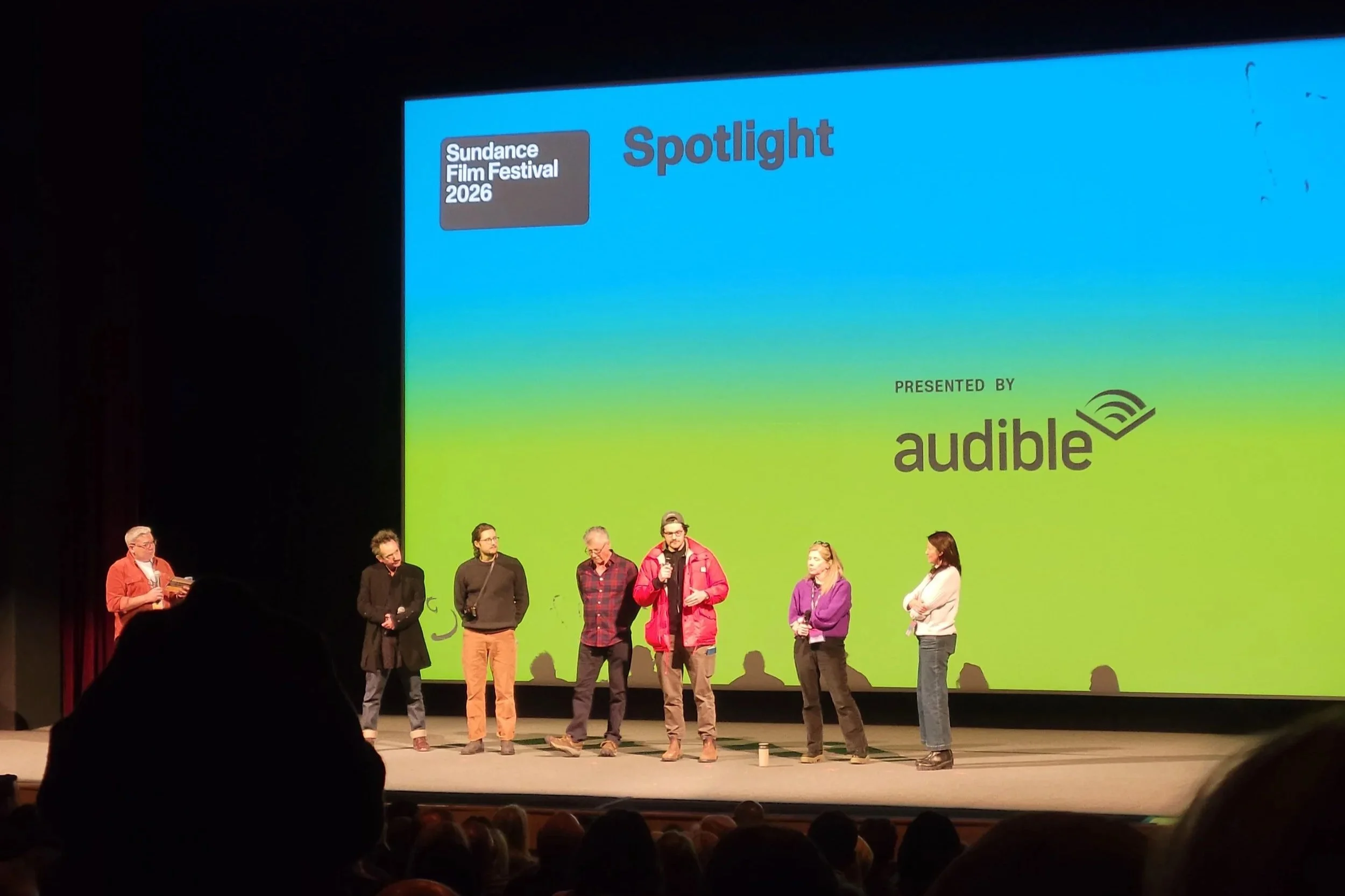
Tuner was one of the first screenings at the 2026 Sundance Film Festival, a bittersweet ending to the festival’s 45-year run in Park City, before beginning its residency in Boulder, Colorado. This film originally premiered at the Telluride Film Festival in October of 2025, and is part of Sundance’s “Spotlight” collection. Daniel Roher is an experienced documentary director and a Sundance alumnus, but this is his first fictional film. I was pleasantly surprised to see a familiar face, Festival Director Eugene Hernandez, who introduced the film and moderated the Q&A after the film. Daniel Roher dedicated this screening to the late Rob and Michele Reiner.
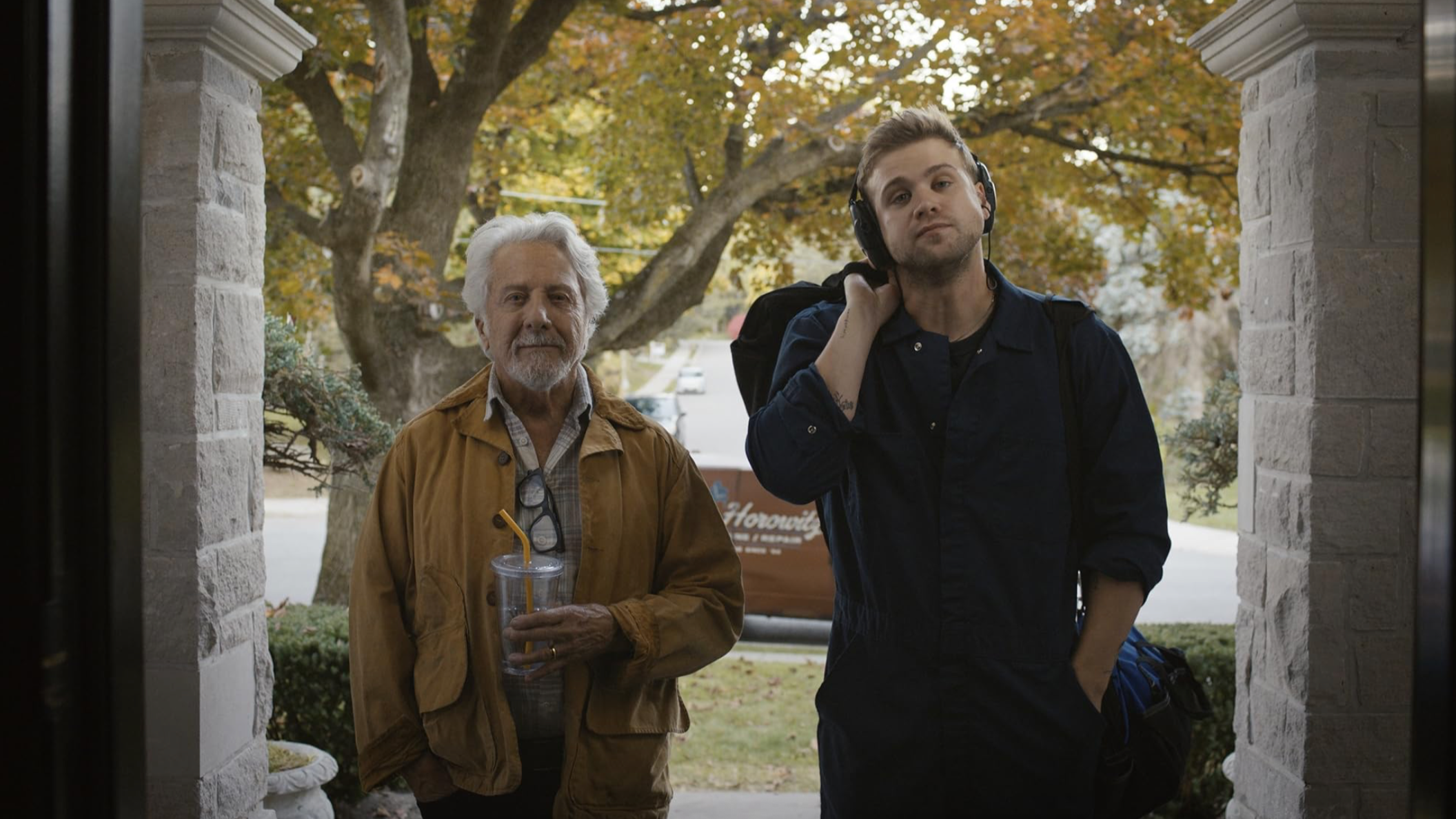
Tuner follows master piano tuner Harry (Dustin Hoffman) and his apprentice Niki (Leo Woodall) as they travel across New York City and its suburbs tuning pianos. Harry’s advancing dementia leads Niki to discover his latent talent of nondestructively cracking open safes, which he and his crime boss, Uri (Lior Raz) exploit. Simultaneously, Niki develops a budding relationship with Ruthie (Havana Rose Liu). A violent heist leads to the fallout of the theft group, and his personal and criminal lives soon collide.
Screening a comedy in a large theater like the Eccles Center is risky. Audience behavior is recursive—laughs beget laughs, and the reverse is true as well. If a film doesn’t engage an audience well, scattered audience reactions can feel lame and serve to reinforce a film’s unfunniness. Fortunately, Tuner’s well-written and well-paced screenplay ensured plenty of laughs and a good time for the Sundance audience. A favorite one liner of mine: “[Benny] likes dogs, he connects with them intellectually.”
Hoffman’s character exuded charisma within the first few minutes of the film, establishing a wholesome, grandfather-grandson-like relationship that seemed genuine. Other supporting characters, including Niki’s love interest and criminal group, were intelligently written and all had piquant moments of humor. I often found myself wheezing (not due to the altitude) from hilarious character interactions. However, the humor was primarily dialogue driven, and I can only recall one instance of situational humor early in the film, and no visual humor. Roher did a fantastic job with his first narrative comedy, but mastering these other types of humor would elevate him to a household name.
Lastly, Maximilian Behrens and Johnnie Burn deserve recognition as the film’s sound designers, and Will Bates for composing the original soundtrack. Movies about music naturally rely on diegetic sound, which Bates delivered. I’m not a musical expert, but I enjoyed Ruthie’s playing. Fortunately, the non-diegetic sound was well balanced and not overpowering while simple, but highly effective low-pass filters placed the viewer in the shoes (ears) of Niki. Other creative sound effects from a partially disassembled piano rounded out the sound design with tangentially familiar sounds.
I appreciated the theme of (dis)ability and talents. Niki’s hearing is simultaneously his greatest strength and his fatal weakness. He has perfect pitch, an eidetic memory, and was a child prodigy at the piano. However, the same aural acuity that enables him to hear minute interactions between levers and cams in safes makes it too painful to pursue his dream of becoming a concert pianist, and thus he is forced to pivot to piano tuning. He requires special earplugs and earmuffs to survive in a noisy world. But by the end of the film, he loses his hearing altogether and is ironically still disabled. His ruptured eardreams hinder his daily interactions, but he is finally able to pursue the piano, which no longer hurts him. The involuntary compromise is bittersweet. When I think about physical disability, I think about my little dog, who lost one of her eyes in an accident, but still enjoys an unreasonably high quality of life. I also think about Leonhard Euler, the greatest mathematician of all time, who lost his eyesight but became more productive (with the help of scribes), citing fewer distractions. Similarly, Tuner’s emphasis on Niki’s hearing turned out to be an interesting commentary on physical ability and happiness.
Tuner is a surprisingly good debut comedy that hits all key elements of a wholesome movie: a talented cast, unique soundtrack, witty dialogue, well-grounded plot, and authentic romance. It keeps mainstream audiences grinning during the movie, and contains enough social commentary to satisfy those seeking more.