
In Conversation: ‘Devil’s Breath’ Director and Writer Blake Butler
by Rohan Connolly
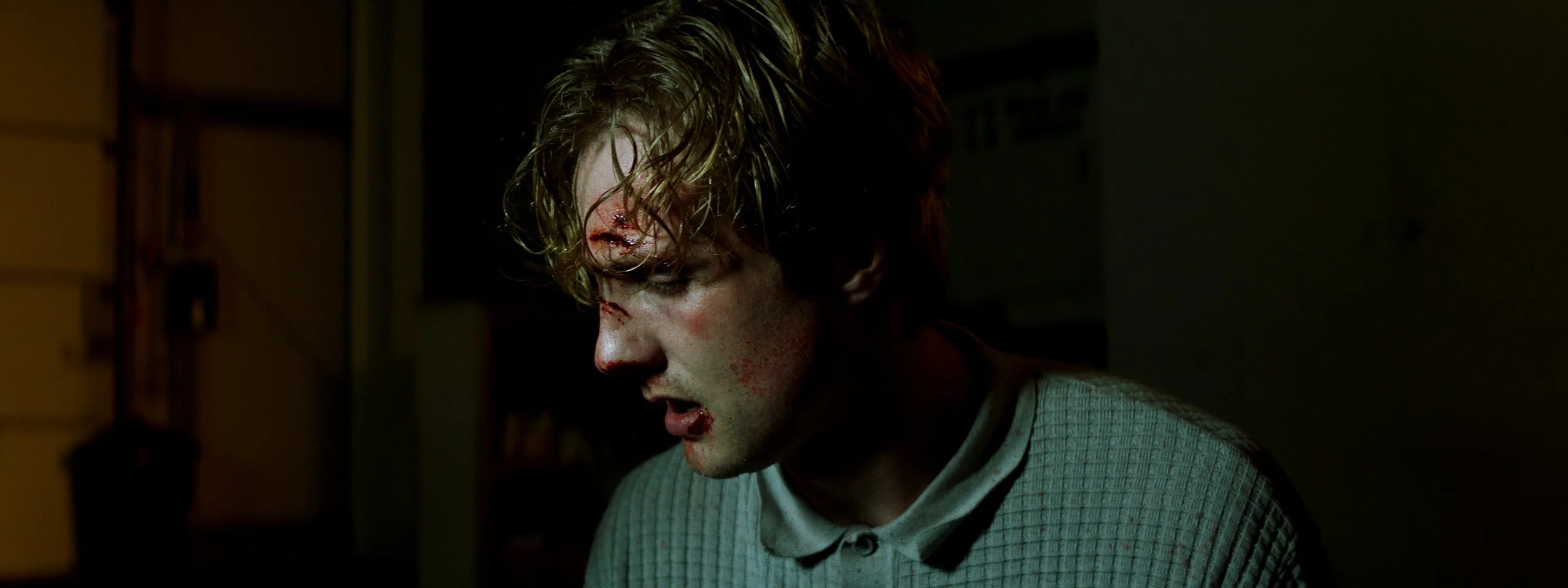
After a date goes sour, resulting in being drugged and robbed, John (Henry Ashton) turns to his brother Frank (Jake Flannigan), a small-time gangster, for help. I got the chance to speak with Director Blake Butler to discuss the filmmaking process behind his latest short film: Devil’s Breath (2026).
This interview has been edited for brevity and clarity.
First, I wanted to ask if you had any specific inspirations going into the film or outside influences you took [inspiration] from?
So when I originally started writing the script, I don’t know if it was some kind of coincidence, but I became quite obsessed with crime films, neo-noirs, like The French Connection (1971), Heat (1995)—anything Michael Mann really, influenced the plot going into it. It’s quite a linear, sprawling narrative and that’s something that I really took from neo-noir films of the ‘70s and ‘80s. In terms of style, Michael Mann was a big influence. I really like his slick camera work—you’re very aware that someone’s behind the camera in his films. There’s sort of a dark, entrenching atmosphere and that’s something I really wanted to bring into Devil’s Breath.
Michael Mann’s great.
He’s a really, really amazing filmmaker. His first film Thief (1981), I don’t know how he's done it but he managed to basically redefine a whole new genre of filmmaking. He took all the noir tropes and brought it into a darker world where it's unbound by the Hays Code and he’s able to run free. He's a remarkable filmmaker for sure.
You previously worked on other short films like Porcelain (2025), Miss Canton (2025), and Ayomikun (2025) in the camera department. I was wondering if, in any way, those experiences influenced your approach to directing this time?
I worked on those films while I was part of Bournemouth Film School, and essentially, the way that our film school worked was in second year you would specialize in a particular field. I picked cinematography because directing was always the end goal but there wasn’t a directing specialism per se. So I thought, well what’s the specialism where I’ll be on set most and get to learn on set experience, and that was cinematography. So I picked that and I did a lot of shorts as just a spark or a best boy, etcetera, a couple of grip work as well. Those really informed my knowledge going into directing, because it’s a small enough role where you get yourself on set but you get a lot of break time—waiting around, supervising lights and things like that. So that gave me a big opportunity to sit back and really take in how a set should be run and employ that into my own film. I think it worked, we had a fairly smooth set, and it being my first directing gig, there was certainly a lot of pressure and a lot of having to prove to myself and also the crew that you can trust in me, I will get you over the line. It was really useful to have that previous on-set experience that I could then work into the slightly higher position.
You also worked as both director and writer on this film, I was wondering if there was any struggle between balancing the two roles?
Interesting. I think perhaps, because I was writing the film, I already had a preconceived vision of what it should be, which is a blessing and a curse. It can pen you in sometimes to be like, no, this is the direction you need to take it versus if you’re directing someone else’s script, you might come in with a lot more new, fresh takes with how to approach the story. But because I didn’t have that person to bounce off, I was really trying to think what is the most beneficial to the story as a director and a writer, what's the best scenario to put these characters in to execute the themes, what perspective I really wanted to attack the story from. So perhaps it would limit me in terms of containing the vision and not letting it get too wild, but I think as well, because it’s my first short film, it was maybe a blessing because if I’d gone and dialed everything up a little bit, [. . .] I may not have been able to achieve it as well as we did with something a bit more scaled back.
Working on a student film can often be very different from projects of other scales. How did those kinds of restrictions, whether budget-wise or time-wise, impact or change your creative approach to this film?
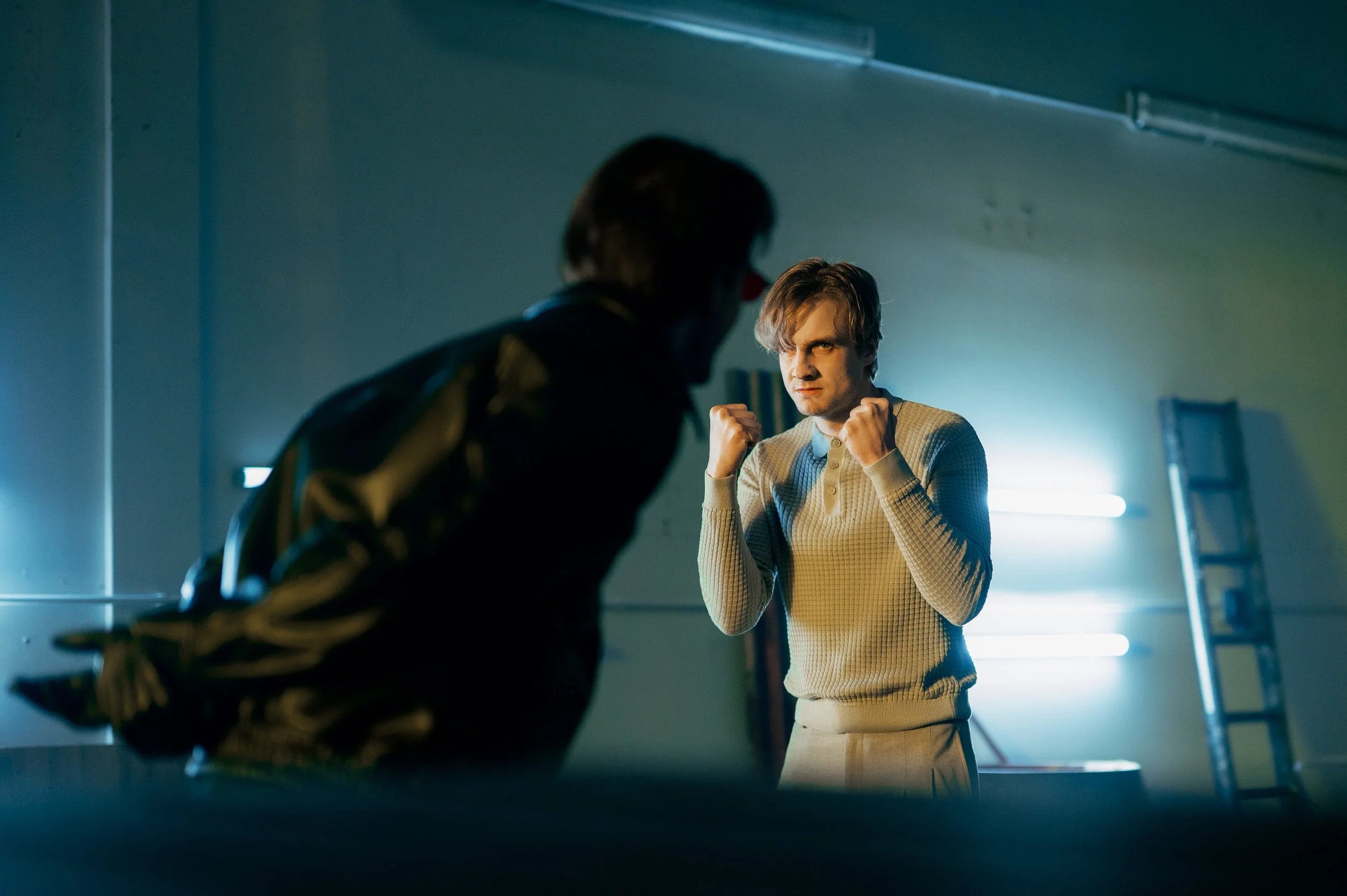
Yeah, I mean, we had a lot of that [laughs]. Originally, before I sat down and wrote the script, it was going to involve a car chase as well. At a student level, that’s not going to be achieved, but we managed to get a fight scene in there and I didn’t make it easy on anyone by having about five locations for the 5-day shoot, a fight scene, night chases, and things like that. We had to raise the budget. It was certainly quite ambitious for a student level, and on top of that, not a lot of us had much experience in the roles that we were in.
We really tried to make the film in industry conditions, just at a student level. I think having someone there that would tell us “no” a lot of the time was probably a really good thing, in hindsight. It really forced us to commit to choices and if we wanted to make something happen, we really had to fight for it. I mean, to get the fight scene over the line, we not only made a video in my back garden of just running through what it will entail, we then filmed a fight rehearsal with the actors and the stunt coordinator to really hammer home that we’re going to do this safely, we're going to do this professionally, and follow the correct guidelines. I think it was really worthwhile. It was a really good experience and it taught me a lot about maintaining a certain stamina.
As a director, you really need to fight and get your vision across. No one is going to care about the film as much as you do, and so you’ve really got to be able to dedicate that time to executing what it is you want to get out of the film. We got pretty much everything I wanted. It took a lot of work with myself and the producers but we got it over the line. With the student budget, it was very dependent on us raising it ourselves, so we did a lot of crowdfunding events, pub quizzes, bake sales, that sort of thing, and that took a good chunk of our development stage. At one point we thought we wouldn’t get the money we needed and so we would have to start dialing things back again, but thankfully, we got some investors to come in towards the end. I suppose that is the downside with student filmmaking, the uncertainty that things are going to turn out the way you hope.
On that note, what did you find was the biggest challenge you faced during the production process?
That is a good one. There’s a chase scene in the film. There’s an alleyway, going down cobbled streets, inspired by noir films like The Third Man (1949) and that sort of thing. I wanted that to have a certain texture to it, so a wetdown—it had to take place at night time, in really narrow alleyways. I didn’t expect how much would go into proving that would be possible within the couple hour window that we had. I think [the] actors running, it being wet, and sourcing the water caused a lot of logistical [issues], and that was probably an oversight. But a lot takes place to get to that point. So that forced a lot of my attention that I didn’t think I would need to be giving and distracted me from a couple other bits. But we got things approved in the end.
Unfortunately, losing locations as well becomes a challenge because you have to adapt and think on the spot. So it’s all about making things work with the circumstances that you’re given. I think it was George Lucas that said, “It's not about how you make the film, it's about how you make the film under the circumstances,” and I think that’s really true. No one’s going to come out of the cinema and think, “Oh, that’s good but I heard they couldn’t do this and this,” they just look at the film for what it is. The production definitely taught me a lot about having to adapt and change plans and be very malleable with what I want to achieve.
Conversely, what did you find most rewarding about the process?
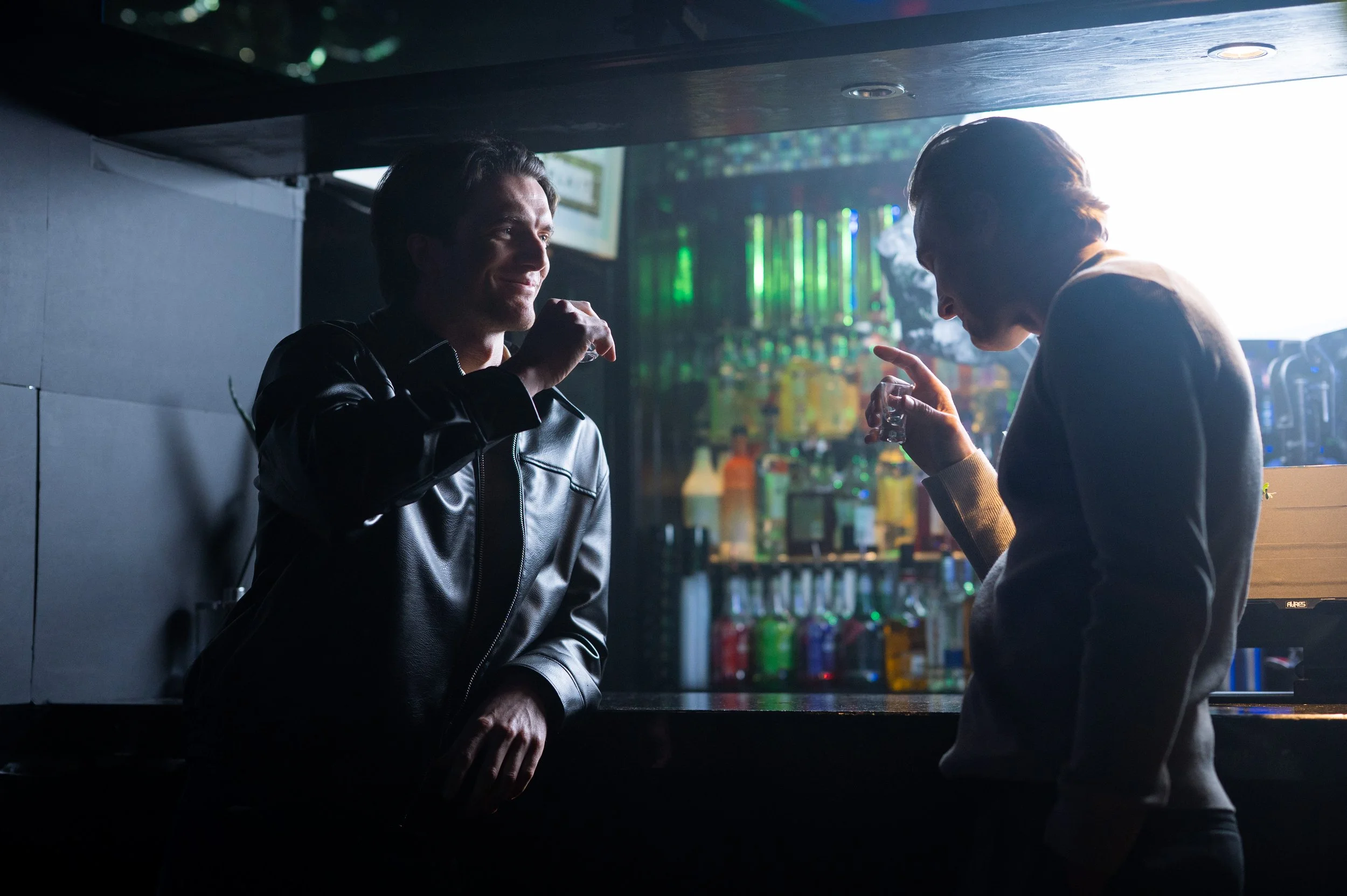
I don’t know if any of the crew will be listening to this, but I think—Sorry crew!—it has to be the actors. It was the first time I got to work with professional actors and it was just an absolute joy. There can be quite a lot of stress and preparation with the crew, but with the actors, you get to forget all of that for a minute and just really focus on the characters and the themes of the film, what is important emotionally. I sat down and had some initial Teams calls with the three of them, which just focused on building a connection with them, learning a bit more about who they are, seeing if there’s any history with their own lives that we could employ into the backstory of the characters. It was very rewarding when we got to the first day of set and we did the fight scene. It was certainly a bold choice, but logistically it was the only day we could do it. Thankfully, it went really well and I think that put all the crew in good spirits for the rest of the shoot. I think for me, it was just really rewarding seeing everyone on that first day coming together and just be completely on it, wanting to execute what we spent months dreaming up in our heads. It’s a really surreal feeling when you see everything actually come together. But yeah, for me the actors were definitely the most rewarding part. That felt most when I was able to actually do some directing compared to being on the producing side of things.
That’s a perfect segue! The relationship between a cast and director can often make or break a film, you can tell if there’s strained relationships behind the camera or otherwise. Working closely with these different actors, what was the learning experience there?
They shouldn’t be underestimated. They’re very intelligent people. They’ll study a script very thoroughly and fire questions that maybe you don’t even expect them to think of. [There] might be certain nuances in the dialogue that they’ll be like, “Okay, how should this be performed. . . Up to this point my character's been doing this, why would this line come out of me. . .?” And you’ve got to be able to give them an answer and also accept when you’re in the wrong and they’re in the right. Actors are usually in the right to be honest. They’re the ones that really spend time getting in the emotional state of the characters, and so they’re your best ally in terms of getting across what you want from the film. I really wanted to use them in a positive way.
I think, also, the role of the director is to take on their stress and make sure that they don’t feel the angst from the rest of the crew. Say we’re running behind schedule, as a director, you don’t go to the actors and say “We’re running 15 minutes behind you’ve got to wrap it up.” You let them be in their headspace, you let them be relaxed, thinking solely about the characters while you take on the priorities of the crew. So I think it’s important the director is the main line of communication with the actor and they are really the ones there to protect them and shield them, make sure that they are just thinking solely about the characters.
Finally, is there anything we can expect from you in the future or goals you have?
In doing this film, I’ve realized that 10 minutes is not nearly enough to tell the story I want to tell. There’s a lot more that can be explored, there’s a lot of themes that I wanted to fit in and simply didn’t have the time to develop it enough. So I want to work on making this into a feature at some point. I’d like to build up my directing catalogue beforehand, working on different short films and things like that. But in an ideal scenario, I’d like to start writing this as a feature and hopefully get that up and running. For now, I think I just want to look for steady directing jobs, if they’re available [laughs].