
In Conversation: Director Renée Petropoulos and Producer Yingna Lu
by Sydney Reyes
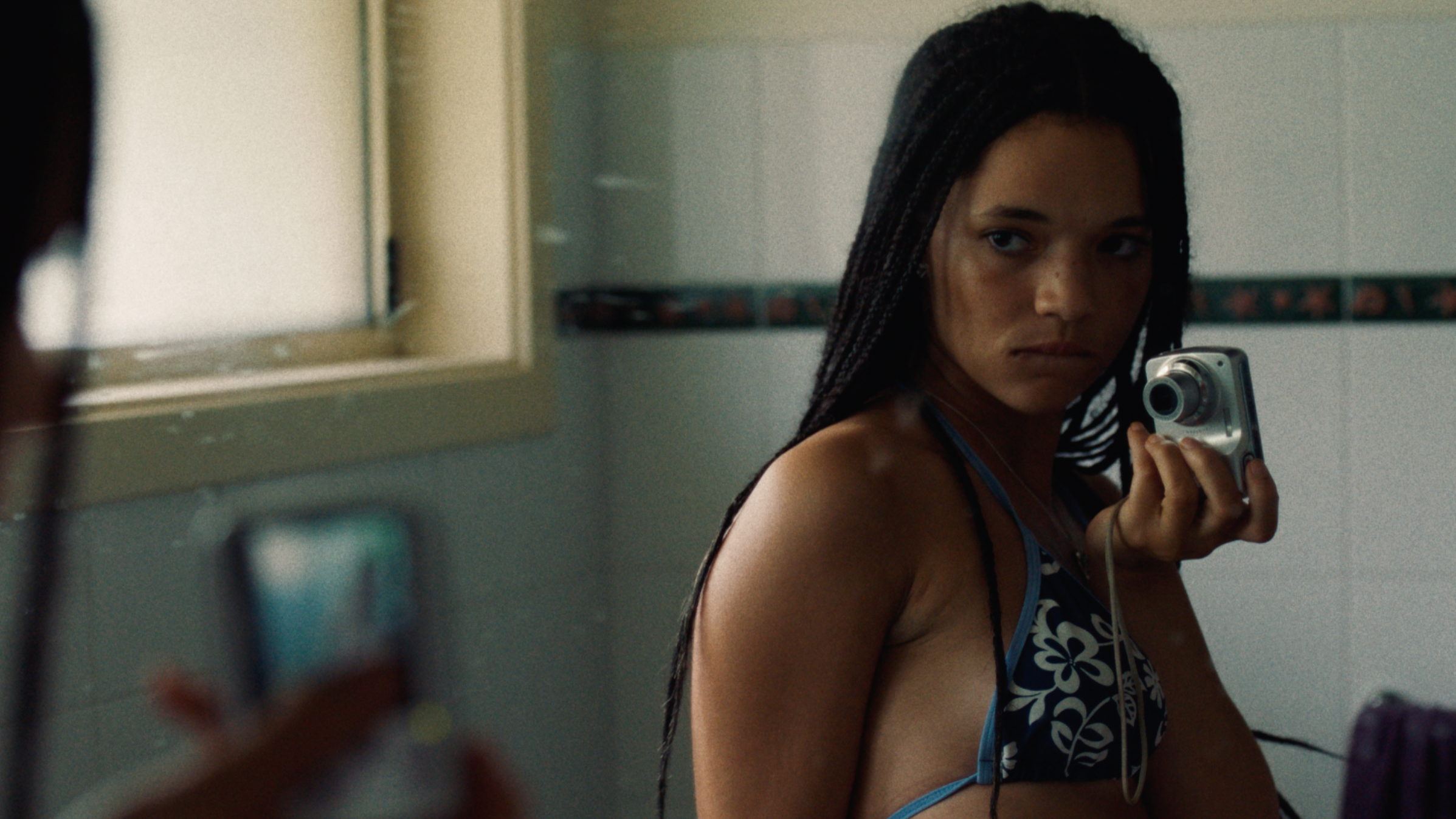
Souvenirs symbolize a fond moment in our lives filled with sentimental value. But souvenirs of a different kind can become a dangerous tool for manipulation. At 16, Keira (Tanzyn Crawford) navigates the fear and tension in her relationship when her girlfriend, Zoe (Emily Grant), takes a photo of her in a compromising position. Telling a queer coming-of-age story, Souvenir (2025) highlights the challenges of consent, privacy, and the unspoken power of the photograph. Ahead of its screening at South by Southwest (SXSW) 2026, we had the chance to speak with Director Renée Marie Petropoulos and Producer Yingna Lu on their insight into the short film’s depiction of boundaries in relationships and uncomfortable power dynamics.
Why is the film set in the early 2000s, and what made you want to tell the story in the manner that you did?
RENÉE MARIE PETROPOULOS: This short is a proof of concept for a feature that's set in the same time. [It’s the] same kind of family vacation on a resort, teenage protagonist, and a similar kind of breach of consent. We took a lot of the ideas from the feature, but wanted to make a short that became its own story in and of itself. We wanted to keep it in 2008 and also ground it in a moment of breaking of consent where a camera is involved.
That period of time was the beginning of Facebook and MySpace, and teenagers curating their life online and posting albums and albums of photos after every hang out. I definitely did that. But also, it was the beginning of nudes, and sharing nude photos with one another. It was becoming this terrifying and exciting new thing. Leading into the period of Souvenir, it definitely allowed us to explore consent and how a camera can be used as a weapon. I still think it has ramifications and is very relevant today. Social media has evolved in a terrifying way. I think that for us, that was the important jump and just using the camera to symbolize a lot of the tension between these two girls.
YINGNA LU: 2008 was about the time of using the first point and shoot camera for me, and really understanding when you could flip the screen and see yourself getting those first selfies. And then, suddenly positioning yourself as not just the person taking the photo, but also controlling your image and how others perceive you.
PETROPOULOS: I think also in the context of these two girls, they're also very much still in the closet, so curating themselves and how they present is also doubly important on top of that.
The start of the film feels fun and focused on young love until you hear the flash of the camera. It takes you out of a heated moment. The way you built up that tension and maintained it throughout the film is really impressive.
PETROPOULOS: Thank you, that's a massive compliment. We wanted the film to feel grounded in Keira's point of view, so you're kind of swept up with her and Zoe. You're cascading down the path with her and frolicking and having these little moments. All the sounds of the ocean and the insects, they're all a bit heightened because we're just totally in Keira's point of view, and how she can never really escape her family or Zoe. They're always off screen, or they always intrude in the frame in some way. Grounding with her was definitely the priority, so I'm really glad it worked.
Congratulations on screening at SXSW. How are you feeling, going back to the festival after Tangles and Knots (2017)?
LU: It's actually so nice to come back older. When we first went there, we were still in our 20s. It’s such a big festival, [and it was] one of our first films together. We now have the benefit of going back armed with a fuller slate of future projects, and not just representing the short. It's actually about building up our career and also building up from this story, because we've got a feature which takes a page out of the short with at least the themes and tone. So it's a really exciting way to launch into the market and start furthering relationships for the upcoming feature.
PETROPOULOS: I'm also excited to reconnect with filmmakers that I've met in the past that are also traveling to the festival, and to meet new people. I feel like SXSW does a good job at nurturing emerging filmmakers. I'm keen to meet international managers and agents, distributors, production companies, and the whole shebang. [Also] to see some cool movies! I'm just really excited.
LU: That's a nice thing about SXSW. They're not afraid to be provocative. I feel very honored to be chosen, as someone who can provoke. As a team, Renée and I really do value moving the needle, or at least moving the emotion in a way you come out and might feel shaken. It's a story that we feel close to.
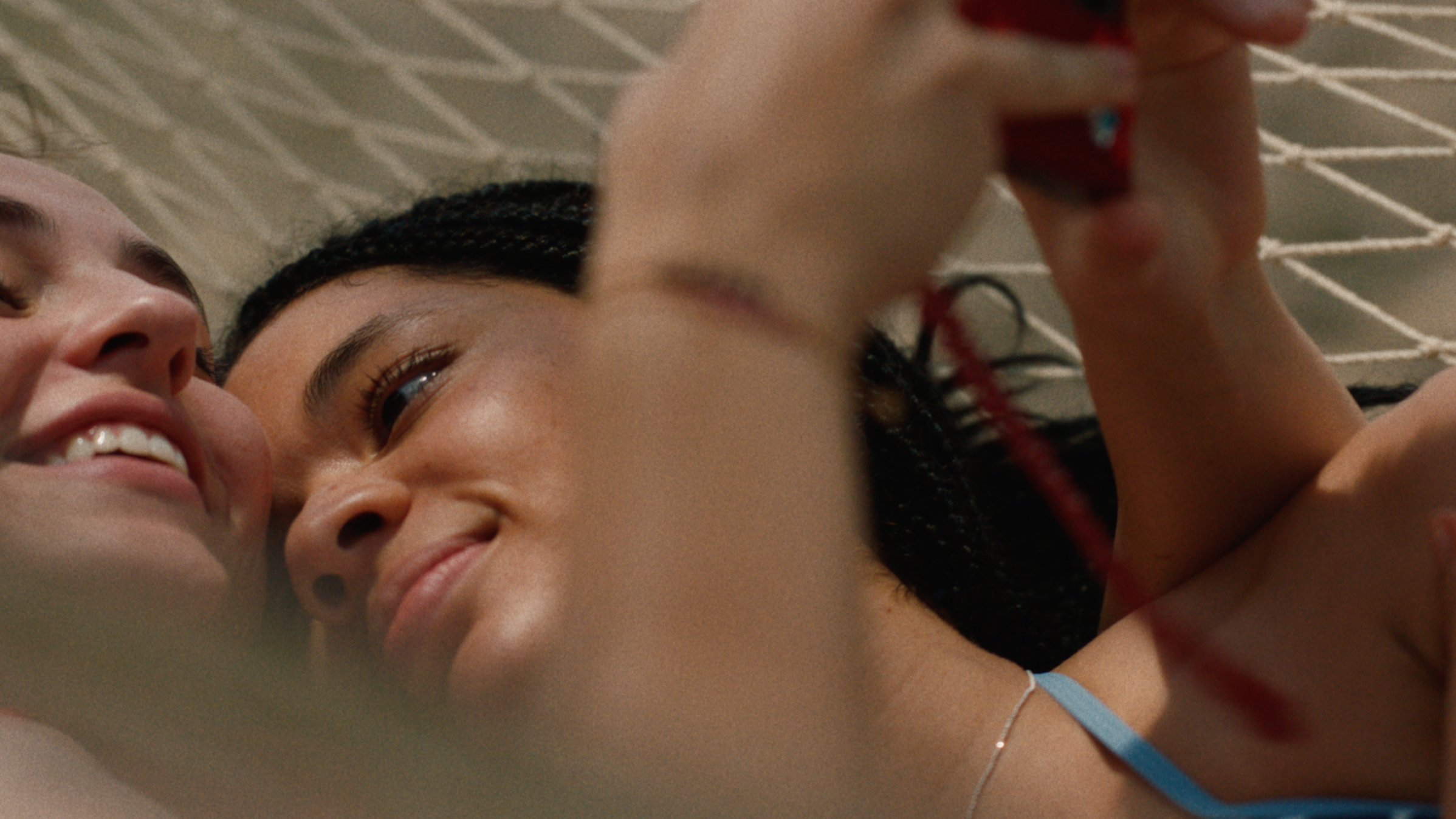
Both Souvenir and Tangles and Knots confront uncomfortable topics and female perspectives. Why are you drawn to unsettling coming-of-age stories and what messages do you want to convey?
PETROPOULOS: Cinema is a safe space to explore very confronting things. I’m hoping to touch audiences who may have experienced something like this, or see themselves reflected in the characters, or may not be aware of how this is mimicking something in their lives. Opening up conversations around consent and these tiny moments that the two have in their relationship, that's where I'm at as a filmmaker. To provoke conversation and to make anyone who's experienced this kind of thing before feel seen, essentially. Not having seen this kind of relationship as well in a sapphic light, I think it's important to show a diversity of stories and make sure you can dive deep and take people to unsettling places.
LU: I really love working with Renée because [she’s] got a real intention to not let people off the hook. Audiences have been invited into this darker space that sometimes is uncomfortable. I love being able to hold onto that and not puncture it. I feel as if a lot of the time, we are expecting these happy endings, or some kind of reprieve. You don't always get that in other films.
The scene where Keira’s mom asks what's wrong stood out to me in particular. Can you walk me through the relationship between Keira and her mother? Her mom seems to be aware of Keira's queerness and has had experience herself with another woman.
PETROPOULOS: She's dealing with the aftermath of Zoe, very alone in this journey, [so she] reaches out to her mom and has this conversation. It's in French, just in case Zoe rushes in at any moment. We wanted to have another moment in the story where she could have a way out or have help, and then it's totally cut off. I wanted to ground that in the mom's perspective being very dismissive, which also adds another layer of not taking Keira’s pain very seriously. All while adding a bit of fun characterization to their relationship and saying a lot [about their dynamic] in a short amount of time. I think it's pretty much a perspective that many parents have had on sapphic relationships, just not taking them quite seriously.
LU: Over the years, I've realized the patterns of the characters I love pursuing or following in shows and films. It's definitely the mother-daughter relationship. Hence, Tangles and Knots and now Souvenir . . . I think because we get to see what the mom's like, you can see what the daughter has grown up with. The confidence of her mom and the dismissal really informs why Keira may feel like, "Oh, maybe I'm not sure about how I feel about Zoe and what's happened to me."
If this story happened today, Keira's photos would have spread like wildfire on social media, and nothing could be truly deleted. What do you guys think about the current state of how we use cameras?
PETROPOULOS: Back in 2008, there was a physical camera and a memory card, and the images didn't go anywhere unless you uploaded it onto a computer. The threat of that keeps the whole film going. I think that's another reason to set it in the 2000s, just so you could physicalize that idea.
If we had set it today, she could instantly load it up and the answer would happen quite quickly of what's happening to those photos. For the purpose of the film, we wanted to ground it in a way that we could dramatize the back and forth between these two girls. Keira even tries to turn the camera on herself to explore this uncertainty that she has. Similarly, you see her family also trying to curate a happy holiday. The camera is a tool and a weapon in different ways, and then eventually the camera is used to help Keira reach this very powerful moment. In terms of the storytelling, it's a device to help us express so much of their relationship. If we set it in today's world, I'm not sure what that film would look like. It would be a very different film.
LU: I think it resonates with modern audiences today because [ . . . ] it's the same kind of shit. Take photos of someone without consent, and you can still be wondering what they’re gonna do with it. And I think nowadays, if someone takes a photo of you, [you’d question if] they really deleted it and if it’s really gone. It's this uncertainty, and how there's this power that someone can have over you. When did taking photos become a weapon?
I suppose back then there was this tactile device that you can just de-electrify by throwing it in the water. Maybe it's a reminder to find some way to dissociate or disconnect from the chaos. How do we, in the modern day, find ourselves disconnected from that? Back then, it was to throw away the machine. Now, what is it? That's the question.
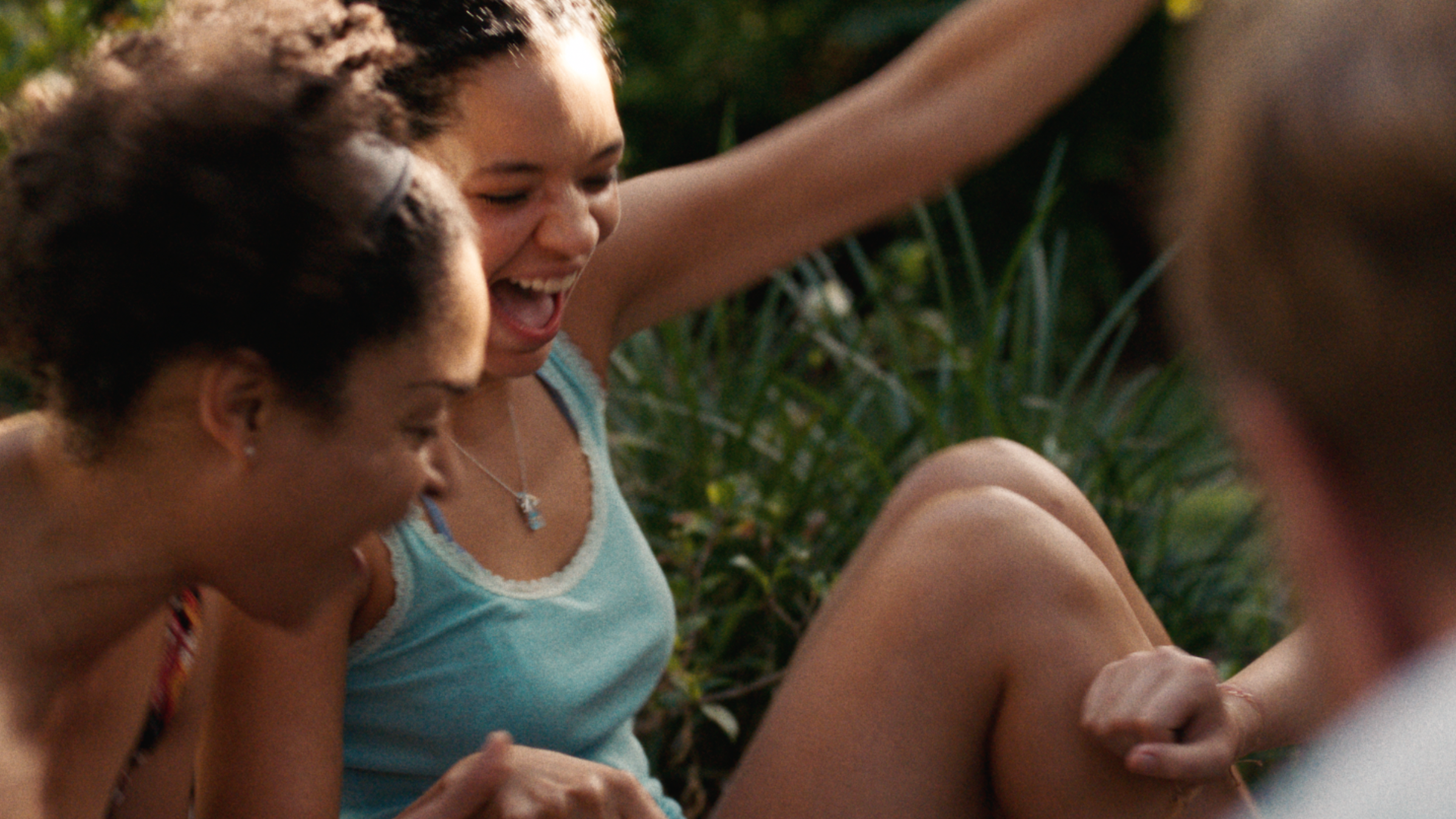
There's this instability to Zoe’s character that makes you feel like you can and can’t trust her. Could you talk us through her character?
PETROPOULOS: I think in crafting Zoe, we wanted to make sure that while she does something quite malicious and controlling over Keira, there are shades to her as well. [Zoe] is very young and doesn't quite understand what she's doing entirely. She's cheeky and charming and always kind of pushing the boundary of how far she can go with Keira. I feel like she knows how much Keira is enamored with her, so that's another layer on top of that. She's also the guest of this family holiday as well. I think there is a power imbalance there with how much stake she has with the family.
Despite what she does, we still do understand her as a character and she's not just a complete villain. The way I approached directing Emily [Grant] as well—we cast her because she's amazing. [Emily] has this natural energy about her and even in between takes when we were shooting the difficult scenes, she just brought everyone up and was an absolute pleasure to work with. Me and Emily were building a backstory for [Zoe’s] life, and how she dealt with her family which wasn't as stable as she would have liked. I think she's just taking the wrong kind of behaviors and passing them on to how she deals with Keira. It's a very human thing to do. You're brought up with a certain imprint of a relationship to base all your romantic relationships off.
LU: It's also to remind everyone that when you're dealing with your own thing, maybe not coming out yet or you're dealing with your own family and this new relationship—you're just trying to figure it out first and you forget or oversee how to empathize with someone else. She just might not notice all the stuff that's also going on with Keira. You can't blame her because she's also dealing with her own story. It's not black and white. It's trying to learn empathy at 16 years old.
In the end, why did you spare the viewers of the aftermath of Keira damaging Zoe's camera? Can you tell us how Zoe reacted, or is it up to interpretation?
PETROPOULOS: We definitely wanted to have this moment where Keira destroys the camera, and reclaims this power for herself. Them sitting together [afterwards] and the wash of tension and darkness that comes over the two of them, ending with Keira’s reaching out. We wanted to leave this open for people to interpret . . . Whether it's an amending gesture or if they're doomed to do this thing again. I think it just depends on where you're coming from as a viewer. I don't want to be too didactic, especially for a short. I just wanted to keep it simple and to the point. Not overstay our welcome with the two characters.
LU: I think the fact that this could be a happy ending for them in the sense of them being together is an interesting take on it. But what does it mean when they're still in that cycle? We like to really focus on the discomfort, and this flaw in their relationship. When we leave them, we just want to be able to give the audience their own way of digesting this flaw. This is a very natural and a realistic thing that happens in relationships, you don't always nip things in the bud.