
The Drama: Ignorance Makes the Heart Grow Fonder
by Romane Tissandier
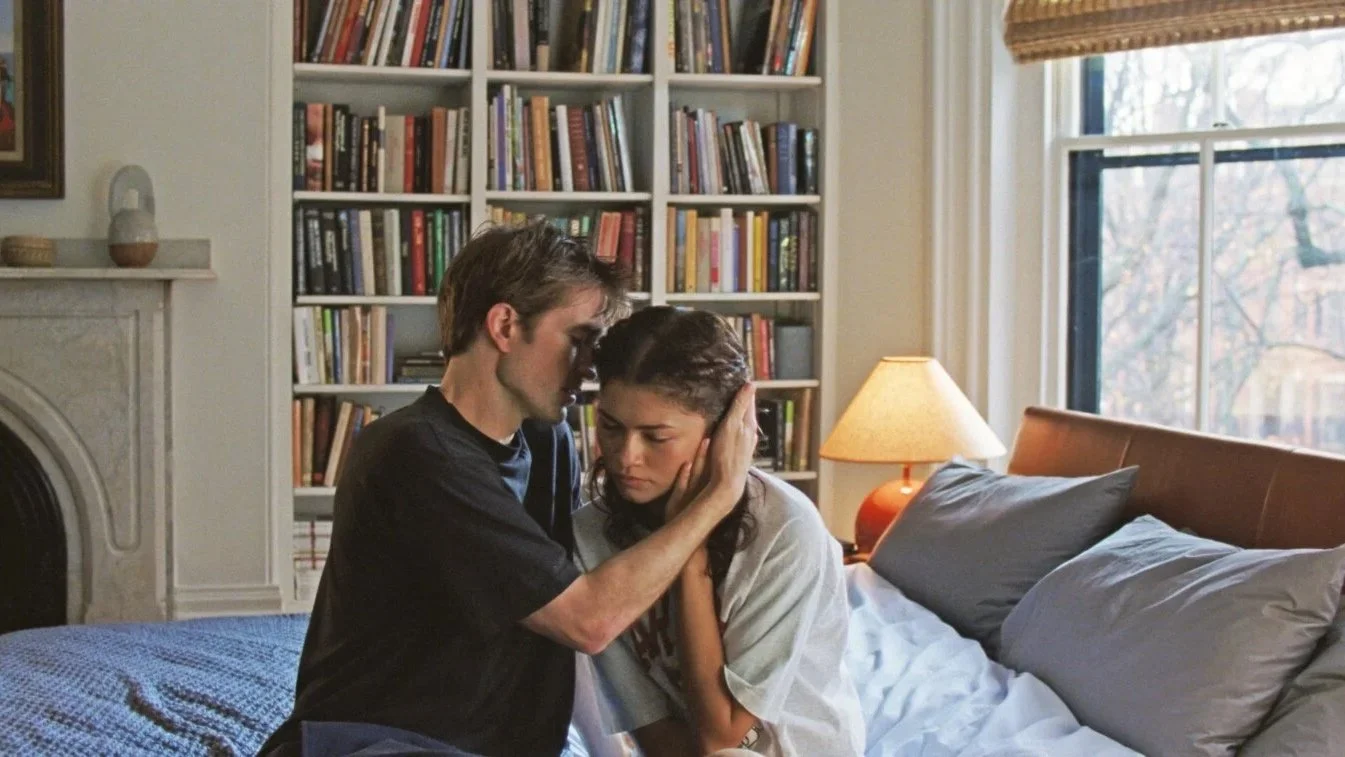
Emma Harwood (Zendaya) and Charlie Thompson (Robert Pattinson) are only a few days away from their wedding ceremony when a drunken confession from the bride-to-be derails the couple’s seemingly perfect path to a happy domestic life.
In Kristoffer Borgli’s The Drama, marriage is a finely staged performance that slowly turns into an absurd, almost macabre celebration as the consequences of Emma’s revelation unfold. Balancing the film’s weaker moments and its tendency to rely on rather superficial aspects of its story, Zendaya and Pattinson both deliver impressively nuanced interpretations and manage to bring a strong physicality to the internal struggles of their characters.
As he tries to make sense of Emma’s newfound past, we are thrown into Charlie’s obsessive mind which slowly destroys the couple’s peaceful dynamic. The terrifying, sometimes nonsensical thoughts that invade his mind completely transform the perception he has of his fiancée, a confusion portrayed by Pattinson with delightful precision. Subtly punctuating the events, the score acts as a reminder that nothing will go as we might expect: Composer Daniel Pemberton translates a haunting feeling of anticipation, as if constantly waiting for one more note to bring a theme to its conclusion, but the relief never comes.
In parallel to Emma and Charlie’s storyline, the film widens its reflections with the introduction of the couple’s two friends, the controlling and surprisingly cruel Rachel (Alana Haim), and her rather passive boyfriend Mike (Mamoudou Athie). During a wine tasting dinner in preparation for the big day, Rachel insists that everyone should share the worst thing they have ever done. The stories are met with awkward laughter and feigned offended expressions, until Emma confesses that she planned a mass shooting when she was a teenager, but never did it.
After this revelation, the movie’s atmosphere becomes suffocating. Everyone revealed something that had concrete repercussions, and yet Emma is the only one who faces judgement and distrust for a plan on which she didn’t follow through. Each closeup peels off a new layer to the story and we are immediately faced with Rachel’s disproportionate outrage that only becomes more unbearable as time passes. Thanks to Zendaya’s candid and charismatic performance, we cannot help but feel the unfairness of the treatment reserved for Emma, who witnesses the people she loves act as if she were someone else.
The Drama triggers an urge to pick sides as the characters go on radically different journeys. The audience is warned from the very first shot, a closeup of Emma’s ear, that every detail holds the power to shift the focus of the entire story, so we examine each word and movement with the hope it might lead us to the truth. But our doubts are only reinforced as the story progresses: While we understand Charlie’s concerns, we also empathize with Emma’s disappointment, bringing forward a frightening amount of moral dilemmas. Should a partner know everything about us, even a past they were not part of? To what extent can we be held responsible for someone else’s behavior? How does the concept of morality affect our closest relationships, and who gets to decide when the limits of what we deem acceptable have been crossed? Those uncomfortable reflections are encouraged by surprising editing choices, which seem to provide the film with a mind of its own, persistently coming up with new ideas and perspectives. Indeed, the couple’s tense conversations are dissected with an unsettling irregular beat, each cut suddenly emphasizing a scared gesture or revealing a possibly evil stare. This unstoppable rhythm inevitably leads to chaos as the second half follows the events of the unusual wedding day.
With its anxiety-inducing evolution and an ending that could be interpreted as optimistic, The Drama uses the dark room of a movie theater to question our moral beliefs and the hypocrisy that can often lie behind them. Like Charlie, we waver between our own interpretations and those of the audience in the room with us. Sparking a complex conversation around the contradictory notion of unconditional love, the importance of second chances, and the often fragile foundations on which we build our relationships, it is a challenging film that will stay on your mind long after it ends.