
Minions & Monsters: Keeping Hollywood Alive
by Karen Reyes
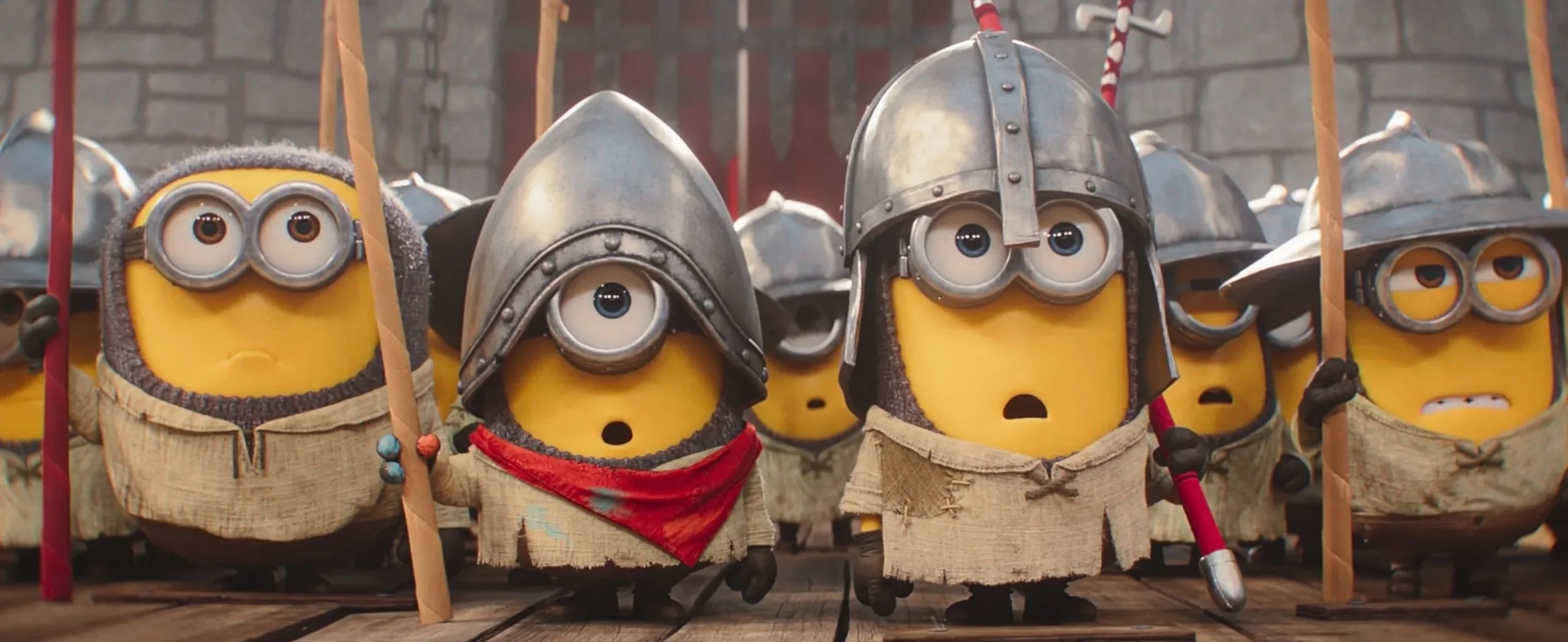
Society has shifted and Minions are no longer an annoying corporate mascot, returning to us as beloved, silly little guys with impeccable comedic timing. Pierre Coffin’s third Minion-focused feature film (and 7th film in the Despicable Me series), Minions & Monsters, scored a whopping 91% on Rotten Tomatoes—and 100% in my heart—making it the highest-rated of the franchise. Listening to narration from a present-day Hollywood tour guide, we follow a new group of Minions as they stumble, fall, and literally crash into Old Hollywood. After accidentally becoming movie stars, two Minions called Henry and James fall in love with movie making, unleash monsters on the world in their efforts to make a movie, and then rely on classic film references, the Minions’ absurd luck, and their roundabout sense of loyalty and camaraderie to save the world.
The film’s cultural success, however, was met with the internet’s favorite pastime: discourse. In recent years, discourse has come to mean a (usually) unnecessary and visceral tearing apart of a piece of media. But the biggest conversation surrounding Minions & Monsters has existed since their inception: the implication that their biological need to serve villains connects them to a certain World War II dictator. Director and voice of the Minions, Pierre Coffin, stated, “I knew that everyone would ask about the Minions working for Hitler. So I solved that one immediately with the ice cave. That was me on my own. We didn’t even have to have a meeting.”
And their 150-year stint in the ice cave held up . . . until Minions & Monsters, which places this group of Minions in Old Hollywood in the 1900s. So the question is back and completely unanswered by the film. Yet, as entertaining as it is, the argument was quickly refuted by Coffin who pointed out that this film establishes there are multiple tribes of Minions in the world. So I guess the ones who would have served Hitler really were stuck in an ice cave.
Sociopolitical implications of the Minions aside, this film hits all the sweet spots of a great animated movie and does so via incredible odes to Hollywood classics. Its references to Citizen Kane (1941), The Blob (1958), and The Day the Earth Stood Still (1951) clearly show the filmmakers hold great reverence for the medium, albeit with silly twists. While some of these films are mentioned or featured explicitly, like Sallie Gardner at a Gallop (1878) or The Matrix (1999), others are incorporated into the Minions’ shenanigans, creating a true love letter to film. And although this might be many kids’ introduction to Old Hollywood, older moviegoers are also learning more about the iconic films that inspired Minions & Monsters.
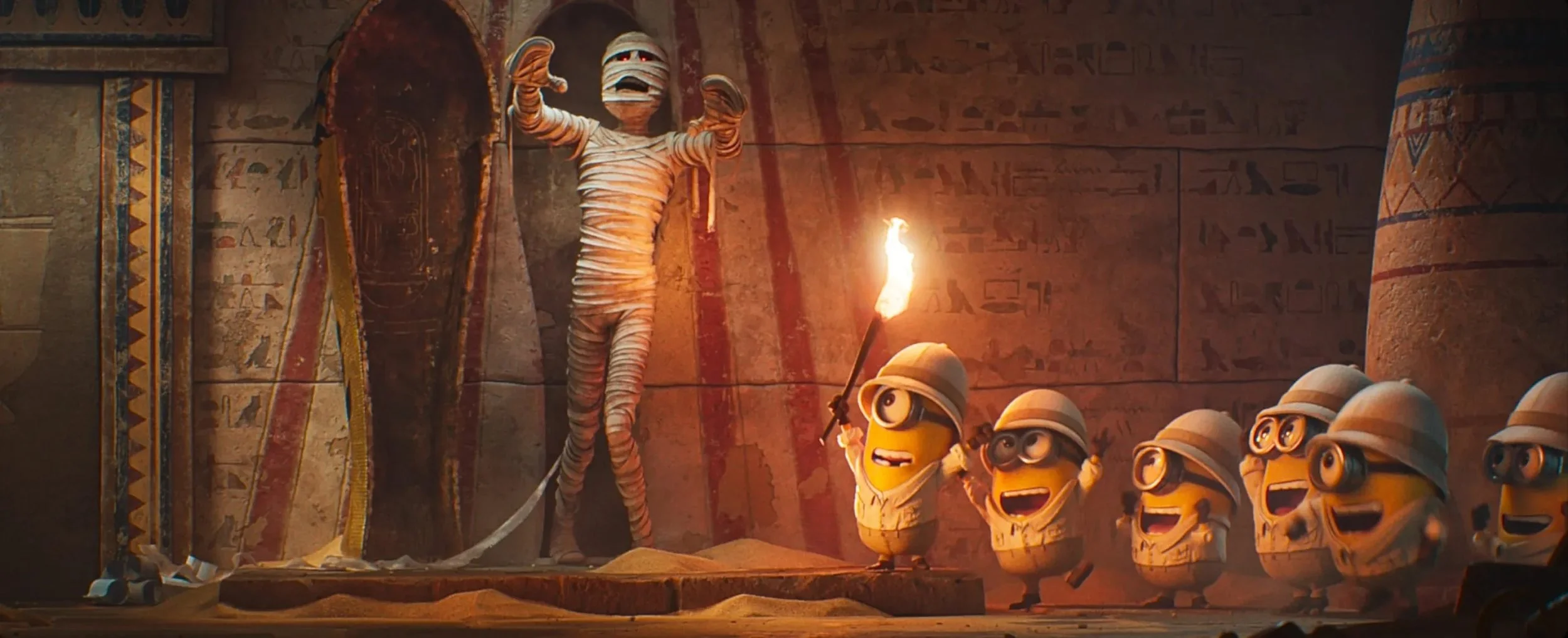
Of course, the appeal of family-friendly animation is its universality. Despite having seen only a few of the referenced films, I found myself catching onto those that are culturally ingrained in us. Minions & Monsters is not the first to point to Old Hollywood, but it’s particularly resonant as viewers find joy and amusement in the idea of these lovable little creatures so intentionally recreating scenes that are otherwise considered serious moments of cinematic history—particularly during a time where “slop” and AI-generation in movies are becoming more and more of a concern.
And even if younger viewers don’t catch many of the nods to beloved films in the industry, the Minions’ antics themselves are enough to keep them engaged. With well-timed slapstick comedy, endearing Minionese that had my theater laughing, and even a moving love story between best friends Henry and James, Minions & Monsters ticked all the boxes of a fulfilling cinemagoing experience.